

35% VLT tint isn't legal on Ontario front side windows or the windshield because those surfaces must allow at least 70% visible light transmission. It's generally acceptable on rear windows, where the restrictions are looser.
You've just bought a clean new car, and the 35% film looks like the perfect balance between a sharp appearance and cabin privacy. Then you notice a cruiser beside you at a light, or you arrive for an inspection and start wondering whether that darker glass could become a problem. The answer depends less on how the car looks in a driveway and more on which window has the film, how much light the finished glass transmits, and when the vehicle was manufactured.
A 35% film allows only 35% of visible light to pass through and blocks 65%, while Ontario's forward-facing glass generally needs at least 70% VLT under the Ontario Ministry of Transportation passenger and light-duty vehicle inspection standard. That makes 35% VLT a poor choice for the windshield and front doors, even though it's a common and useful shade for rear glass.
The Short Answer on 35 Percent Tint in Ontario
If you're asking, “Is 35 tint legal in Ontario?”, the practical answer is simple. Not on the front side windows or windshield of a vehicle that falls under the newer enforcement rules. Generally yes on the rear side windows and rear glass, where restrictions are less demanding.
The confusion comes from the way tint is sold. A shop may describe a film as “35 tint,” but that usually means the film's VLT rating. It doesn't mean Ontario permits that rating on every window. Front glass is judged by the amount of light that gets through the complete window assembly, including the original glass and any added film.
The situation most drivers face
A car owner chooses 35% film because it looks dark without appearing completely blacked out. The installer applies it across the whole vehicle, including the driver and passenger windows. The car looks uniform, but that uniformity is exactly the problem. The rear windows may be acceptable, while the front windows can fail a roadside meter reading.
Ontario enforcement guidance treats the windshield and the windows directly to the left and right of the driver as subject to a 70% light-transmittance threshold. A peace officer can use a photometric tint meter, and a reading below that threshold is considered non-compliant for those forward-facing windows, as described in the Ontario Association of Chiefs of Police resolution.
Practical rule: If you want a 35% look, keep it to the rear glass unless a qualified installer confirms that the final front-window reading remains compliant.
Why the rear windows change the answer
Ontario's rules don't treat every pane of glass as one category. The driver's direct view through the front side windows matters most for visibility and roadside identification. Rear side windows and rear glass are treated more leniently, so a darker film is generally used there.
That's why a mixed installation is the sensible setup for many Ontario vehicles. Use a legally compliant, light film on the front doors if you want glare or heat control, then use 35% on the rear doors and rear glass for a consistent-looking cabin from the outside. Don't order a full-car 35% package until the installer has separated the windows by legal position and checked the vehicle's factory glass.
Ontario Window Tint Laws by Window Position
Ontario tint legality depends on the window, not just the film's label. The front glass has stricter visibility requirements, while the rear glass follows looser restrictions. The MTO inspection standard is the key reference for inspection purposes.
| Window Position | Minimum VLT Required | Is 35% Tint Legal? |
|---|---|---|
| Windshield | At least 70% for applicable forward glass, with aftermarket windshield tint restricted on newer vehicles | No, except for a permitted top strip within the specified limit |
| Front driver and passenger windows | At least 70% | No |
| Rear side windows | Restrictions are looser | Generally yes |
| Rear window | Restrictions are looser | Generally yes |
Windshield
Treat the windshield as a separate category. For vehicles manufactured after January 1, 2017, aftermarket tint isn't permitted on the windshield under Ontario's inspection rules. A permitted top strip must stay within 75 millimetres, or 3 inches, from the top edge or AS line, as specified in the MTO inspection standard cited above.
A 35% film across the windshield is not a legal installation on a newer vehicle. A visor strip can also fail if it extends below the permitted area. Keep the windshield clear except for a compliant strip.
Front side windows
The driver and passenger windows beside the front seats must allow at least 70% visible light transmission. A 35% film allows only 35% of visible light through the film, putting it 35 percentage points below that commonly applied minimum before the vehicle's original glass is even considered.
This is a clear violation, not a marginal finding. If an officer measures the finished window below the threshold, it can be treated as non-compliant. The Ontario Association of Chiefs of Police guidance describes photometric measurement for these forward-facing windows.
Rear side windows and rear glass
The rear doors and rear window are the practical locations for 35% film. Restrictions are generally looser there, allowing drivers to create a darker appearance behind the front seats while keeping the forward glass lighter.
“Rear” refers to glass behind the driver's seating area. A rear door window is not governed like the driver's door window merely because both sit along the vehicle's side. Have the installer identify each pane by position before ordering a full-car package, especially on vehicles with different factory glass from front to back.
How VLT Is Measured and Why Film Percentage Misleads
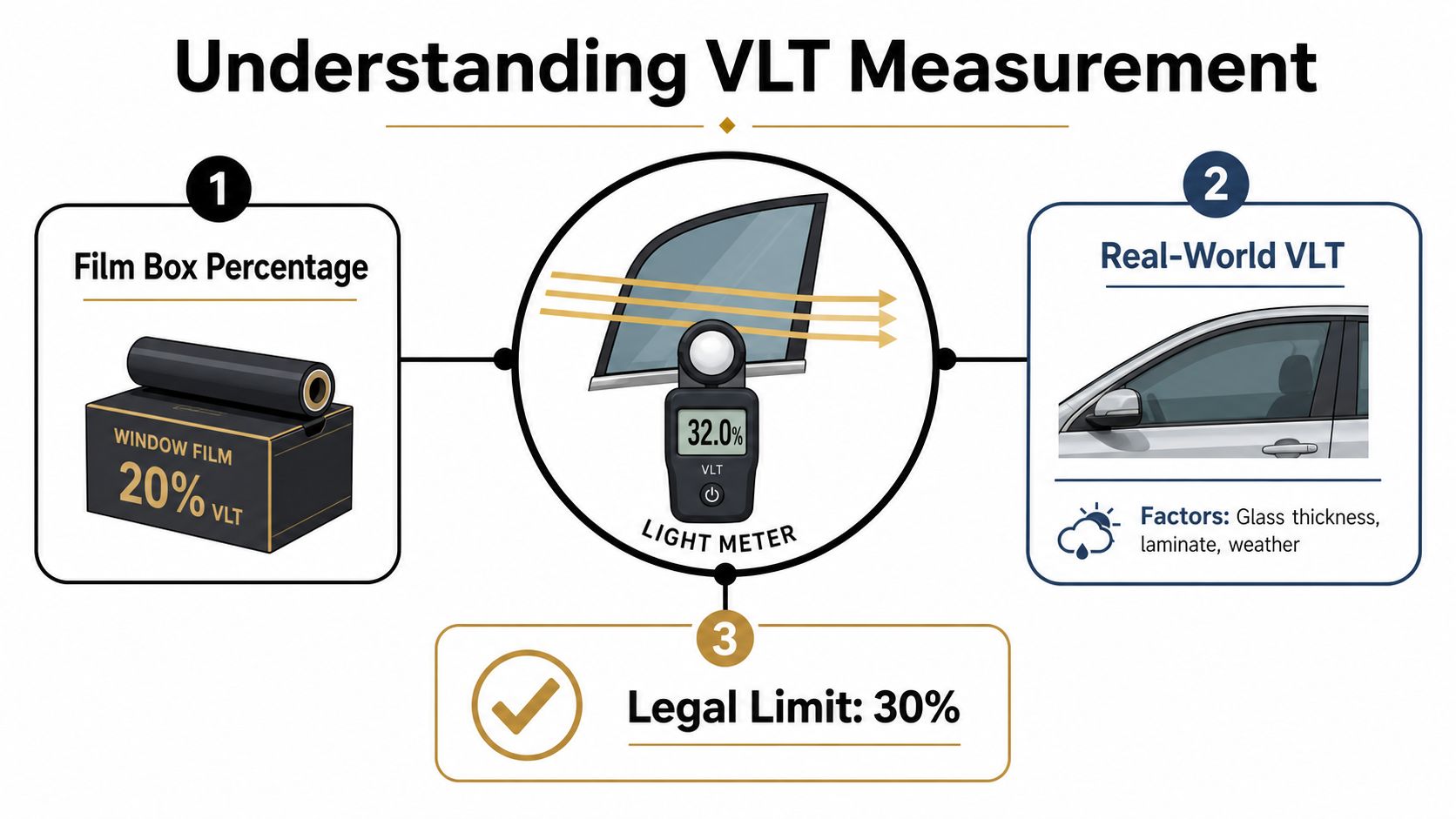
Visible light transmission, or VLT, measures the percentage of visible light that passes through the finished glass. It's not a measure of how black the film looks from outside, and it isn't always identical to the number printed on the film packaging.
A 35% film is rated to transmit 35% of visible light through the film itself. Your vehicle's original glass already has its own optical properties. When an installer adds film, the film and glass work together, so the final reading can be darker than the film label suggests.
What happens during a meter check
A photometric tint meter places a light source on one side of the window and measures how much visible light reaches the sensor on the other side. The result reflects the installed window, not just the film roll.
That distinction matters on newer vehicles with privacy glass. A 35% film installed over already-dark factory glass can produce a final VLT well below the required front-window threshold. You can't confirm legality by holding the film sample beside the car or relying on the product label.
How an installer should check the result
A competent shop should measure the glass before recommending a front-window film, then test the finished window after installation. Ask to see the meter reading and ask whether the shop is discussing film VLT or final glass VLT.
Installer's rule: Never choose front-window film from the box percentage alone. Measure the car first, then measure the completed installation.
For rear glass, the same measurement still helps you understand the finished shade and night-driving visibility. Legal permission for darker rear windows doesn't automatically make an extremely dark setup comfortable or safe in every lighting condition.
Pre-2017 vs Post-2017 Vehicles and Factory Glass Exceptions
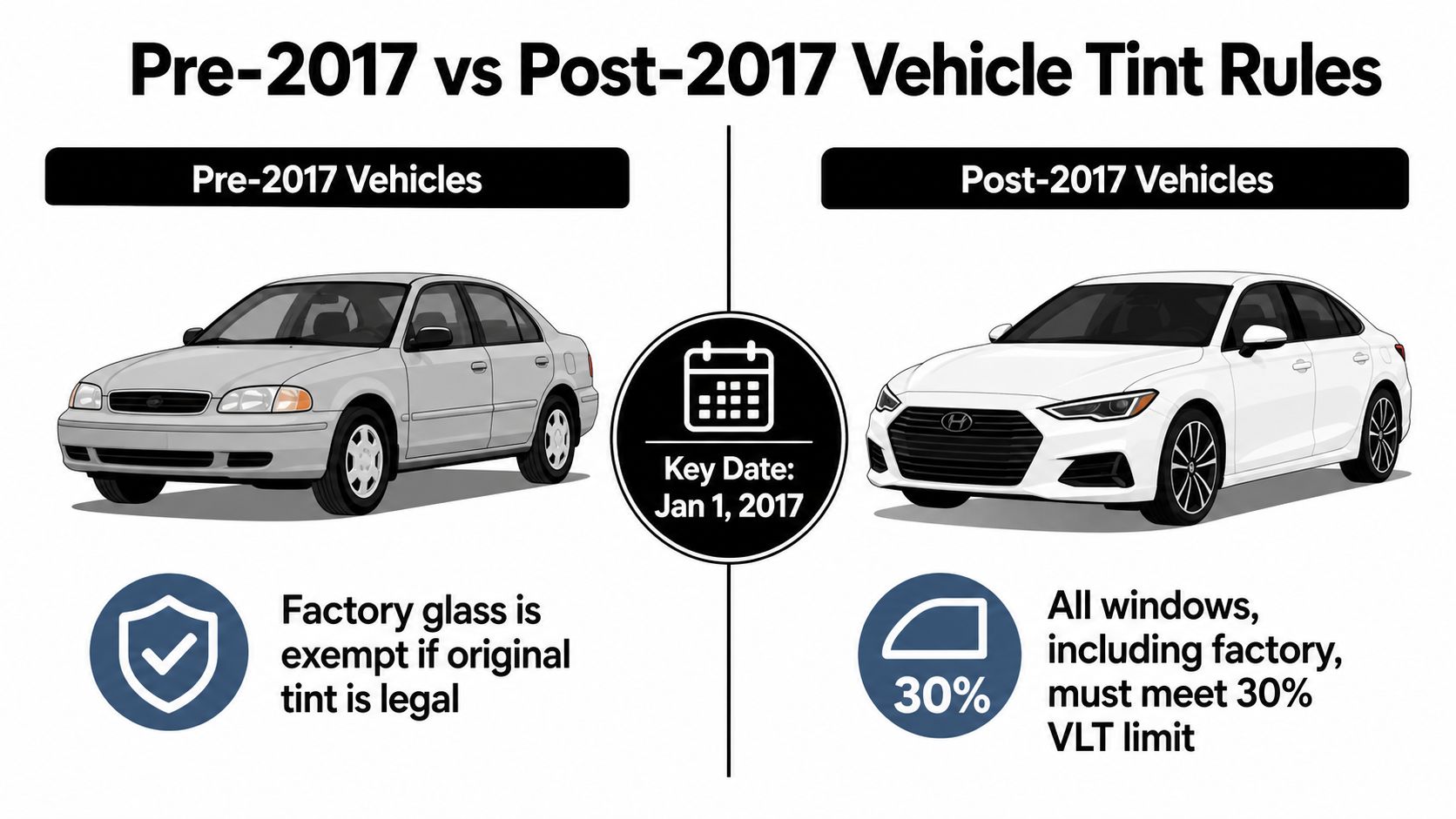
A 35% tint answer depends on the vehicle's manufacturing date and the glass already installed. Ontario treats vehicles manufactured before and after January 1, 2017 differently for certain windshield and window-tint inspection requirements. That distinction changes how an installer should assess the car.
Vehicle age does not give every pre-2017 vehicle permission to use any tint. First identify whether the darkness comes from factory glass, aftermarket film, or replacement glass. Then confirm whether the tint was already present when the vehicle was purchased or whether you are adding it now. Keep purchase or installation records if available.
Vehicles manufactured before the key date
Pre-2017 vehicles often create the most uncertainty during a tint inspection. Existing tinted glass may be assessed under different provisions from a new aftermarket installation, especially on a used vehicle that arrived with the tint already in place.
Do not rely on the model year alone. Have the shop inspect the glass and determine what was installed at the factory and what was applied afterward. If the vehicle already had tinted windows when you bought it, retain any documentation that identifies the glass or installation history.
Vehicles manufactured after January 1, 2017
Newer vehicles face stricter scrutiny for aftermarket windshield tint. A 35% film does not belong on the windshield. The permitted upper strip is limited to 75 millimetres, or 3 inches, from the top edge or AS line, as detailed in the MTO inspection standard cited earlier in this article.
Front side windows remain forward-facing compliance glass. If a newer vehicle already has tinted front-door glass, adding 35% film makes the finished window darker still. The shop must measure the existing glass before choosing film, then test the completed installation.
Factory privacy glass isn't the same as film
Factory privacy glass is manufactured with its darker appearance built into the pane. Aftermarket film sits on top of the original glass, so both layers affect the final VLT measured by a meter.
That is why dark rear SUV glass may be acceptable while matching darkness on the front doors creates an inspection problem. Treat each window position separately. Do not copy the rear shade onto the front doors, and do not approve a job until the installer has checked the finished front glass.
Enforcement Risks Fines and What Police Can Do
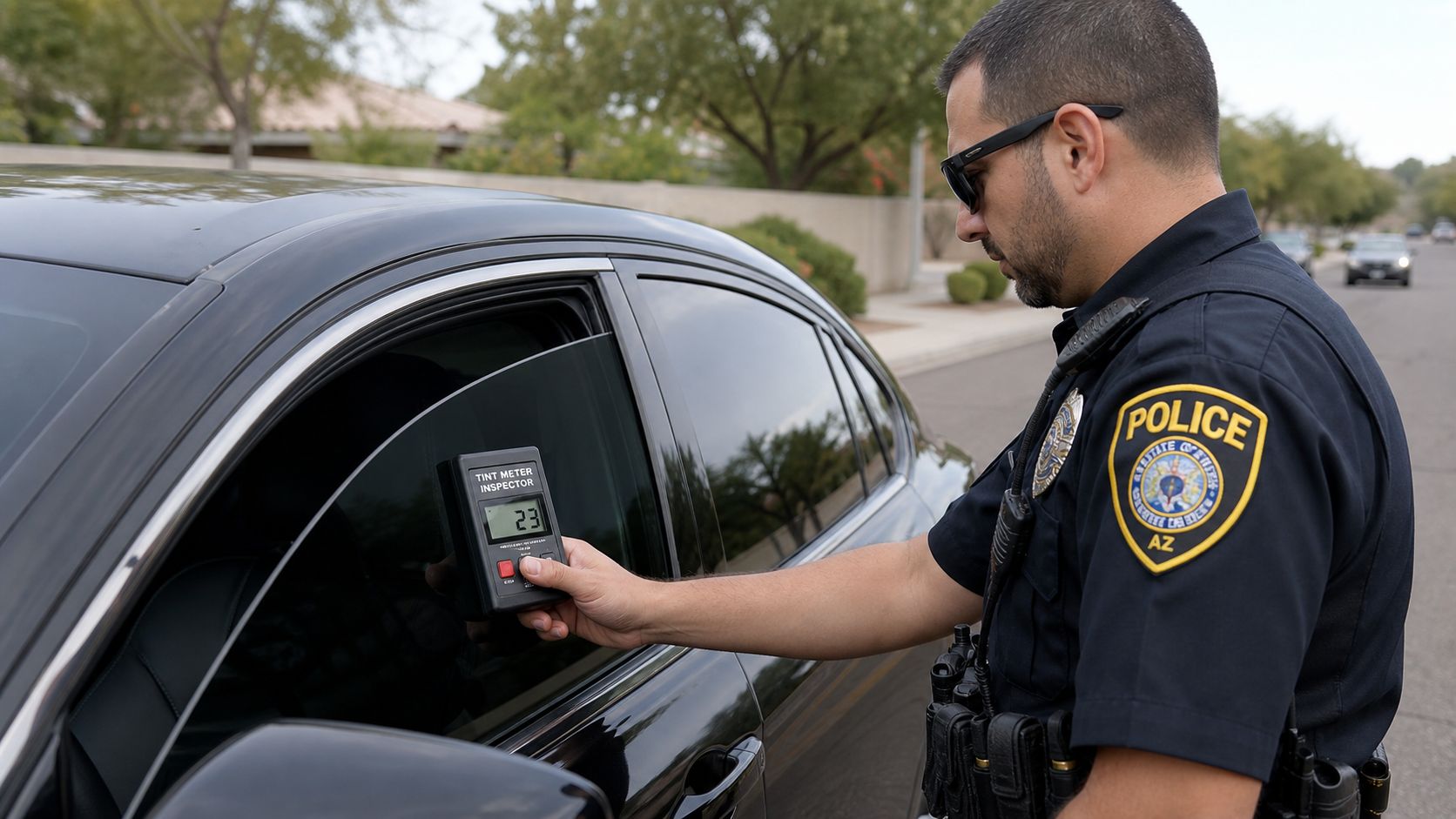
A dark front window can turn a routine stop into a tint check. Ontario enforcement guidance allows a peace officer to use a photometric tint meter on the windshield and the windows directly beside the driver. If the meter reads below 70% transmitted light, that forward-facing glass is considered non-compliant under the guidance.
What an officer sees at a stop
Police may pay closer attention when the driver is difficult to see through the glass. Appearance alone does not prove the final VLT, but it can prompt a meter test during a traffic stop. Once tested, the reading matters more than the film's label or the tint shop's description.
A 35% film on a front door starts with the wrong number. It transmits only 35% of visible light before the original glass and installation are factored in, placing it far below the commonly cited front-window threshold. I would not install it on a front door in Ontario.
The financial and inspection consequences
Ontario consumer guidance discusses possible illegal-tint fines from $85 to $500, as reported in Surex's Ontario tint guidance. The outcome depends on the circumstances and the officer's enforcement decision. The OACP resolution cited earlier also supports treating front-window visibility as an enforcement concern.
The bill may continue after the stop. You could pay to remove and replace the film, and a vehicle inspection can expose the issue when a technician measures the forward glass or finds that the tint obscures the interior.
The cheapest tint job is the one you don't have to remove twice.
My recommendation is simple: keep 35% tint on windows where it is permitted, not on the front doors. The darker appearance is not worth a roadside conversation, a failed inspection, or paying a shop to strip the film and redo the installation. Different window positions have different enforcement risks, so choose the film for the vehicle and glass, not for a uniform catalogue shade.
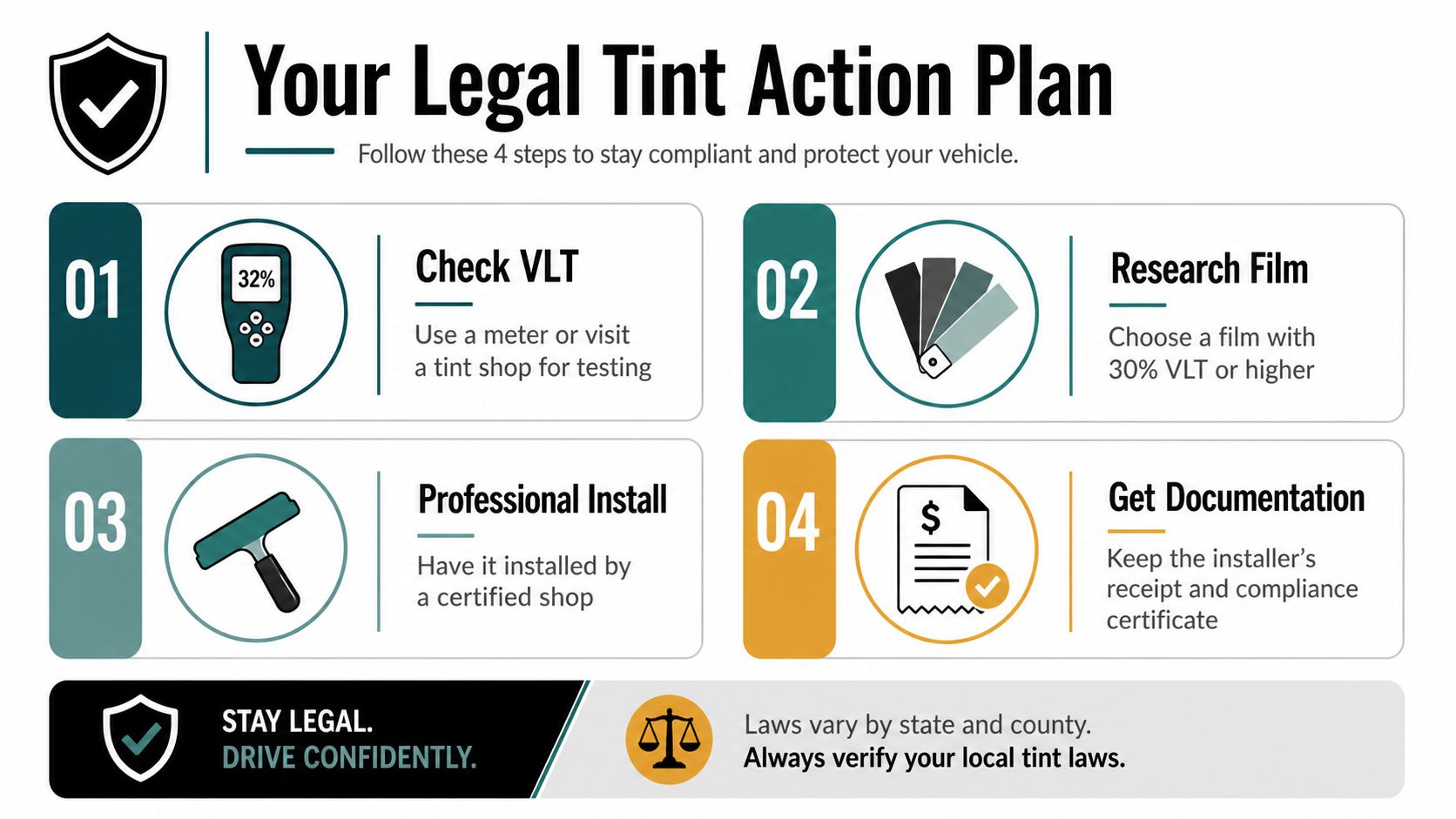
How to Verify Compliance and Get Legal Tint Installed
Start with the car, not the tint catalogue. Find out the vehicle's manufacturing date, identify any factory privacy glass, and have the existing front windows tested with a tint meter before you choose film.
Use a meter before ordering film
A handheld meter can give you a useful indication, but the most reliable route is to visit a professional tint shop that can test the actual glass. Ask for a pre-installation reading on each front window, not just one sample reading.
Then ask the installer to test the completed installation. That final number is what matters because the original glass and added film combine into one finished surface.
Choose the package by window position
A practical legal package usually separates the vehicle into zones:
- Front doors: Select a light film that keeps the final VLT at or above the applicable threshold. Don't assume a film labelled 70% will produce a compliant result on every factory-glass combination.
- Rear doors: 35% VLT is generally suitable where darker rear tint is permitted, subject to the vehicle's glass and your visibility preferences.
- Rear window: Match the rear doors if you want a uniform appearance, but ask the installer to consider the vehicle's original privacy glass.
- Windshield: Avoid aftermarket tint on newer vehicles, apart from a properly limited top strip where permitted.
Questions worth asking a shop
Ask who will perform the installation, what film brand and series they're proposing, whether the shop owns a calibrated tint meter, and whether they'll document the final readings. You should also ask how they'll handle factory privacy glass rather than treating every window as clear glass.
For drivers in Whitby and Durham County, Carmedics Autowerks Inc offers window tinting alongside paint protection film, collision repair, general auto repair, and fleet maintenance. Visit the shop with the vehicle before booking so the technician can inspect the glass and recommend a window-by-window package.
Common Tint Questions and Final Takeaways
Does ceramic film change the law? No. Ceramic, dyed, carbon, and other film types can differ in construction and performance, but the legal question remains the final VLT and the window's position. A premium film doesn't make a dark front window legal.
Can a medical need automatically permit darker tint? Don't assume so. If you believe a medical condition requires a different setup, confirm the current Ontario process with the relevant authority before installing film. A note from a clinic isn't something you should treat as automatic roadside protection.
What about moving to Ontario with tint from another province? Ontario compliance still matters once the vehicle is being operated here. Have the front glass tested before relying on tint that was acceptable somewhere else.
Use this checklist before you approve the job:
- Confirm the vehicle date: Check whether it was manufactured before or after January 1, 2017.
- Separate the windows: Treat the windshield, front doors, rear doors, and rear glass as different compliance zones.
- Measure the finished glass: Film packaging doesn't replace a meter reading.
- Keep the front clear enough: Aim for at least 70% VLT on applicable forward-facing surfaces.
- Reserve 35% for the rear: That's where the shade generally fits Ontario's looser restrictions.
- Get the recommendation in writing: Keep the invoice and any recorded readings from the installer.
The practical answer is clear. 35% VLT is generally fine for rear windows, but it's not a sensible legal choice for Ontario front side windows or the windshield. If you want the appearance without the compliance headache, use a lighter front-window film and let the rear glass carry the darker look.
If your vehicle is in Whitby or Durham County, visit Carmedics Autowerks Inc for a window-by-window tint assessment, final VLT testing, and professional installation planned around Ontario's inspection realities. Ask the team to check your existing glass before choosing film, especially if your vehicle has factory privacy glass or was manufactured around the 2017 rule change.