


You've just picked up your vehicle after a windshield replacement in Whitby, and a warning light appears for lane keeping or forward collision assistance. The glass looks perfect, the vehicle drives normally, and the repair invoice may not mention anything beyond the windshield. Yet a camera mounted near the rear-view mirror, or a radar sensor behind the bumper, may now need a precise reset.
That's why ADAS calibration cost deserves attention before you approve a repair. The price depends on the vehicle, the sensor systems involved, the required procedure, and whether the shop can complete and document the work properly. A low quote may not be a bargain if it leaves a safety system misaligned or creates questions during an insurance claim.
Why ADAS Calibration Matters for Ontario Drivers
A Whitby driver might have a minor front-end collision repaired, replace a cracked windshield after a stone strike on Highway 401, or complete suspension and alignment work after hitting a pothole. The vehicle can look repaired while its camera, radar, blind-spot sensors, or surround-view systems still require verification. ADAS, or advanced driver assistance systems, depends on accurate sensor information, so a small change in mounting position, ride height, glass placement, or vehicle alignment can affect how the system interprets the road.
The manufacturer's procedure determines whether calibration is required. After the work, the vehicle may display warning messages, disable lane-keeping assistance, or produce alerts that don't match what you're seeing around the car. In a collision file, missing documentation can also create complications when an insurer needs confirmation that required repair steps were completed.
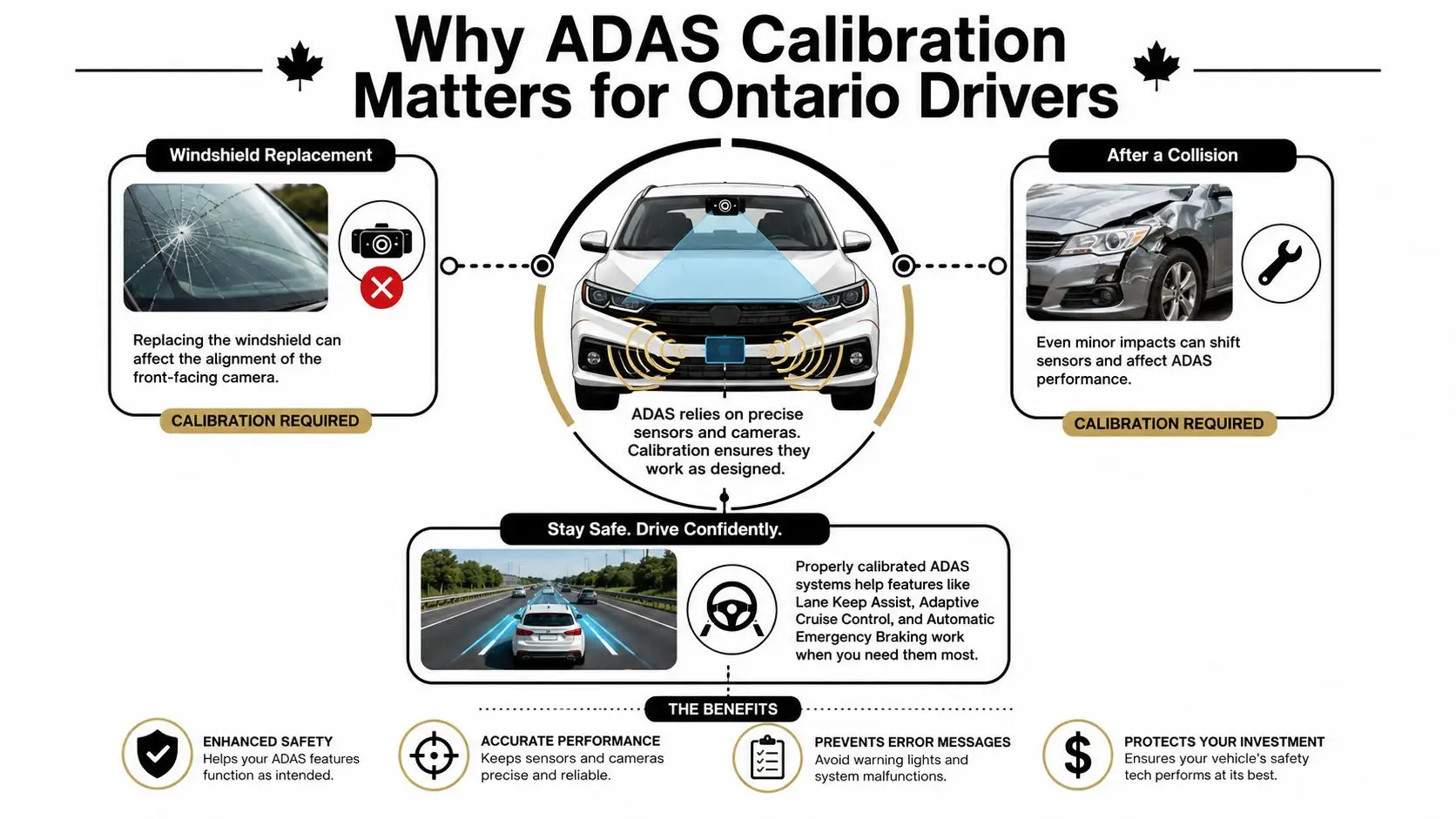
A Canadian collision-repair study found that 88% of required ADAS calibrations were missed on 100 repair estimates, highlighting why these procedures have become a measurable repair and billing item in Canada. The finding is discussed in Canadian ADAS calibration pricing guidance, and it shows why drivers should ask specifically about calibration instead of assuming the repair estimate includes it.
Practical rule: Ask which ADAS systems were checked, whether calibration was required by the vehicle-specific procedure, and what report confirms completion.
For a plain-language explanation of the process, review what ADAS calibration involves. The right question isn't, “How much is calibration?” It's, “What procedure does my vehicle require, and what will I receive when the work is finished?”
Understanding ADAS Calibration Methods
Calibration generally uses one of two approaches, although some vehicles require both. Static calibration takes place in a controlled service bay. Dynamic calibration uses a road test under the conditions specified for the vehicle. Think of static calibration as tuning a home speaker with a reference tone, then dynamic calibration as listening to that speaker at different volumes and distances to confirm it behaves properly in the world.
Static calibration in a controlled bay
A technician first checks the vehicle's condition and confirms that the bay, floor, tyre pressures, ride height, and steering position meet the procedure requirements. The vehicle is positioned in relation to a target board or measurement frame. The scan tool communicates with the relevant control modules while the camera or radar system reads the target.
The equipment gives the system a known reference. If a forward-facing camera sits behind the windscreen, the target helps the vehicle recognise its correct centreline and vertical angle. Radar calibration can use dedicated measurement equipment and vehicle-specific positioning. Surround-view cameras may need separate setup so the combined image is correctly aligned around the vehicle.
The technician then records the result and checks for diagnostic faults. A calibration that stops at “the warning light went away” isn't the same as a completed procedure with supporting scan information.
Dynamic calibration on the road
Dynamic calibration requires the vehicle to be driven while its sensors observe road features. The required road markings, traffic conditions, speed, weather, and route depend on the manufacturer's instructions. The system learns or confirms its operating reference while the technician monitors scan-tool data and warning messages.
Some vehicles require static setup before the road test. Others use a dynamic procedure alone, while still others need a combined workflow. That combination can extend the appointment because the technician must prepare the vehicle in the bay, complete the controlled checks, drive the required route, and verify the final result.
Industry guidance says calibration can take 30 minutes to several hours, depending on whether the procedure is static, dynamic, or combined. The same guidance notes that recalibration revenue can range from about $250 to over $600 per event. Those figures help explain why the labour time and bay requirements matter when a Whitby shop prepares a quote. See ADAS diagnostic services for context on the scanning and diagnostic side of the process.
A parking sensor tutorial, such as this DIY parking sensor calibration tutorial, can help you understand basic sensor concepts. It shouldn't be treated as a substitute for the manufacturer's full ADAS procedure, especially when forward cameras, radar, or collision-warning functions are involved.
Typical ADAS Calibration Cost Ranges in Canada
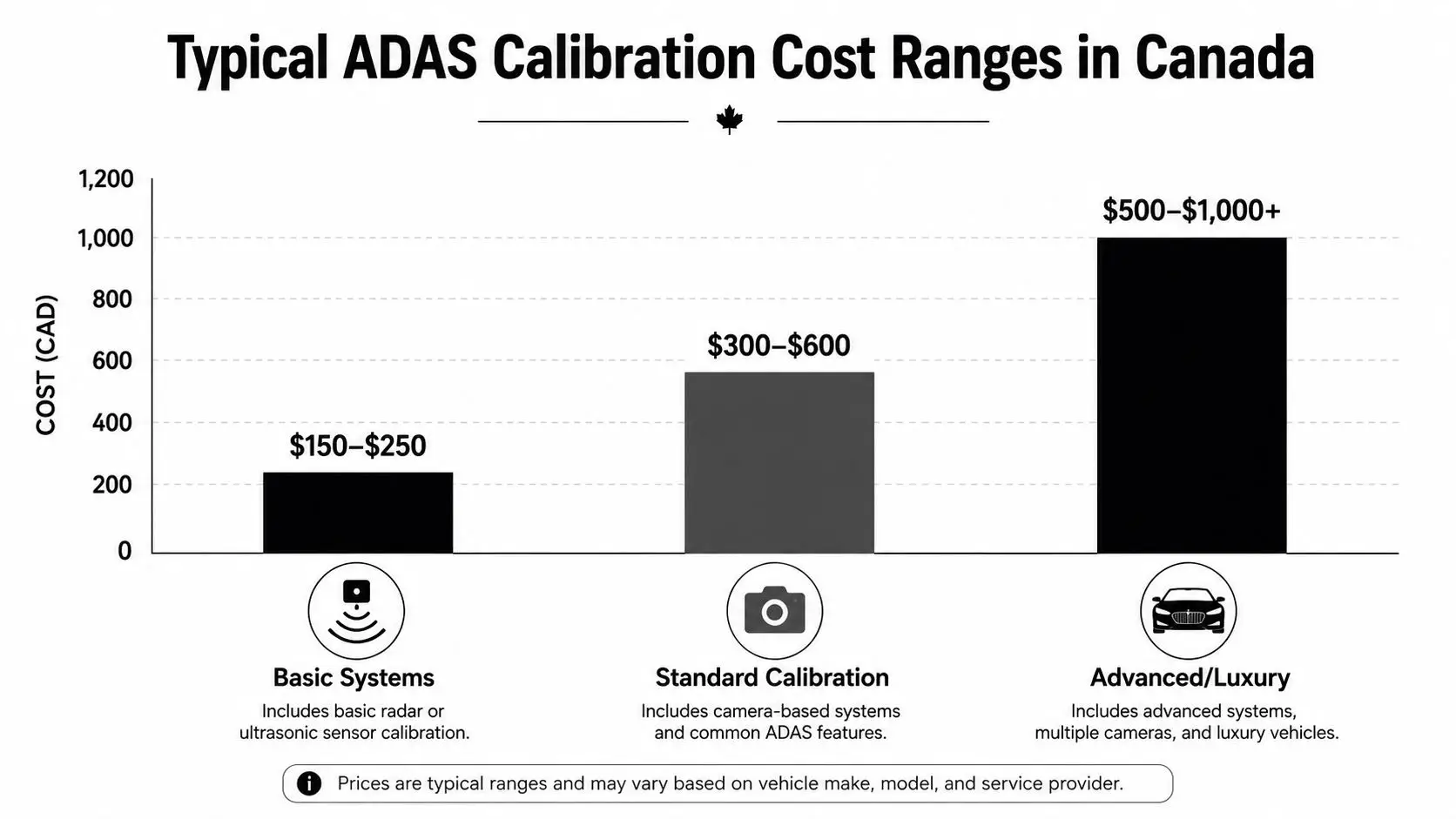
A Whitby driver may receive very different calibration quotes for vehicles that appear similar. The procedure follows the vehicle's installed systems and manufacturer requirements, not a universal part price. Ontario pricing guidance places basic calibrations around $150 to $250, advanced work around $300 to $600, and luxury or high-end systems at $500 to over $1,000. The same source reports an average fee of about $500 per vehicle. Review the Ontario ADAS calibration pricing information when comparing these ranges with an estimate.
| Calibration category | Common Ontario guide range |
|---|---|
| Basic systems | $150 to $250 |
| Advanced or complex work | $300 to $600 |
| Luxury or high-end systems | $500 to over $1,000 |
These ranges help with budgeting, but they cannot replace a vehicle-specific quote. A straightforward camera reset may fall near the lower end. A vehicle with several radar and camera systems can require target placement, scanning, road testing, and final verification. Like setting a camera on a tripod, even a small change in position can affect what the system detects. A combined procedure may also take more technician time than one static operation.
Calibration is now a more visible repair line. One industry source states that calibration appeared on more than 23% of repairable appraisals by 2025, up from 0.9% in 2017, while the average fee had risen to about $500 per repairable vehicle. These figures show why a calibration charge may appear after collision repair, windshield replacement, or sensor-related work.
For Whitby drivers, a quote near the lower range is a starting point, not a guaranteed final price. Ask whether it includes scanning, target setup, dynamic road testing, documentation, and any alignment or glass-related work.
Before booking an assessment, review ADAS calibration service information near Whitby to understand what the shop's process may involve.
Factors That Affect Your ADAS Calibration Cost
Two vehicles parked beside each other in a Whitby driveway can require very different calibration work. A family SUV with a windscreen camera may need one procedure after glass replacement, while a premium sedan with multiple cameras and radar sensors may require several checks and a longer verification process.
Vehicle platform and system complexity
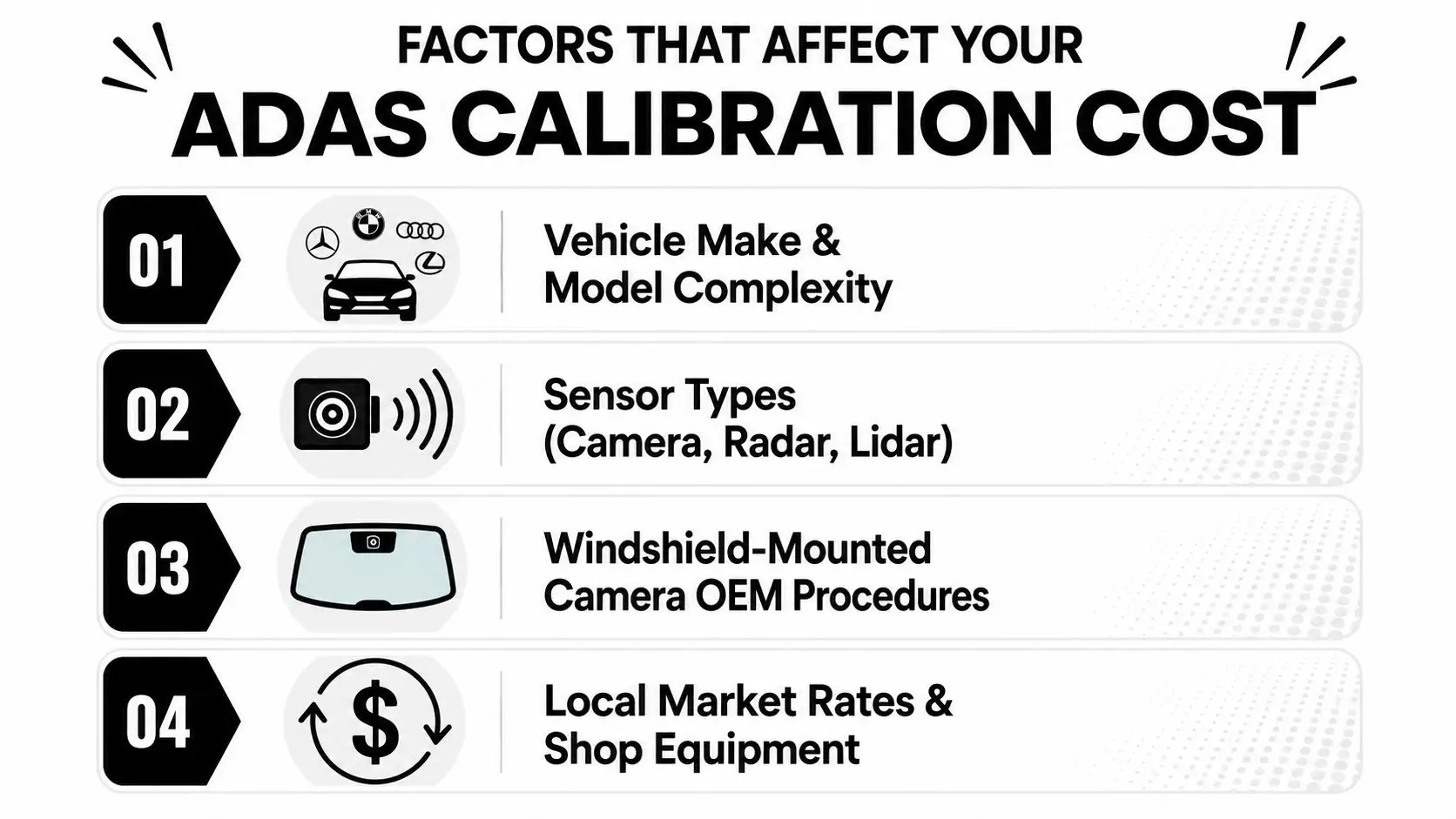
The year, make, model, trim, and VIN determine which systems are installed and which procedure applies. A vehicle may have a forward camera, front radar, rear blind-spot radar, parking sensors, or a surround-view camera system. More systems don't automatically mean every component needs calibration, but they do make the inspection and documentation more important.
A luxury vehicle can cost more because the procedure may involve additional equipment, targets, measurements, or technician time. An apparently minor bumper repair can also expose a sensor issue that wasn't visible during the initial estimate.
Sensor type and repair trigger
Camera-based systems often depend on the camera's exact relationship to the vehicle's centreline. Radar systems depend on correct mounting and alignment. Parking sensors and surround-view cameras have their own checks. The shop must identify which sensor was affected instead of applying a generic calibration package.
Windshield replacement deserves a separate question. For a windshield-mounted camera, calibration is required after replacement only when the procedure for that vehicle's year, make, model, and VIN mandates it, not automatically after every windshield job. This distinction is explained in Canadian OEM calibration guidance for windshield-mounted cameras.
Alignment, ride height, and shop capability
A wheel alignment or suspension change may affect the position the vehicle presents to its sensors. If the manufacturer procedure calls for alignment verification, that step can change the appointment scope. Ask whether alignment inspection is included or quoted separately.
The shop's equipment and training also influence the invoice. An independent facility may use vehicle-specific procedures and specialist equipment, while a dealer may handle certain procedures directly. Neither label guarantees that every shop can perform every calibration, so ask about the exact make and model rather than choosing only by shop type.
For collision-related work, collision repair and refinishing services may involve ADAS checks as part of a broader repair assessment. The final price should identify each included operation clearly.
Professional Calibration Versus DIY Approaches
DIY work can make sense for simple maintenance tasks, but ADAS calibration is different from adjusting a conventional mirror or replacing a fuse. The system may require a precise target position, a level service area, a compatible scan tool, a controlled road test, or a manufacturer-specific sequence. A generic aftermarket device may read faults without completing the required calibration.
A driver who pays a low upfront fee for an incomplete reset may later see recurring warning lights or discover that a system remains unavailable. The collision-repair guidance on ADAS calibration omissions and documentation risks warns that a missed alignment can create warning chains and failed insurance documentation.
What a DIY attempt may miss
A home garage usually lacks the controlled space and reference equipment needed for static calibration. Even if a scan tool clears a diagnostic message, clearing a code doesn't prove that the camera or radar now measures distance and position correctly.
Common problems include:
- Incorrect target placement: Small errors in distance, height, or centreline can affect the result.
- Incomplete system coverage: A tool may access one module while leaving another sensor unverified.
- No manufacturer procedure: The vehicle may require a specific sequence that generic instructions don't include.
- Weak documentation: An insurer or future repairer may need a calibration report, not a screenshot showing that a warning disappeared.
Why professional work can cost less over time
A qualified shop can identify the correct procedure from the vehicle information, inspect related systems, perform the calibration, complete the road test where required, and document the outcome. That process reduces the chance of returning for the same warning or discovering an incomplete repair during a later claim.
The key comparison isn't DIY price versus shop price. It's incomplete work versus verified work. Low upfront calibration prices can be false savings when the system isn't correctly reset, particularly on newer vehicles with several connected safety systems. Paying for a proper assessment is often the more sensible choice when a windshield camera, collision sensor, or lane-assistance system is involved.
Timeline Warranty and Insurance Considerations
A calibration appointment usually starts with information gathering, not target boards. The technician confirms the vehicle identification, reviews the repair history, scans the relevant modules, and checks whether the vehicle meets the manufacturer's conditions. If the vehicle needs alignment, glass work, suspension correction, or sensor mounting repairs first, calibration may need to wait until those steps are complete.
The actual workflow can include a controlled-bay setup, static calibration, a dynamic road test, or both. The procedure may take 30 minutes to several hours, depending on the required method, as outlined in the earlier industry calibration workflow guidance. Weather, road conditions, vehicle readiness, and the need for additional diagnosis can affect when the vehicle is ready for collection.
What to document
Ask the shop for paperwork that identifies:
- The vehicle identification information.
- The ADAS systems checked.
- The manufacturer procedure used.
- Whether static, dynamic, or combined calibration was completed.
- Pre-scan and post-scan results, where applicable.
- Any remaining fault codes or conditions that prevented completion.
Keep that documentation with your repair invoice. It can help explain the work to an insurer, another repair facility, or a future buyer. It also gives you something more useful than a verbal assurance that “the sensors were looked at.”
Insurance and warranty questions
In Ontario, ask your insurer or collision representative how the calibration line should appear on the claim before approving extra work. The repair estimate should separate calibration from unrelated labour and identify why the procedure was required. If the glass replacement or collision repair caused the trigger, the documentation should connect the repair to the calibration requirement without assuming that every vehicle follows the same rule.
Warranty coverage depends on the vehicle manufacturer, the repair performed, and the shop's terms. Ask what warranty applies to the calibration service and what happens if a warning returns. For help organising repair and claim communication, see car repair insurance support.
Questions to Ask Your Calibration Shop
A trustworthy quote should explain the work in language you can follow. You don't need to understand every scan-tool screen, but you should know which system requires attention, why the procedure applies, and what the shop will provide afterward.
Ask these questions before authorising the job:
- Which system requires calibration? Look for a specific answer, such as a forward camera, front radar, blind-spot sensor, or surround-view camera.
- What does my VIN procedure require? A careful shop should verify the vehicle-specific instructions instead of quoting a universal package.
- Can you perform static and dynamic calibration? The answer should reflect the procedure required for your vehicle, not a claim that one method is always enough.
- Does the quote include scanning and documentation? Ask whether you'll receive pre-scan or post-scan information and a calibration report.
- Is alignment or glass correction separate? Clarify whether wheel alignment, ride-height checks, windshield work, or sensor mounting repairs are included.
- What equipment and training support this vehicle? Ask whether the technician has the appropriate vehicle coverage and calibration equipment.
- What warranty applies? Get the terms in writing, including what happens if a warning returns after the repair.
Red flags include a flat price with no vehicle questions, a promise to clear warning lights without discussing calibration, or a refusal to provide completion documentation. A professional answer may include conditions and may reveal that more diagnosis is needed before anyone can provide a final price. That's more useful than false certainty.
How Carmedics Autowerks Supports Whitby Drivers
Carmedics Autowerks Inc in Whitby provides ADAS calibration support for cars and SUVs, including diagnostic scanning, static and dynamic calibration, and vehicle-specific procedure checks. The service can help determine whether calibration is required after windshield work, collision repair, suspension changes, alignment work, or sensor-related repairs.
For a local family SUV, a proactive inspection can identify a calibration requirement before the vehicle returns to daily Durham Region driving. That approach can reduce the risk of completing the visible repair while leaving a camera or radar system unresolved. Ask for a written explanation of the required procedure, the included work, and the supporting documentation before approval.
Carmedics Autowerks Inc offers ADAS inspections, pre-scan and post-scan support, static calibration, dynamic calibration, and vehicle-specific procedure checks for Whitby drivers. Visit Carmedics Autowerks Inc to arrange an assessment online or contact the shop by phone before your windshield, collision, alignment, or sensor repair is closed out.