


Yes, PPF does protect against rock chips by acting as a sacrificial urethane barrier that absorbs gravel impacts before they reach the paint. It isn't invincible, though, and whether it's worth installing depends on your driving conditions, coverage needs, and how often you repair chipped paint.
You know the sound. You're travelling along Highway 401 or the 412, traffic is moving steadily, and a small stone kicked up by another vehicle strikes the hood with a sharp ping. On a new car, that single mark can feel disproportionate to its size, especially when the factory paint was one of the reasons you chose the vehicle in the first place.
For Whitby and Durham Region drivers, highway exposure, construction routes, winter salt, slush, and loose road debris make front-end paint damage a recurring concern. PPF can reduce that risk, but the sensible question isn't only whether it works. You also need to know how it works, what it won't stop, and whether the protection makes financial sense for your driving routine.
The Highway Gravel Problem Every Whitby Driver Faces
A driver commuting between Whitby and the western GTA may spend much of the week behind transport trucks, through construction zones, or on roads carrying winter debris. The most vulnerable areas are usually the front bumper, leading edge of the hood, fenders, mirrors, and sometimes the A-pillars. These panels face the debris first, so they collect the familiar peppering of small paint chips.
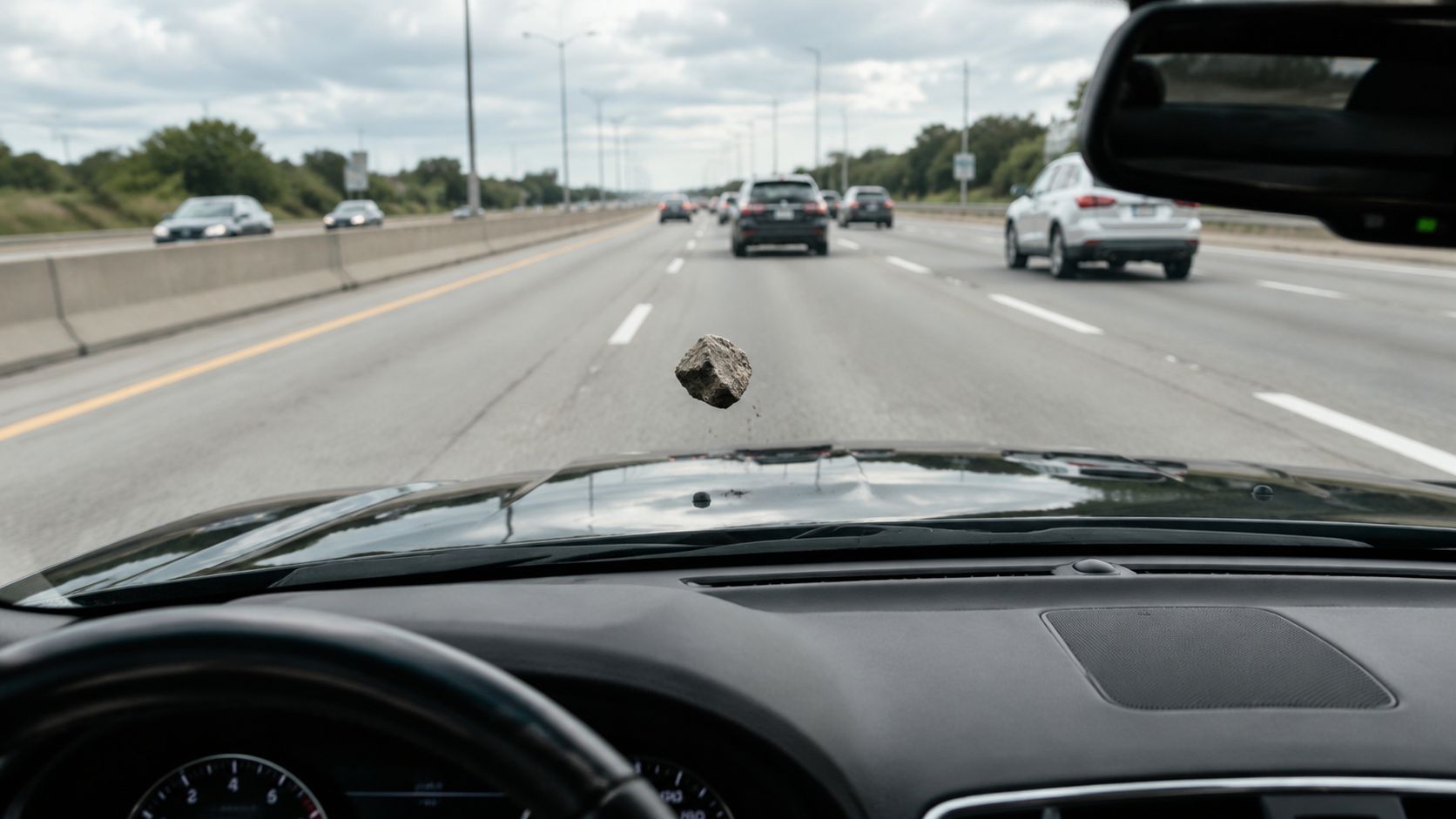
Yes, paint protection film protects against typical rock-chip damage. It works as a clear polyurethane film placed over the painted surface, creating a physical layer between the road debris and the factory clearcoat. 3M Canada describes its Scotchgard Paint Protection Film Pro Series 200 as designed to protect against stone chips, scratches, bug damage, road tar stains, automotive fluid stains, and harsh UV weathering.
That wording matters. PPF isn't a wax, sealant, or cosmetic gloss product. It's an impact-absorbing film, so the material takes part of the force that would otherwise concentrate directly on the clearcoat. The film can prevent a small stone from creating a chip, or reduce the severity of damage when the impact is within the film's intended capability.
Practical rule: PPF protects the panels you cover, not the entire vehicle. A protected hood doesn't shield an uncovered roof, door, or windshield.
The result depends on the film, the installation, the coverage pattern, and the type of debris involved. Typical highway gravel is the situation where PPF earns its keep. A very sharp object, a severe impact, or a large piece of winter debris can still break through.
How Paint Protection Film Absorbs Impact
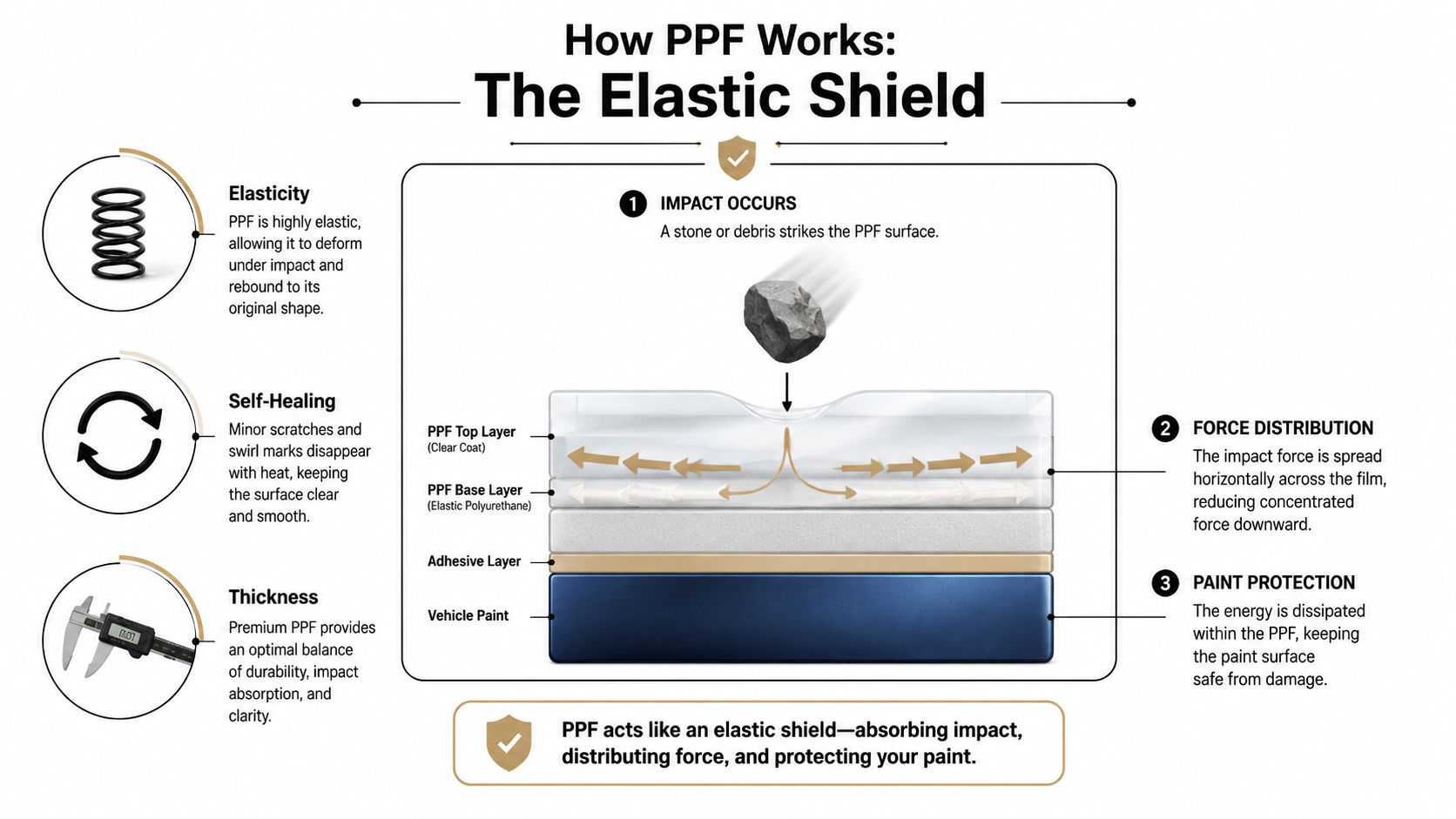
Think of PPF as a flexible shield rather than a hard shell. A stone striking unprotected paint delivers its force to a very small point. That concentrated load can fracture the clearcoat and expose the colour coat or primer underneath.
PPF changes the way that force reaches the panel. Independent Canadian and Québec-focused guidance describes PPF as a thermoplastic urethane layer measuring 6 to 8 mils, or about 150 to 250 microns. Canadian guidance on 3M paint protection film explains that this layer absorbs gravel impacts and helps prevent chip formation, while also acknowledging that severe impacts can puncture it.
The material does the work
The film's urethane structure has elasticity. When a small stone hits, the film can flex and spread the impact across a broader area instead of allowing the force to act on one tiny spot of clearcoat. After the impact, the material can recover much of its original shape.
That is different from a ceramic coating. Ceramic coatings can improve gloss, chemical resistance, and surface slickness, but they aren't designed to absorb the mechanical energy of flying gravel. Wax and paint sealants provide useful surface protection against contamination and weathering, yet they don't create a comparable physical impact layer.
Modern films can also reduce the appearance of minor surface marks through heat-activated self-healing. That feature relates mainly to light scuffs and swirl marks, not a stone that has punctured the film or reached the paint.
Why Ontario debris suits PPF
Ontario roads expose vehicles to the kind of gravel and road debris this material is intended to handle. Winter driving adds slush, salt, and projectiles that can strike the lower front end and leading edges.
The film doesn't make paint impact-proof. It gives the clearcoat a thicker, elastic buffer that can delay crack formation and prevent direct gouging from many ordinary road impacts.
Four Factors That Determine Real-World Protection
Two vehicles can receive PPF and produce very different results. The difference usually comes from the product selected, the area covered, and how carefully the installer prepares and finishes the panels.
1. Film quality and construction
A reputable product uses urethane engineered to flex and absorb impact. 3M's Canadian product information positions its film as protection for stone chips, scratches, road tar, fluids, and harsh weathering. That is a more appropriate specification for an Ontario daily driver than a thin decorative film intended mainly to change appearance.
Film quality also affects clarity, adhesive behaviour, edge finishing, and long-term appearance. A low-cost installation may look attractive at first but disappoint if the film lifts, yellows, traps contamination, or fails to handle regular winter exposure.
2. Coverage area
Partial coverage can be sensible when the budget is limited, but it leaves predictable areas exposed. A bumper and the front portion of the hood protect the primary impact zones, while a broader package can include fenders, mirrors, and other forward-facing panels.
| Coverage Level | Areas Protected | Best For | Protection Rating |
|---|---|---|---|
| Partial front | Front bumper and selected hood area | Local drivers seeking targeted protection | Focused |
| Extended front | Bumper, hood, front fenders, and mirrors | Frequent highway commuters | Broad |
| Custom high-impact package | Selected vulnerable panels based on vehicle use | Enthusiasts, specialty vehicles, and mixed routes | Tailored |
A large pickup, performance car, and compact commuter don't necessarily need the same pattern. The correct choice follows the vehicle's shape and the owner's routes.
3. Installation quality
Clean preparation, accurate pattern alignment, consistent adhesion, and careful trimming determine whether the film becomes a durable part of the vehicle. Contamination under the film can affect the finish, while poor alignment can leave vulnerable paint exposed.
Professional installation is especially useful around sensors, body contours, grilles, headlamp edges, and complex bumper shapes. The installer needs to work with the panel rather than forcing a flat piece of material over a three-dimensional surface.
4. Edge treatment
Edges collect dirt when they're left exposed or poorly sealed. Wrapped edges can create a cleaner finish and reduce the chance of lifting caused by repeated washing, road grime, and winter contamination.
Installer question: Ask which panels are covered, where the edges finish, how exposed seams are handled, and what the warranty covers. A vague answer usually means the package hasn't been clearly defined.
What PPF Cannot Protect Against
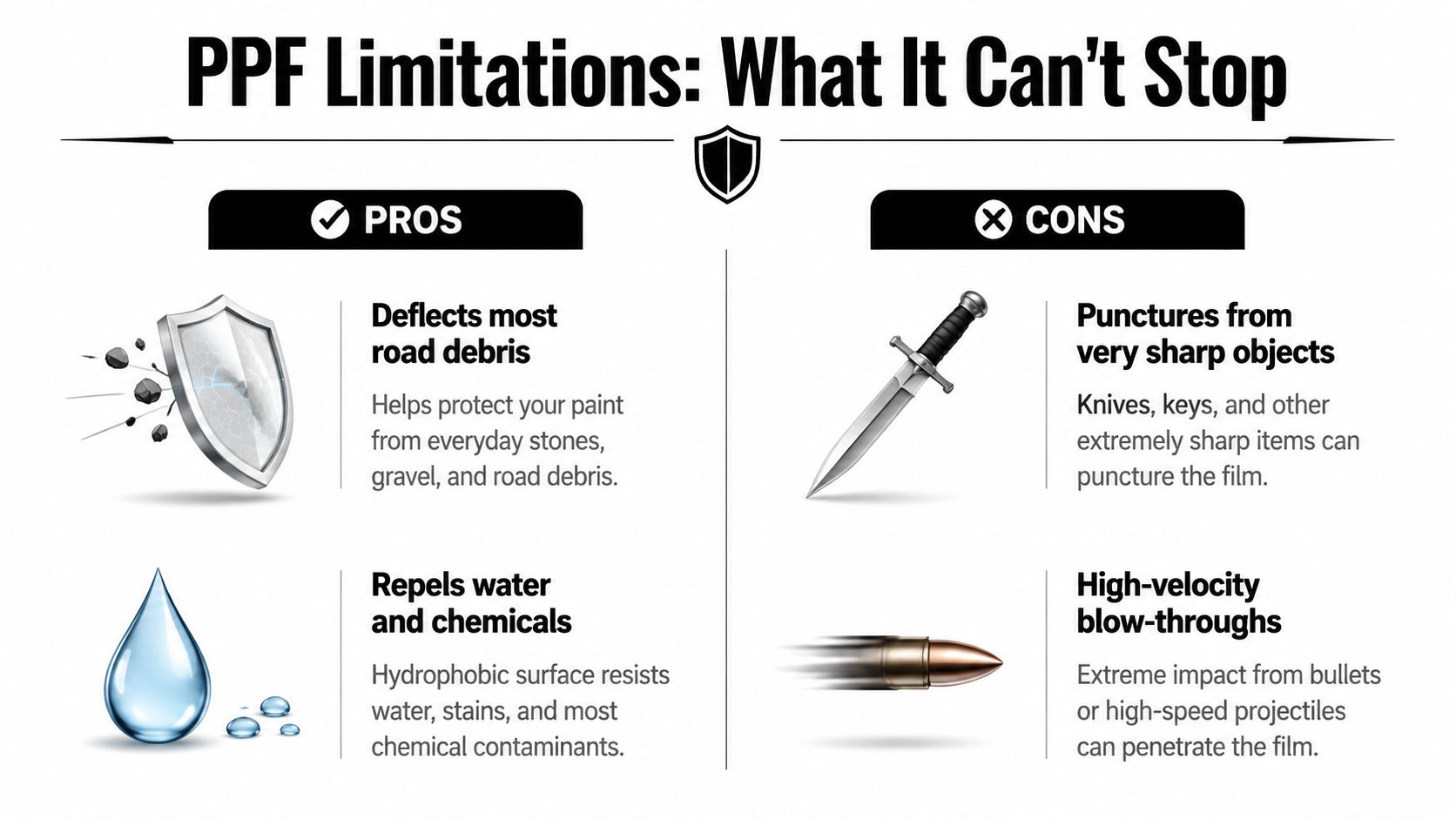
PPF is a sacrificial barrier, not a force field. Very sharp or high-speed projectiles can puncture the film and create a blow-through that reaches the paint underneath. The Canadian guidance cited earlier specifically notes this limitation, which is why a professional should describe PPF as risk reduction rather than a guarantee of zero damage.
A sharp fragment can behave differently from rounded highway gravel. A heavy object thrown by a truck can also exceed the film's ability to spread and absorb impact. Large chunks of ice or packed snow during an Ontario winter may damage the film, the paint, or both.
Protection has boundaries
PPF won't prevent every type of exterior damage:
- Door dings: A parking-lot impact can dent the panel beneath the film.
- Poor washing: Abrasive mitts, dirty towels, and aggressive contact can mark the film or its edges.
- Severe punctures: A sharp object can pass through the film and damage the underlying paint.
- Uncovered panels: Film on the hood doesn't protect paint that wasn't included in the installation.
- Neglected contamination: Salt, tar, and grime can make edges look untidy if the vehicle isn't maintained.
Premium films are commonly warranted for up to 10 years, as noted in Canadian PPF guidance, but a warranty doesn't mean the film will look untouched forever. High-impact zones may show wear sooner than protected areas that see less debris. A damaged section can sometimes receive a spot repair, while extensive puncture, lifting, or contamination may justify removing and replacing the panel's film.
The honest purchase is this: you're buying a replaceable protective layer that takes abuse so the original paint has a better chance of staying intact.
Is PPF Worth the Investment for Ontario Drivers
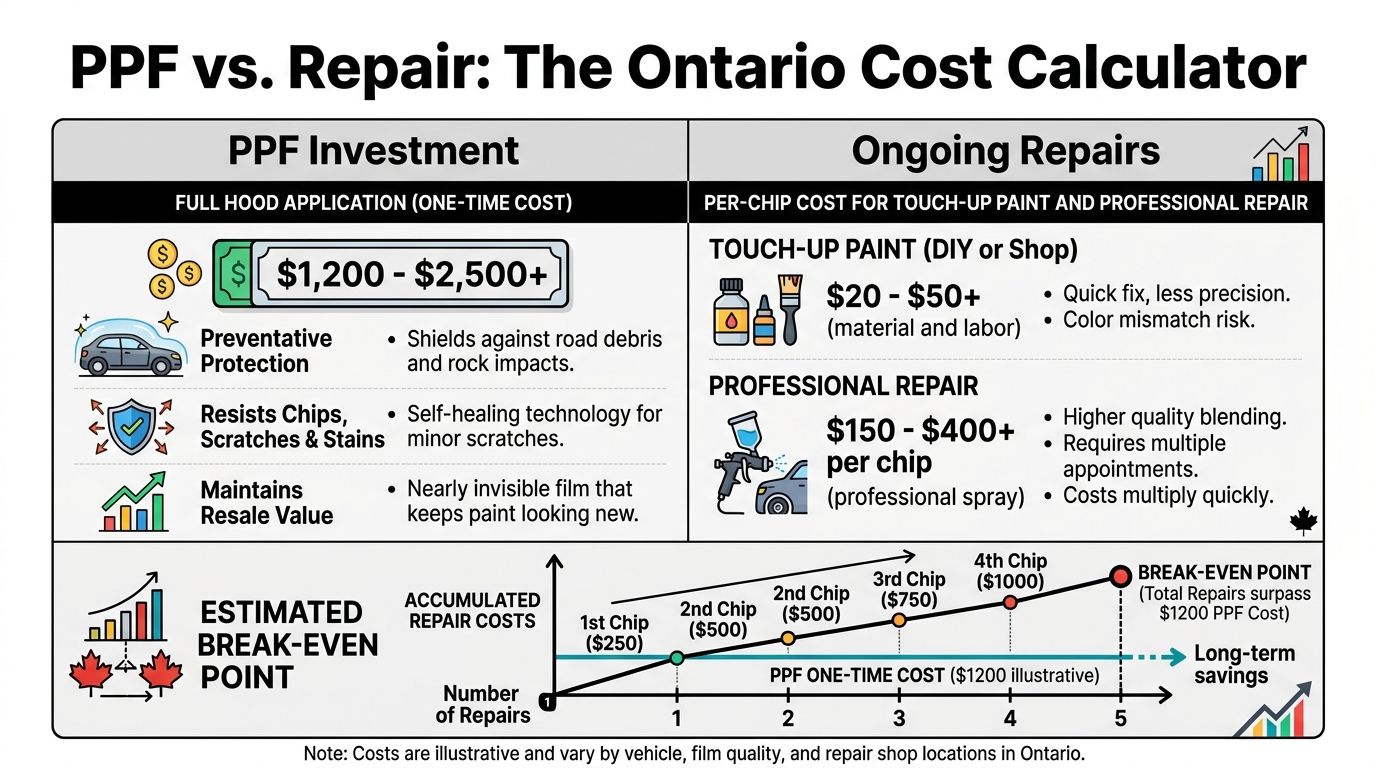
The financial case depends on exposure. Canadian touch-up repairs can cost $10 to $40 per chip in some markets, according to Canadian guidance on whether PPF is worth the cost. That range makes one point clear: there isn't a universal break-even answer without knowing the price of the film package and how often your vehicle gets chipped.
A Whitby driver who uses the 401 regularly faces a different risk profile from someone who stays mostly on local suburban roads. A vehicle that spends frequent time behind trucks or on gravel-exposed routes will use the protective film more aggressively than a lightly driven city car.
Compare your driving pattern
| Driver profile | Likely exposure | Sensible starting point |
|---|---|---|
| Daily highway commuter | Regular gravel and truck-debris exposure | Prioritise bumper, hood, and mirrors |
| Weekend performance-car owner | Less frequent use, high concern for finish | Target high-impact zones |
| Fleet operator | Repeated use by multiple drivers | Standardise coverage and inspection |
| Casual local driver | Lower highway and gravel exposure | Compare targeted film with prompt touch-up |
For a simple personal calculation, begin with the price of the proposed PPF package. Then consider the number of paint chips you realistically repair, or would be willing to repair, over the vehicle ownership period. Divide the film price by the local per-chip repair cost to estimate how many repairs would equal the installation price.
That calculation has limits. It doesn't assign a value to preserving original factory paint, maintaining a consistent finish, avoiding visible touch-up marks, or reducing the hassle of repeated repairs. It also shouldn't assume every chip would be repaired professionally. Some owners live with small marks, while others want the front end to remain presentable at all times.
The right question isn't whether PPF pays for itself for every driver. It's whether your routes create enough repeated exposure to justify a replaceable barrier.
A new-car owner planning regular highway travel may value the protection even when the arithmetic is close. A local driver with little gravel exposure may reasonably choose selective coverage or touch-up repair instead.
Maintaining Your PPF Through Canadian Seasons
Good maintenance protects both the film and the adhesive beneath it. Start with a clean rinse to remove loose grit, then use a pH-neutral car wash soap and a clean wash mitt. Work from the upper panels downward so the dirtiest material doesn't get dragged across the film.
Avoid directing a pressure washer at the film's edges. High-pressure water can work beneath a lifting edge and enlarge the affected area. Automatic washes with stiff brushes can also create unnecessary abrasion, especially where the film has exposed seams or corners.
Seasonal care that prevents avoidable problems
- Spring: Rinse away winter salt and inspect bumper, hood, mirror, and fender edges for lifting.
- Summer: Remove bugs and tar promptly instead of allowing contamination to sit on the film.
- Autumn: Clean leaves, road film, and grime from panel edges before winter conditions return.
- Winter: Remove ice gently and avoid picking at frozen material with a sharp scraper on the film.
Minor swirl marks may improve when the film receives gentle heat, depending on the product. That doesn't repair a puncture. If a stone creates a visible hole or the film lifts around damage, have the area assessed rather than pushing it flat or applying household adhesive.
A small, isolated defect may be suitable for a local repair. If the panel has widespread contamination, extensive lifting, or a larger damaged section, replacing the film on that panel usually produces a cleaner result. Keep service documentation and follow the installer's cleaning recommendations, particularly during the first period after installation while the adhesive settles.
Choosing the Right PPF Solution for Your Vehicle
Start with your route, not the package name. A new-car owner commuting on the 401 should prioritise the bumper, hood, fenders, and mirrors. A weekend enthusiast may prefer targeted high-impact coverage, while a fleet manager should focus on consistent panel selection, inspection routines, and straightforward replacement planning.
Ask the installer about film construction, coverage boundaries, edge wrapping, preparation, warranty terms, and damage-repair options. A reputable shop should explain what the film can handle and where it can fail, rather than promising perfect protection.
Carmedics Autowerks Inc offers PPF installation for Whitby drivers, including coverage intended to protect high-impact painted areas from rock chips, road debris, and scratches. Visit Carmedics Autowerks Inc to discuss your vehicle, driving routes, and whether targeted or broader protection fits your needs.