

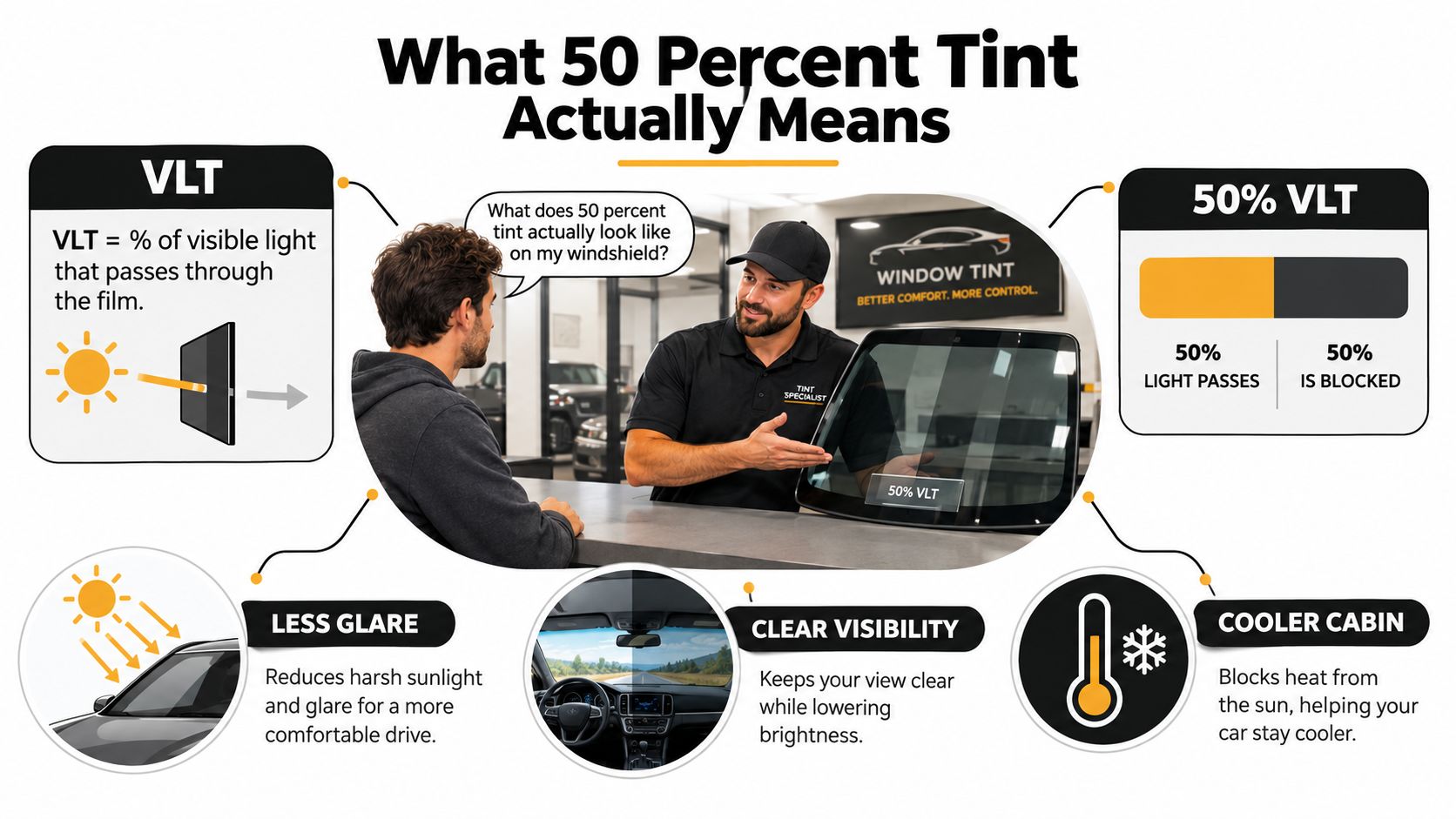
A 50% windshield tint is not legal on the main windshield area in Ontario. The 50% refers to visible light transmission, or VLT, meaning the film allows half of visible light through and blocks the other half.
A Whitby driver often asks about it after seeing a lightly shaded windshield on another car, or after finding a roll of “50 tint” online. The attraction makes sense. A darker windshield can soften glare and change the car's appearance, but Ontario rules and real-world visibility make this a poor choice for the forward-facing glass.
The better question isn't whether 50% looks good. It's whether the film, the factory glass, the vehicle's sensors and Ontario's rules all work together.
What 50 Percent Tint Actually Means
At a Whitby tint counter, the question usually sounds simple: “What does 50 percent tint look like on my windshield?” The answer starts with VLT, or Visible Light Transmission. VLT describes the percentage of visible light that passes through the glass and film together.
A 50% VLT film allows half the visible light through and blocks the other half. It isn't the same as a film that blocks 50% of heat, and it doesn't tell you how much infrared or ultraviolet energy the product rejects. Lower VLT numbers mean darker film. A 20% film is darker than 50%, while a 70% film looks much closer to clear glass.
Factory glass already has its own light transmission. That matters because the final result comes from the glass and film as a combined stack, not from the film label alone. A film advertised as 50% may therefore produce a darker finished reading when installed over tinted or shaded factory glass.
Windshield film isn't the same as side-window film
Windshield applications usually call for a very light ceramic or nano-ceramic film. Side and rear windows can use dyed, carbon or other darker films, depending on the vehicle and the legal position of the glass.
A 50% film can look subtle from outside in bright daylight, but subtle appearance doesn't make it optically clear or legal on an Ontario windshield. The driver still receives less light through the forward view, especially at dusk, in rain or on an unlit road.
Practical rule: Choose windshield film for visibility first, then evaluate heat control and appearance.
VLT is only one specification. You should also ask about infrared rejection, UV blocking and TSER, or Total Solar Energy Rejection. Those measures affect cabin comfort and solar protection independently of how dark the film looks. Carmedics Autowerks' guide to automotive window tint percentages is useful when comparing the visual difference between lighter and darker films.
How 50 Percent VLT Affects Visibility and Heat
A 50% film changes the optical balance of a windshield in a way drivers notice most when the available light is already limited. During a bright summer afternoon in Whitby, the reduction can soften harsh sunlight, dashboard reflections and some headlight glare. On Highway 401, that may make a low afternoon sun feel less aggressive through the glass.
The same reduction becomes a disadvantage after sunset. A darker windshield dims the road scene, and low-contrast objects become harder to distinguish in rain, shadow or poor lighting. Dark clothing, cyclists and pedestrians can blend more easily into the background. The issue isn't only whether you can see a road sign. It's whether you can identify a developing hazard early enough to respond smoothly.
Daylight comfort versus night-time clarity
The practical trade-off looks like this:
| Metric | Clear Glass (100% VLT) | 50% VLT Film |
|---|---|---|
| Visible light | Passes through at the highest level | Transmitted light is reduced by half |
| Daytime glare | More direct sunlight and reflections | Softer glare and a dimmer view |
| Dusk and night | Preserves more scene brightness | Reduces luminance and can lower contrast |
| Rain and low contrast | Gives the eyes more available light | Makes dark objects more difficult to separate |
| Heat strategy | Relies on the glass and any factory treatment | Can improve comfort without relying only on darkness |
The heat benefit depends on the film construction, not just the VLT rating. A darker film may reduce some solar load, but a quality clear ceramic product can target infrared energy while keeping the windshield visually light. That's why the benefits of automotive window tinting should be assessed separately from the darkness percentage.
A 50% windshield film can offer meaningful glare and thermal comfort in daylight, but it also reduces transmitted visible light in conditions where your eyes need every available detail. For an Ontario daily driver, that combination rarely justifies using 50% across the main windshield.
Ontario Windshield and Front Window Rules
Ontario customers should separate the glass into three areas: the main windshield, the front side windows and the rear glass. The rules aren't based on how light or tasteful the film appears from outside.
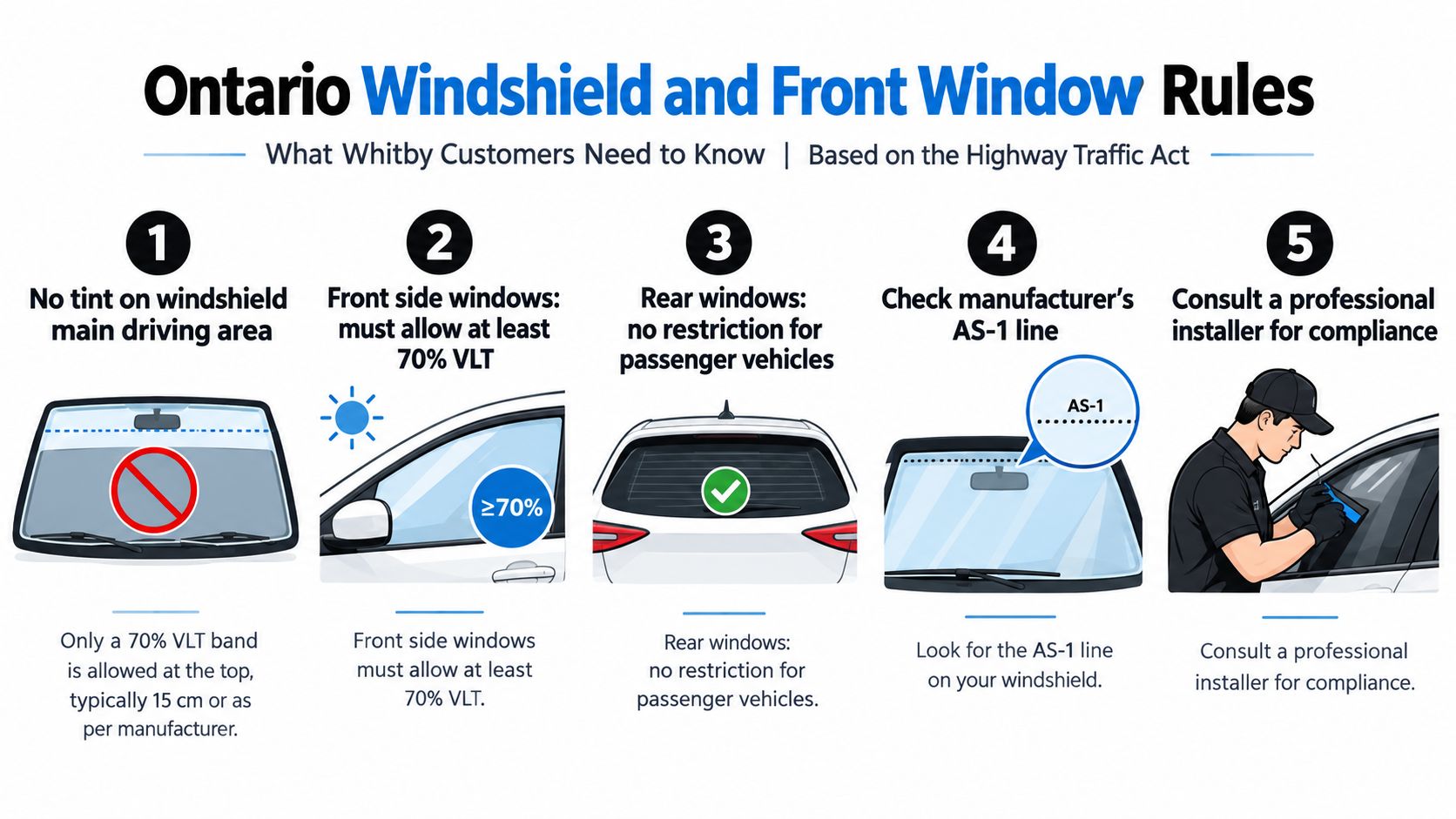
The main driving area of the windshield cannot receive aftermarket darkening film. Ontario summaries identify a narrow top sun strip as the common exception, limited to the upper 75 mm, or about 3 inches, measured from the top edge or the AS-1 line. That strip must stay out of the driver's forward sightline.
Check each window position separately
For the driver and front passenger windows, Ontario's commonly cited threshold is at least 70% VLT, measured with the factory glass and film together. That means a film labelled 70% may not automatically produce a compliant finished reading if the original glass already reduces light. An installer may recommend a very light film, sometimes in the 80% to 90% range, after considering the existing glass.
Ontario gives passenger vehicles more flexibility at the back. Rear side windows, back windows and the rear windshield can generally be tinted to any darkness, subject to the vehicle's equipment and safe operation. That flexibility does not extend forward to the main windshield or front side glass.
Whitby and Durham Region drivers follow provincial requirements, not a separate municipal tint standard. Non-compliant film can create enforcement problems, lead to a failed safety certification inspection, and require removal before the vehicle can be brought into compliance. The exact outcome depends on the circumstances, but removing an unsuitable film is always more expensive and inconvenient than selecting the correct glass position at the start.
Use Ontario's legal window tint percentage guide as a starting point, then have the finished glass checked rather than relying only on the roll label.
Comparing 50 Percent Tint to Other VLT Levels
VLT becomes easier to understand when you place common options beside one another. The lower the number, the less visible light reaches the cabin. That doesn't automatically make a film better or worse, because the correct level depends on the glass position and the driver's priorities.
| VLT Level | Light Transmitted | Typical Use | Ontario Legal on Windshield? | Ontario Legal on Front Side Windows? |
|---|---|---|---|---|
| 35% | Just over one-third of visible light | Darker rear side glass and rear glass | No on the main windshield | Generally too dark |
| 50% | Half of visible light | Light rear glass or applications permitted by local rules elsewhere | No on the main windshield | Generally below the required threshold |
| 70% | Seven-tenths of visible light | Light front side-window film, subject to combined-glass measurement | Not for the main windshield | Common legal target when the finished glass meets the rule |
| 80% | Four-fifths of visible light | Near-clear front glass or heat-control applications | Darkening film still isn't permitted on the main windshield | May suit some front windows, subject to final measurement |
The 35% option is popular with drivers who want a darker appearance on rear doors and back glass, where Ontario allows greater flexibility. 70% is the practical reference point for front side windows, but the final result must account for the factory glass. An 80% product looks close to clear and can suit drivers who want light transmission with modest visual change.
A 50% film sits in the middle of the darkness spectrum, but that doesn't give it a legal path on the Ontario windshield. A film can look lighter than a privacy tint and still reduce forward visibility enough to be unsuitable for the main driving area.
For a Whitby vehicle, the sensible layout is usually a legal sun strip at the top, a clear heat-control solution where permitted, and carefully measured light film on the front side windows.
Installation Considerations on Modern Vehicles
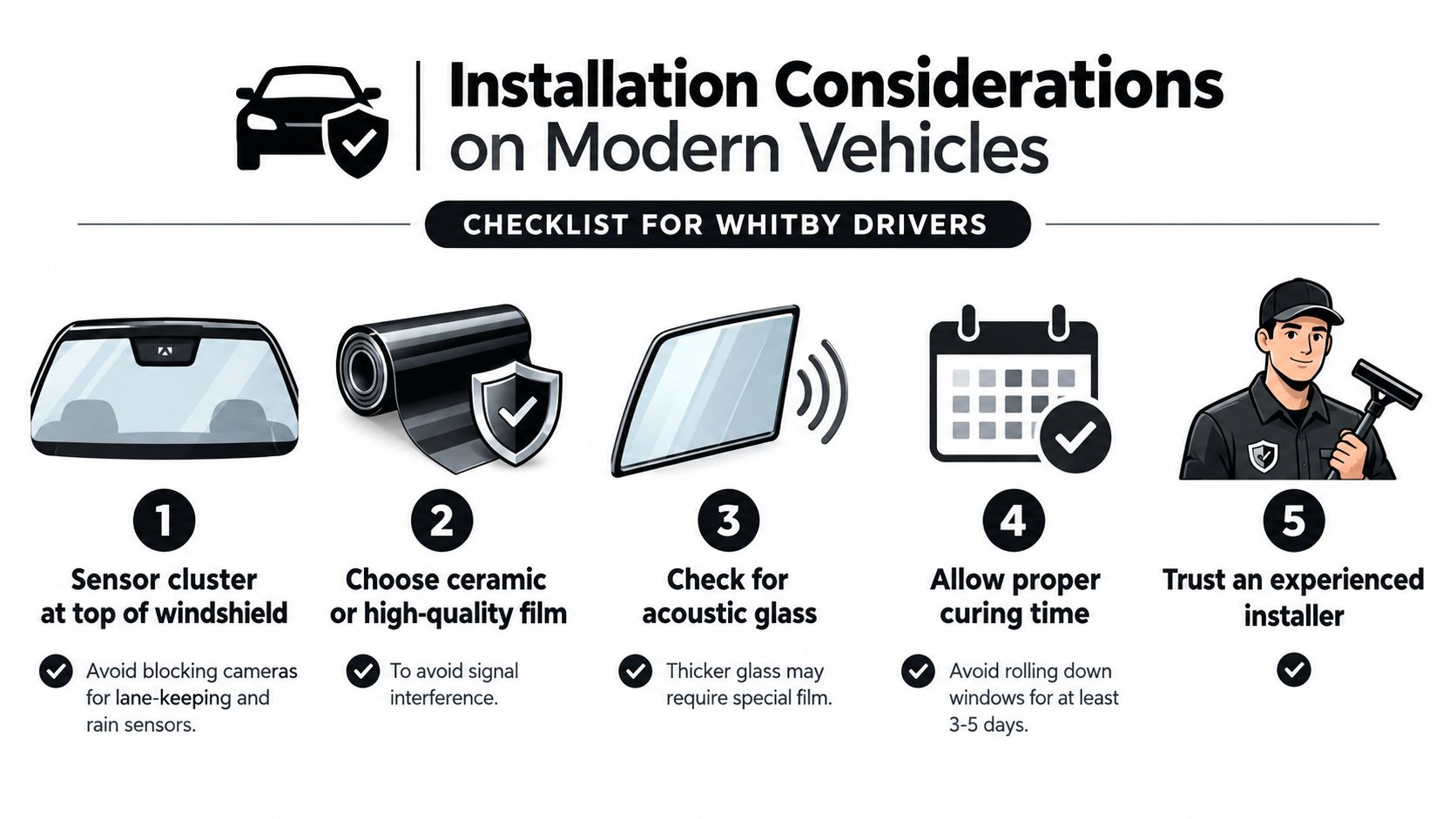
Modern windshields are more than curved panes of glass. Many have a sensor cluster near the top that houses rain sensors, light sensors and forward-facing cameras for driver-assistance systems. A film installer must identify those areas before cutting, then keep the material from covering a camera or sensor zone in a way that changes its view.
Lane-keeping and forward-collision systems depend on a clear, predictable image. A poor cut, a visible edge across the camera's field of view or adhesive distortion near the sensor can create concerns that have nothing to do with the film's shade.
Five details that deserve attention
Sensor mapping comes first. The installer should identify the camera housing, rain sensor and any head-up display area before preparing the film. The pattern must follow the vehicle's actual glass and equipment.
Defroster elements need room to work. Heated windshield areas and delicate grid lines require controlled application. Film should not be forced across components in a way that creates trapped moisture, lifting or visible distortion.
Glass construction affects product selection. Acoustic laminates and heated glass can call for a low-metal or ceramic film. The aim is to avoid unwanted interference while keeping the optical finish clean.
PPF needs a compatibility check. Ceramic window tint can sometimes sit over paint protection film near adjacent trim or glass edges, but the PPF manufacturer's guidance should be confirmed before combining products.
A plotter-cut pattern is preferable. A current vehicle database helps the installer produce a pattern for the exact make, model and glass shape. Hand-cutting directly on the vehicle can introduce avoidable risks to seals, trim and the glass surface.
Glass preparation matters just as much as film selection. Clean tools, controlled moisture and careful edge work help prevent contamination under the film. For broader expert glass maintenance advice, it's useful to review guidance on keeping glass clean without scratching or leaving residue.
If the vehicle has cameras or radar-linked driver assistance, tint work should be planned alongside ADAS calibration information. The installer should never assume that every windshield has the same sensor layout.
Cost Expectations for Window Tinting in Whitby
A reputable Whitby quote should be based on the vehicle, the glass positions and the film specification, not only on the phrase “50% tint.” Pricing in Whitby and Durham Region generally follows the Ontario market, but the final amount can vary considerably between a basic two-door car and a larger vehicle with more glass.
A full-vehicle installation on a typical sedan usually costs more than a basic coupe because the shop handles more windows and more door glass. A panoramic roof, strongly curved rear glass, quarter windows or frameless doors can add preparation and installation time.
What changes the quote
Film construction: Dyed film is usually the entry-level choice, while carbon, ceramic and nano-ceramic products sit at higher price points because of their construction and heat-control performance.
Vehicle shape: Large SUVs, panoramic roofs and difficult curves require more material handling and careful shrinking. Frameless doors also need precise edge placement so the film doesn't catch when the glass moves.
Scope of work: Tinting only the rear doors and back glass costs less than a full package. A legal sun strip or a clear windshield film is a separate glass application and should appear clearly on the quote.
Existing film: Old tint may need removal before new film is installed. Stacking fresh film over deteriorated material can create bubbling, optical distortion and edge problems.
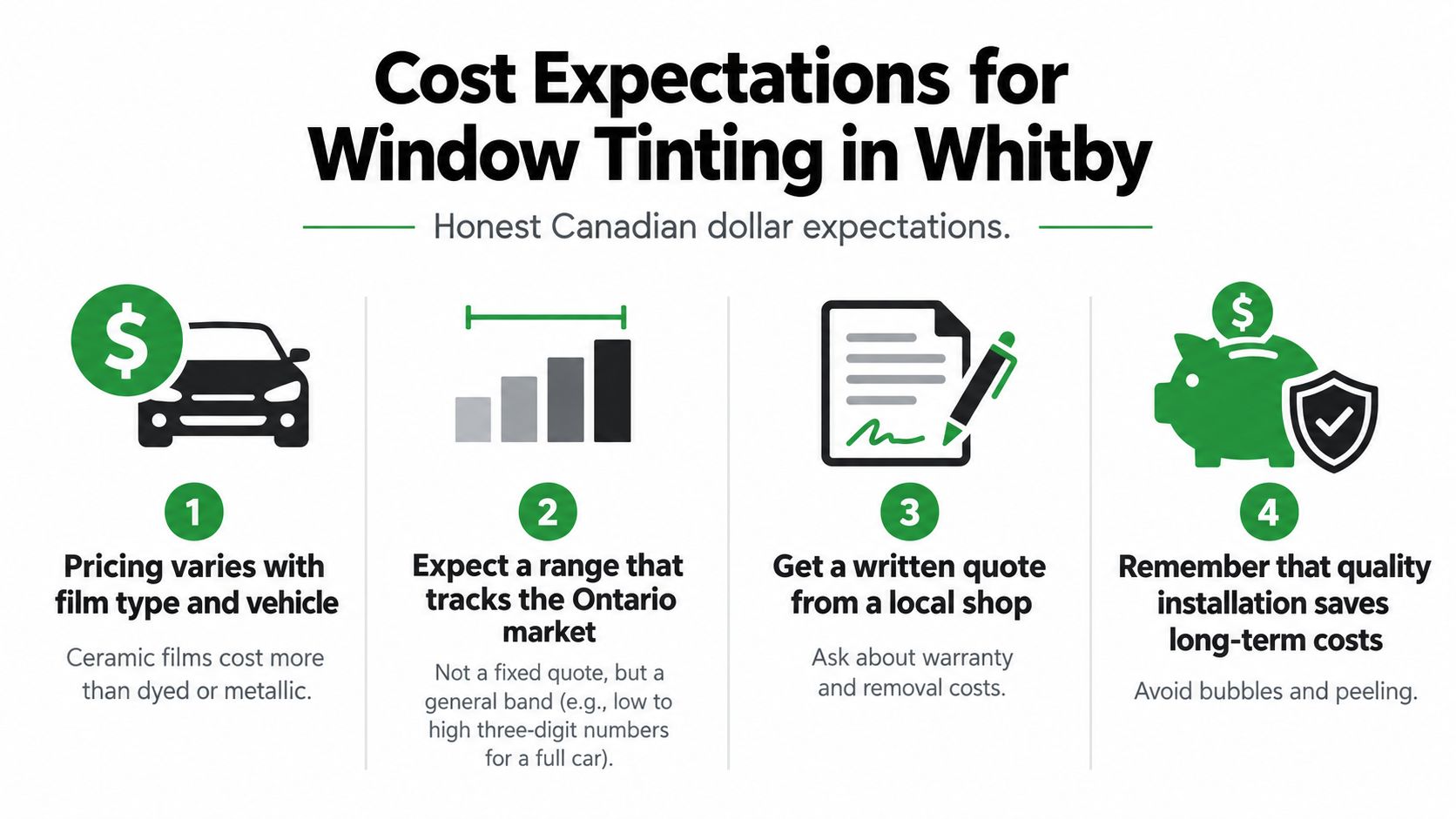
Ceramic film costs more than basic dyed film, but it can provide stronger heat control without making the glass noticeably darker. That can be a better fit for an Ontario commuter who wants a comfortable cabin without sacrificing forward visibility.
Ask for the film's exact name, the VLT intended for each window, the labour coverage and the warranty terms. Carmedics Autowerks' window tinting cost guide can help you prepare questions before requesting a written quote. The cheapest estimate may reflect economy film, hand-cutting or limited labour coverage, so compare the installation method and warranty rather than the headline price alone.
Common Scenarios and Mistakes Whitby Drivers Make
A customer once arrives with a roll of 50% film purchased online and expects a quick windshield installation. The label sounds light, but the main windshield area still isn't an approved place for darkening film in Ontario. The practical alternative is a properly measured top sun strip, or a clear film selected for heat management where the application is permitted.
Another driver uses a vehicle for ride-share work and assumes that any film is acceptable because the car still feels easy to drive in daylight. During a Ministry inspection, the glass is assessed as part of the vehicle's overall condition, and the driver discovers that appearance isn't the same as compliance. The safer approach is to confirm the finished VLT on the front side windows and keep dark film to rear positions where Ontario permits it.
Three checks that prevent expensive corrections
An SUV owner may tint only the upper windshield strip, then match the look with a dark film on the front doors. The result appears uniform from outside, but the front side windows still need to meet the 70% VLT requirement, measured with the factory glass and film together. A very light front-door film, checked after installation, avoids that mismatch between appearance and legality.
Drivers also underestimate how conditions change around Whitby. Bright winter sun can sit low over the road, while rain, spray and darkness on the 401 reduce contrast. Lakeshore traffic adds reflections from surrounding vehicles and wet pavement, so a darker forward glass can feel acceptable in one drive and tiring on the next.
Installer's advice: Put darkness on the glass that doesn't control your primary forward view. Use optical clarity and heat rejection for the windshield.
A compliant plan might include a measured sun strip above the AS-1 line, light front side-window film that satisfies the combined-glass requirement, and darker rear glass for privacy or appearance. It also leaves the driver with a clear view through intersections, ramps and unlit stretches of road.
The main mistake is treating a VLT number as a universal product recommendation. 50% isn't “almost clear” for every application, and it doesn't become acceptable on the windshield because the film looks mild beside a darker rear tint. Position, finished glass measurement, sensor layout and driving conditions all matter.
Carmedics Autowerks Inc offers automotive window tint installation, legal sun strip applications, paint protection film and related vehicle services for Whitby drivers. Visit Carmedics Autowerks Inc to discuss a measured, Ontario-appropriate tint plan for your windshield, front side windows and rear glass.