

You've just picked up a newer vehicle in Whitby, and the next upgrade seems obvious. A darker tint would sharpen the look, reduce glare, and give the cabin more privacy. Before booking the darkest film available, check which windows you're tinting and how the finished glass will be judged. Ontario's rules don't treat every pane equally, and a tint that looks fine during a casual drive can create trouble during a roadside stop or safety inspection.
The practical approach is simple. Keep the forward glass clear enough for visibility, choose rear tint according to your needs, and have the finished installation measured rather than trusting the film label alone. That's how you get legal window tint without sacrificing the appearance and comfort you want.
Understanding Ontario Window Tint Laws
Ontario's starting point is Highway Traffic Act section 73. For the windshield and the windows directly left and right of the driver, the rule focuses on whether coloured spray, coloured coating, or reflective material substantially obscures the vehicle's interior when viewed from outside. The legislation is therefore built around visibility and obstruction, not just a single darkness percentage. You can review the practical framework in this Ontario window tint law guide.
That distinction matters in Whitby and across Durham Region. A police officer looking at a car on the road is concerned with what the tint does to the forward glass in real conditions. A very dark or reflective film can make it difficult to see the driver, passenger area, or traffic conditions inside the vehicle. Even if the film packaging uses a percentage that sounds acceptable, the finished result may still attract attention if it substantially limits outside-to-inside visibility.
The forward glass deserves priority
Treat the windshield and front side windows as the compliance-sensitive part of the vehicle. These are the panes that support the driver's view, allow other road users to see the vehicle's occupants, and receive the most scrutiny during a stop or inspection.
Ontario's rule also explains why generic advice from another province or country can mislead you. Window tint laws differ by jurisdiction, and a film that's routine elsewhere may not be suitable for Ontario's forward glass. The safest choice is to assess the vehicle as a complete system, including the original glass, the new film, the viewing angle, and the intended use.
Practical rule: If a tint installer can't explain how the finished front glass will be checked, don't choose the film based on appearance alone.
Visibility is a safety issue, not just a legal one
A dark front window can make it harder to read a driver's movements, assess an approaching vehicle, or see clearly in poor light. The same problem affects the person behind the wheel, especially at night or in rain. Legal window tint should improve comfort without compromising the sightlines that let you react early.
For a Whitby driver, the sensible baseline is conservative: leave the main windshield alone unless the proposed treatment is specifically designed and permitted for that location, use only a very light solution on forward side glass, and reserve darker shades for the rear areas where Ontario's rules are more accommodating.
How Visible Light Transmission Affects Your Tint
Visible Light Transmission, or VLT, measures the percentage of visible light that passes through a glazing system. A higher VLT means a lighter window, while a lower VLT means a darker appearance. The important detail is that the meter evaluates the finished combination of factory glass and aftermarket film, not the film in isolation.
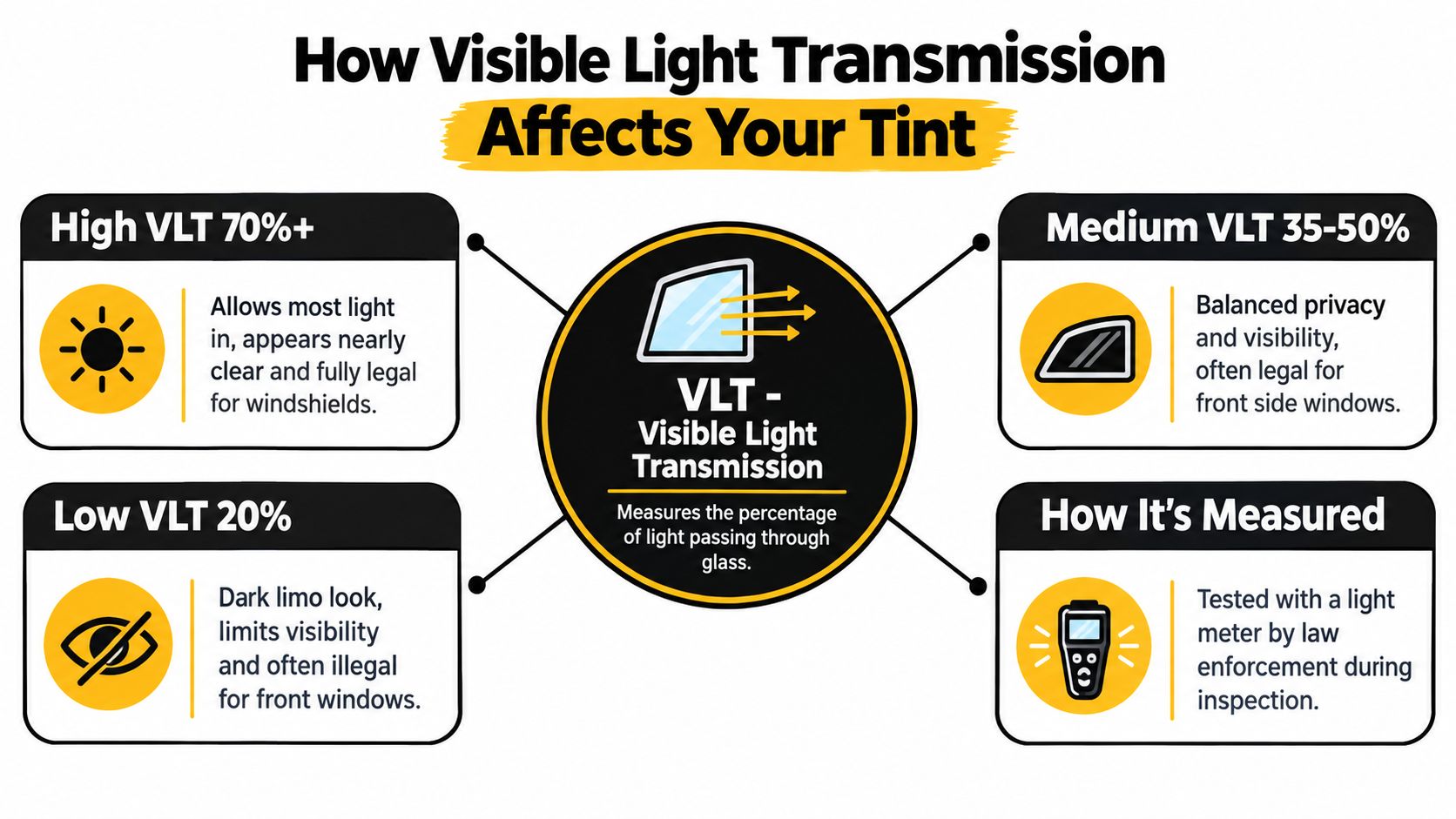
Think of the glass and film as two filters placed over the same opening. Factory side glass may already reduce the amount of light entering the cabin. Adding a film labelled 70% VLT doesn't guarantee that the completed window will still transmit 70% of visible light, because the original glass has already changed the result.
The combined reading is the number that matters
California provides a useful example of why this distinction gets missed. Its front side window standard is at least 70% VLT for the complete glass-plus-film system, as stated in the California Vehicle Code. California guidance also explains that factory side windows can already measure roughly 70% to 85% VLT, which is why installers commonly target film around 88% VLT or higher on front side glass to preserve a compliance margin, as outlined by the California Highway Patrol FAQ.
That California example isn't Ontario's complete legal framework, but it demonstrates the measurement problem clearly. A film's printed label describes the film. The meter reads the finished window. Those are different things.
A simple way to think about the result is:
- Factory glass: already filters some visible light.
- Aftermarket film: filters more light.
- Finished glazing: determines the actual VLT reading.
Don't shop by the roll label
Ask an installer what the original glass measures before film is applied and what the finished window is expected to measure afterward. The answer should account for the specific vehicle, because a new SUV, an older sedan, and a replacement window may not have identical factory glass.
The Carmedics Autowerks tint level guide can help you compare shade choices, but the right legal decision still depends on the completed installation. A light-looking film can fail a meter reading if the base glass is already tinted. Conversely, a premium film may provide heat management and glare control without requiring an aggressively dark shade.
If you're comparing products, separate appearance from performance. Darkness controls privacy and the visual effect. Film construction, optical clarity, and heat-management properties influence comfort. Choosing a lighter, higher-quality film is often smarter than choosing a cheap dark film and hoping the final reading works out.
Front Windshield and Side Window Restrictions
The front half of the vehicle is where tint decisions need the most discipline. Ontario's forward-glass rule is visibility-based, while the Ontario Association of Chiefs of Police has adopted a meter approach that uses 70% light transmission for the front windshield and the windows directly left or right of the driver's seat. That means a film can create two separate questions: does it substantially obscure the interior, and will the measured glass meet the applicable inspection or enforcement standard?
The windshield is not a canvas for dark film
The main windshield should remain clear. Drivers often refer to a “brow” or visor strip at the top, but that term doesn't turn the entire upper windshield into an unrestricted tint area. Ontario drivers should treat any windshield strip as a narrow, visibility-sensitive application rather than a workaround for darkening the full pane.
The safest installation leaves the driver's primary sightline unobstructed and avoids reflective or heavy material. A strip that sits too low, changes the driver's view, or creates a sharp contrast can become a practical problem even if it appears modest from outside. Review the options for a legal front windshield tint installation before approving any windshield work.
Front side glass requires a measured approach
Driver and passenger windows need enough transparency for outside-to-inside visibility and the driver's own peripheral view. Because the original glass already affects transmission, don't assume a film marketed as “light” will automatically be acceptable. Have the installer measure the glass before and after installation, and keep the result documented with the vehicle's work records.
A medical need doesn't automatically make dark forward glass acceptable. An exemption or supporting documentation may affect how a particular situation is handled, but it doesn't erase the basic need for safe visibility or make every dark film legal. Drivers should confirm the applicable requirements before installation instead of relying on a note or verbal assurance.
Older vehicles need a separate inspection check
Ontario's vehicle inspection regulation states that the windshield tint requirements in that inspection standard don't apply to vehicles manufactured before July 1, 2011, as set out in the Ontario safety inspection regulation. That is important for owners of older cars, collector vehicles, and used vehicles being certified for sale.
The pre-2011 inspection treatment doesn't mean visibility stops matter on the road. Highway Traffic Act rules still apply to driving conditions, and an obstructed forward view remains a safety concern. Think of the exemption as an inspection-specific detail, not permission to install any shade you want.
Rear Window Tint Rules and Mirror Requirements
Ontario gives drivers more freedom with rear passenger windows and the rear window than with the forward glass. Neutral legal summaries commonly describe no VLT restriction on the rear side windows and rear window, while the front side windows remain the compliance-sensitive area. That makes the rear cabin the logical place to pursue privacy and a darker appearance.
This flexibility suits SUVs, crossovers, trucks, and family vehicles. You can use a deeper shade behind the driver without putting the same visual load on the forward glass. Rear tint can also make the cabin feel more private and reduce the amount of direct sunlight entering the passenger area.
Dark rear glass still has conditions
The common mistake is treating unrestricted rear darkness as a complete exemption from visibility and equipment requirements. If the rear tint obstructs the driver's view behind the vehicle, the vehicle needs appropriate outside mirrors, commonly understood as dual side mirrors, so the driver can maintain rearward awareness.
This is especially important on vehicles with a dark rear windshield, cargo-area glass, or a factory privacy package combined with aftermarket film. Before choosing the darkest available shade, check the mirror setup and confirm that the driver can still use the mirrors effectively. The Ontario tint film options can be discussed according to the vehicle's glass layout rather than as a one-size-fits-all package.
A police stop isn't the same as a certification
A vehicle may pass an ordinary drive through town without attracting attention and still fail a later safety inspection. Roadside enforcement considers obstruction and visibility in the circumstances of the stop. A licensed inspection facility may use a meter and apply the stricter forward-glass transmission standard.
A quiet roadside experience doesn't certify the vehicle for sale, transfer, or inspection.
For rear tint, the practical recommendation is straightforward. Pick the shade you want for the rear passenger and cargo areas, verify the mirror requirement, and don't use the rear rules as an excuse to darken the windshield or front side windows. A balanced installation gives you the privacy benefit without turning the whole vehicle into a visibility problem.
Enforcement Mechanics and Safety Inspections
Ontario drivers need to separate roadside enforcement from provincial safety inspection. They overlap, but they aren't identical tests. A roadside officer may assess whether forward tint substantially obscures the vehicle interior, while the Ontario Association of Chiefs of Police resolution recognises the use of a tint meter on the front windshield and the windows directly beside the driver, with a minimum reading of 70% light transmission. The resolution is available in the OACP tint-meter document.
That gives enforcement a practical tool. An officer doesn't have to judge darkness only by eye. A meter can quantify the amount of visible light passing through the forward glass, which is why a film that looks almost clear in a driveway can become a problem when measured against the original glass.
Two contexts, two practical risks
| Evaluation Context | Primary Metric | Legal Threshold | Consequence of Failure |
|---|---|---|---|
| Roadside police enforcement | Obstruction and outside-to-inside visibility, with meter use recognised for forward glass | The forward glass must not substantially obscure the vehicle interior, and the OACP resolution identifies 70% light transmission for the tested areas | The driver may face enforcement action and may need to correct the tint |
| Ontario safety inspection | Meter reading on the applicable forward glass | The cited inspection threshold is 70% light transmission | The vehicle can fail certification until the tint is removed or corrected |
A warning, ticket, or order to correct the vehicle is a roadside concern. A failed safety certificate is a transaction problem. If you're selling a car, transferring ownership, or certifying a vehicle, the inspection result can delay the process even if you've driven the vehicle for a long time without being stopped.
Product choice affects compliance
The strongest legal-window-tint strategy is usually a high-clarity film with useful heat and UV-management properties at a light enough shade for the forward glass. Ceramic film is often considered for that role because it can provide performance without requiring the darkest appearance, but the product name alone doesn't guarantee compliance. The installer still needs to evaluate the glass and the finished measurement.
Ask for three things before work begins:
- A glass reading: Measure the factory pane before applying film.
- A finished target: Confirm the expected combined VLT after installation.
- A written record: Keep the product and measurement details with the vehicle paperwork.
That process removes guesswork. It also makes it easier to choose a darker rear shade while keeping the front within a sensible margin.
Choosing Compliant Tint at Carmedics Autowerks
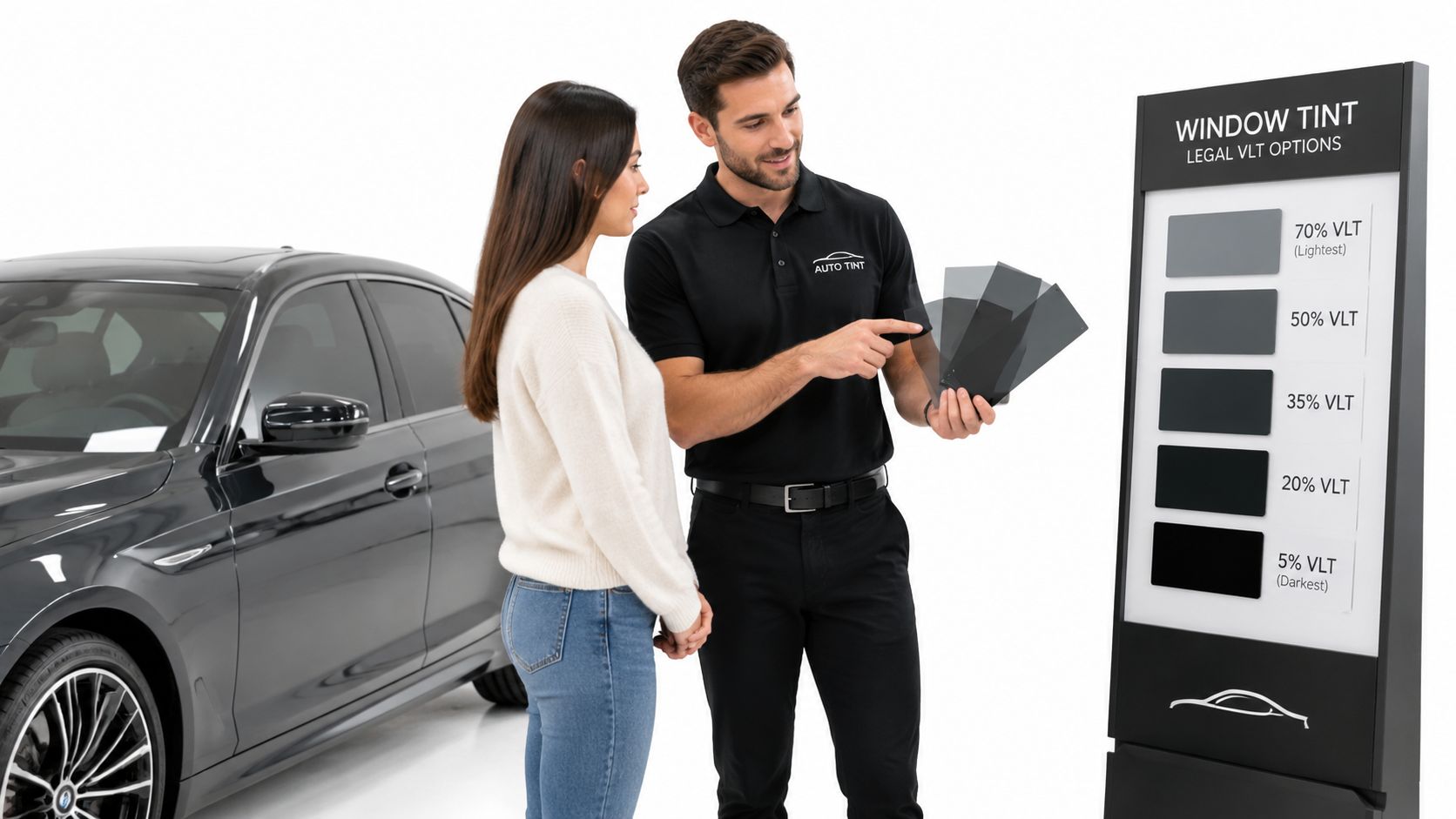
The right tint decision starts with your use of the vehicle, not the darkest sample on the display rack. A daily-driven SUV in Whitby may need rear privacy and cabin comfort, while a weekend sports car may need a subtle appearance that preserves outward visibility. Both vehicles can benefit from professional film, but they don't need the same layout or shade.
Choose performance before darkness
A quality ceramic film can be a sensible choice when you want heat control and optical clarity without pushing the shade too dark. For the windshield and front side windows, the goal should be a light, unobtrusive finish that preserves the required visibility. For the rear glass, you can choose a deeper appearance if the vehicle's mirrors and layout support it.
The main mistake is buying a film by shade alone. A dark dyed film may deliver the look but create poor night visibility or a difficult inspection result. A well-selected lighter film can give the vehicle a cleaner appearance and better comfort without placing the forward glass near the line.
Installation quality matters
Poor application creates its own problems. Bubbling, peeling, hazy adhesive, uneven edges, and contamination can distract the driver or make the glass look suspicious during a stop. Precision cutting and careful edge sealing help the film follow the glass properly, especially around curved windows, door frames, and defroster-equipped rear glass.
Professional installation also gives you a chance to confirm the plan before the film goes on. A technician should identify which panes are factory privacy glass, explain how the combined reading works, and separate the front-window recommendation from the rear-window recommendation. Carmedics Autowerks window tinting in Whitby is one local option for discussing those choices and arranging vehicle-specific installation.
Use a written plan
Before approving the job, confirm:
- Which windows receive film: Windshield, front side glass, rear side glass, and rear window should be listed separately.
- Which shade goes where: Don't let a rear-window package accidentally become a front-window recommendation.
- How the forward glass will be checked: The completed system matters, not just the film's advertised VLT.
- What care the film needs: Follow the installer's curing and cleaning instructions to protect the finish.
Carmedics Autowerks Inc offers automotive window tinting alongside auto repair, paint protection film, and collision repair services in Whitby. For a legal-window-tint upgrade, bring the vehicle in with a clear goal: preserve forward visibility, choose the rear shade deliberately, and have the finished work assessed as a complete glass-and-film system.
Carmedics Autowerks Inc can help Whitby drivers select and install vehicle-specific window tint with forward-glass compliance and rear-window privacy in mind. Visit Carmedics Autowerks Inc to discuss your vehicle, tint layout, and the right next step before committing to a film.