

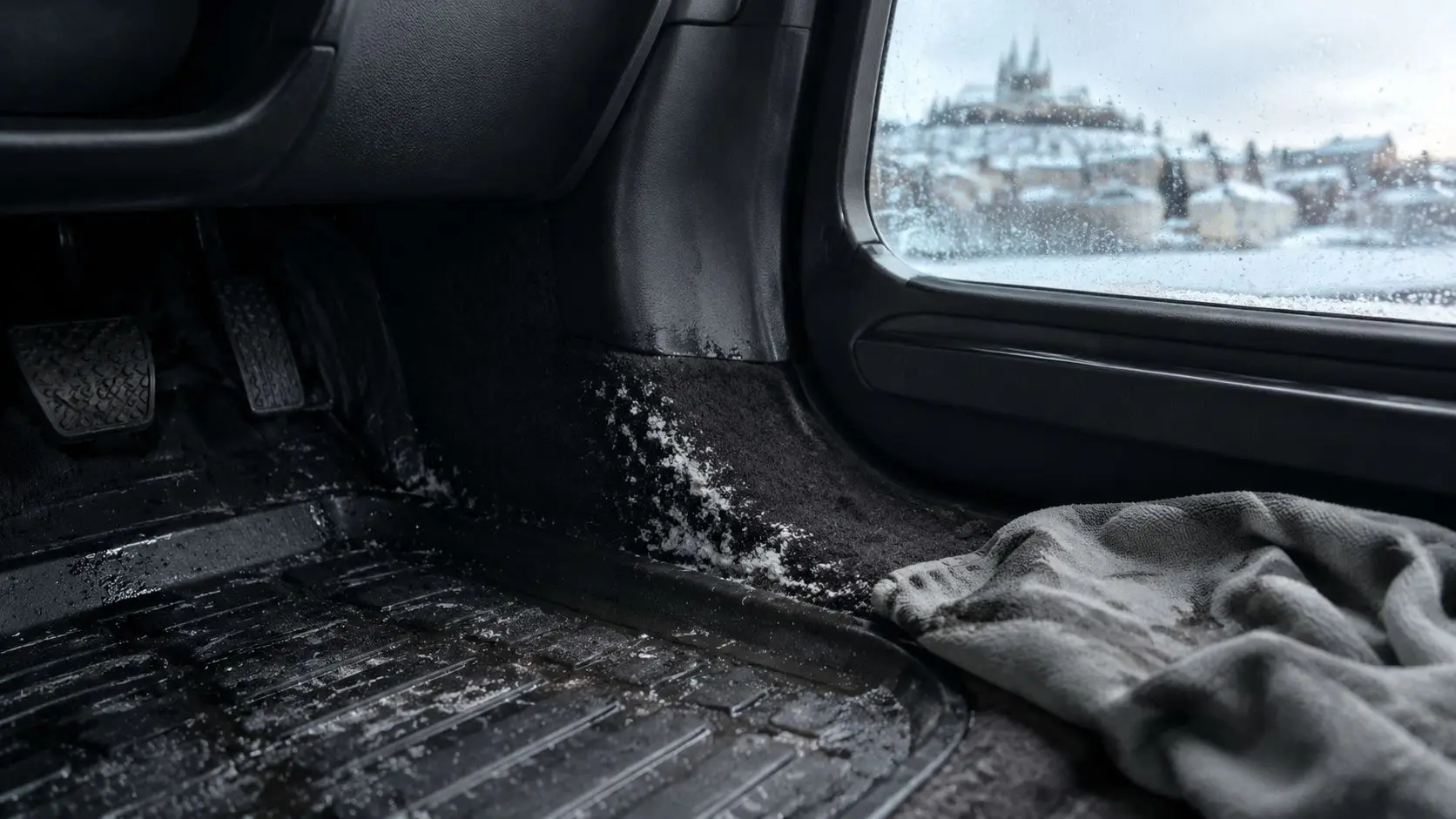
You notice it after another Whitby winter: crusty white salt climbing the carpet edges, a damp smell that returns whenever the heater runs, and windows that seem to fog from the inside even after the cabin warms up. A quick vacuum removes loose grit, but it won't pull brine from carpet backing, moisture from seat seams, or residue from the areas your hands and boots touch every day.
That's where interior detailing earns its place. It's a diagnostic cleaning and preservation process for fabrics, leather, vinyl, plastics, glass, and headliners, not a stronger version of a car wash. Ontario's road salt, slush, humidity swings, and summer sun create contamination patterns that often stay hidden until odours, staining, cracking, or electrical problems appear. This guide focuses on what works, what can cause unnecessary wear, and when a targeted clean makes more sense than a full reset.
What Interior Detailing Actually Involves
A Whitby driver might describe the job as “getting the salt out.” A professional sees several separate problems: crystallised mineral residue on the carpet, embedded sand under the floor mats, moisture trapped in upholstery, and possibly an odour source below the visible surface. Each needs a different response.
Interior detailing means cleaning, conditioning, and protecting the cabin's individual materials. That includes vacuuming textile fibres, extracting carpets and upholstery, cleaning leather without stripping its finish, treating vinyl and plastics with compatible products, polishing interior glass without leaving a film, and spot-cleaning the headliner without soaking its adhesive layer. The detailer also checks for damage that cleaning alone can't fix, such as torn bolsters, detached trim, or deteriorated foam. If upholstery has already split or pulled away, a specialist resource such as Carmedics Autowerks' upholstery repair service is more appropriate than repeated scrubbing.
Cleaning starts with diagnosis
Skilled Trades Ontario treats vehicle detailing as a technical competency. Its curriculum covers identifying interior contaminants, removing stains such as gum, blood, urine, and grease, then using an appropriate sequence of vacuuming, shampooing, solvent wiping, glass cleaning, and final inspection. That cause-and-effect approach matters because a product that works on carpet may damage leather, soften a coating, or leave a sticky residue on textured plastic. Ontario's automotive trade curriculum provides the technical foundation for that material-specific process.
Basic cleaning usually addresses what you can see. Detailing investigates why the problem is there. Salt needs to be dissolved and removed rather than covered with fragrance. Grit in a seat track needs to be blown out before it migrates into moving hardware. A musty smell needs source control and drying, not a stronger scent.
For perspective, Canadian drivers spend an average of five hours per week in their vehicles, while 84% eat or drink inside them and 73% clean their interiors less than once every few months, according to a Canadian Tire consumer survey. That combination explains why a cabin can look acceptable while holding months of residue. For broader principles on cleaning textile surfaces, Rubber Ducky's area rug pros offer useful context, especially around extraction, drying, and avoiding residue that attracts more soil.
The Professional Interior Detailing Workflow
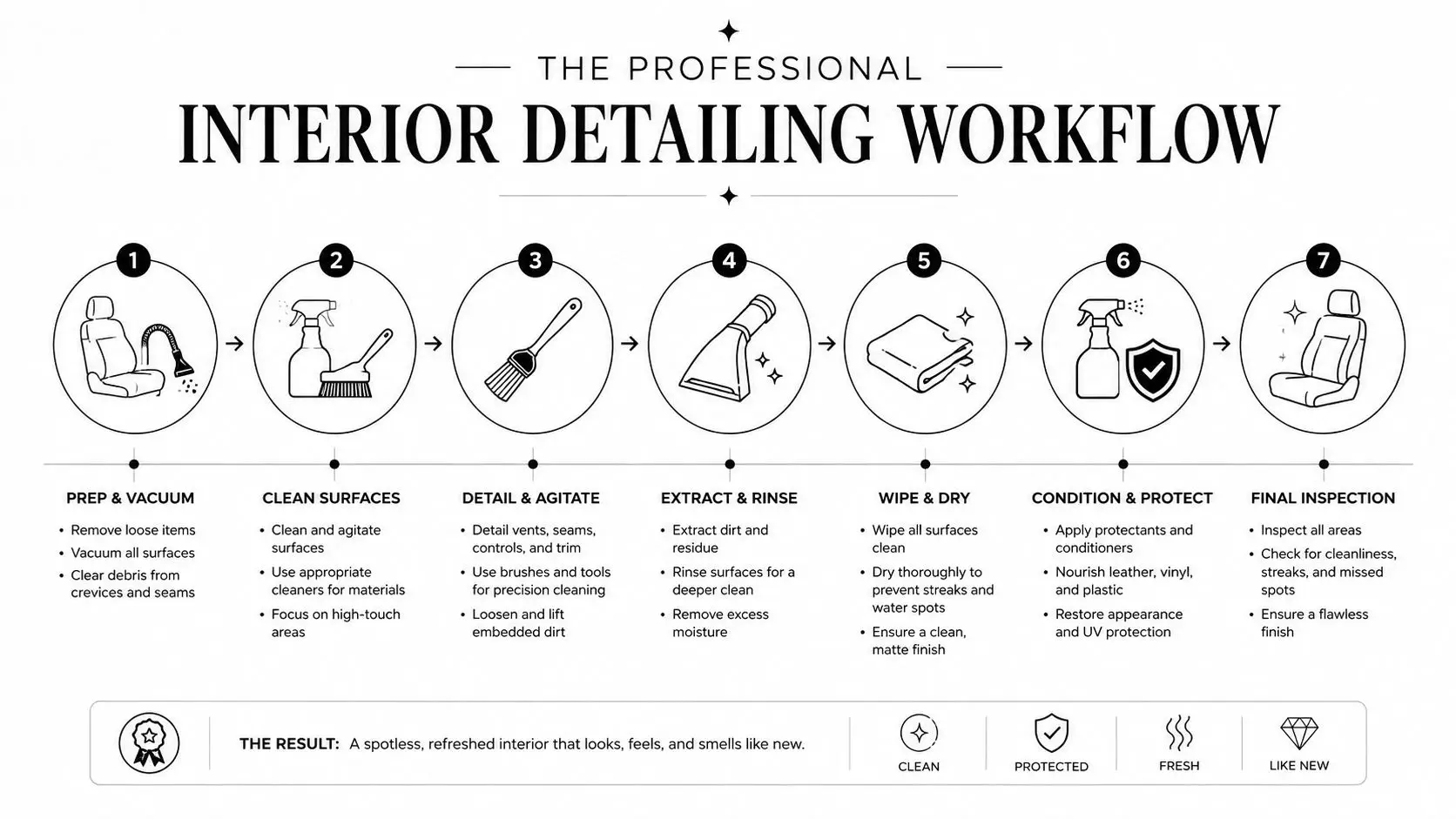
Professional results come from sequence. The detailer first identifies the contamination and material, then chooses the least aggressive process that can remove it safely. Skilled Trades Ontario describes this same logic through a sequence that includes contaminant identification, vacuuming, shampooing, solvent wiping, glass cleaning, and final inspection, as outlined in its automotive detailing competency guidance.
Inspection prevents avoidable damage
The first step is a cabin inspection. The detailer records pre-existing scratches, dye transfer, cracked leather, loose trim, sagging headliner fabric, water marks, and electronic controls that need protection. Material identification comes next. A coated synthetic seat, unfinished leather, woven fabric, soft-touch plastic, and piano-black trim shouldn't receive the same cleaner or agitation.
Personal items and floor mats are removed before the cabin is disturbed. Mats are cleaned separately because they often carry the heaviest salt and grit load. A thorough vacuum follows, including seat rails, belt anchors, door pockets, under-seat areas, and carpet edges. Compressed air or a detailing blower clears vents and seams before the final vacuum pass. Blowing out those areas afterward would just redeposit dust on surfaces already cleaned.
The wet process must match the substrate
Carpet and fabric may require steam, controlled shampooing, or hot water extraction. The operator applies enough moisture to release soil, then extracts it rather than leaving the backing saturated. Ontario salt can require an acidic neutralising step because mineral residue may remain after a standard alkaline cleaner. The rinse and drying stages matter as much as the initial treatment.
Leather is cleaned with a pH-balanced product and soft agitation, then conditioned only after the surface is clean. Conditioning first can trap grime in the grain and create a slick finish that masks, rather than solves, the problem. Strong alkaline cleaners may be useful for some carpets, but they can strip or dry leather finishes.
Steam is powerful but not universal. Excessive heat or dwell time can loosen headliner adhesive, affect delicate plastics, or force moisture into switches. A professional controls temperature, distance, agitation, and drying instead of treating every surface as if it were a kitchen floor.
Practical rule: If the material, stain, and moisture tolerance haven't been identified, the product choice is a guess.
Interior glass gets cleaned after dusty and wet operations are complete. A lint-free towel, measured product, and overlapping passes reduce haze and streaks. The Professional Window Cleaning guide is a useful reference for the same principles of controlled application and clean towel management. Persistent smells may also require a dedicated car odour removal service, particularly when the source is below the carpet or in the ventilation system.
The last stage is inspection under good lighting. The detailer checks high-touch areas, seat seams, glass clarity, remaining salt, moisture levels, and product residue before returning the vehicle.
Interior Detailing Costs and Value in Ontario
Interior detailing is easier to evaluate when you separate the service price from the cost of equipment, time, and future correction. A basic clean may be enough for a lightly used vehicle, while a neglected winter cabin can require extraction, stain treatment, odour work, and material restoration. Prices vary by vehicle size, condition, contamination, and location, so a written inspection is more useful than a promise based only on the vehicle model.
The following ranges are planning figures for the Durham Region market, not verified universal prices:
| Service Type | Typical Cost Range | Time Investment | Best For |
|---|---|---|---|
| Basic interior detail | C$150 to C$250 | Several hours | Routine dirt, dust, and light staining |
| Full interior restoration | C$300 to C$500 or more | Most of a working day or longer | Heavy soil, embedded salt, stains, and odours |
| Mould remediation or salt damage repair | C$200 to C$600 additional | Condition-dependent | Biological contamination or severe winter residue |
| DIY equipment setup | C$300 to C$800 | Repeated use and learning time | Owners who clean regularly and have storage space |
The DIY setup can include a wet-dry vacuum, extractor, steam cleaner, brushes, microfibre towels, interior-safe cleaners, and drying equipment. That investment doesn't include the time spent learning dilution, protecting electronics, extracting moisture, and correcting streaks or over-wetting. A portable extractor can improve a carpet, but it won't automatically identify whether a stain is salt, food residue, dye transfer, or biological contamination.
The cost of leaving winter residue
Ontario's car wash and auto detailing industry is mature. IBISWorld estimates the provincial industry at C$617.2 million in 2026, with 1,478 businesses and 8,146 employees, and reports average annual revenue growth of 3.5% from 2021 to 2026. Its definition includes cleaning, polishing, and waxing the outside and inside of motor vehicles, confirming that interior work is part of mainstream automotive maintenance rather than a niche add-on. The figures are reported in the cited industry reference, although the source link itself is a Canadian Tire release rather than an IBISWorld report.
Neglect has less predictable costs. Trapped brine can leave persistent staining and odour, while repeated moisture exposure may affect carpet backing, seat rails, and switches. A professional detail can therefore function as preventive maintenance, but only when the process removes contamination and dries the cabin rather than adding fragrance or dressing over it.
For readers comparing service pricing principles across home-service categories, Pine Country Window Cleaning's cost guide illustrates why condition, access, labour, and scope affect a quote. The same logic applies when comparing car detailing in Pickering, where the vehicle's actual condition should determine the package.
Full Detail Versus Targeted Maintenance
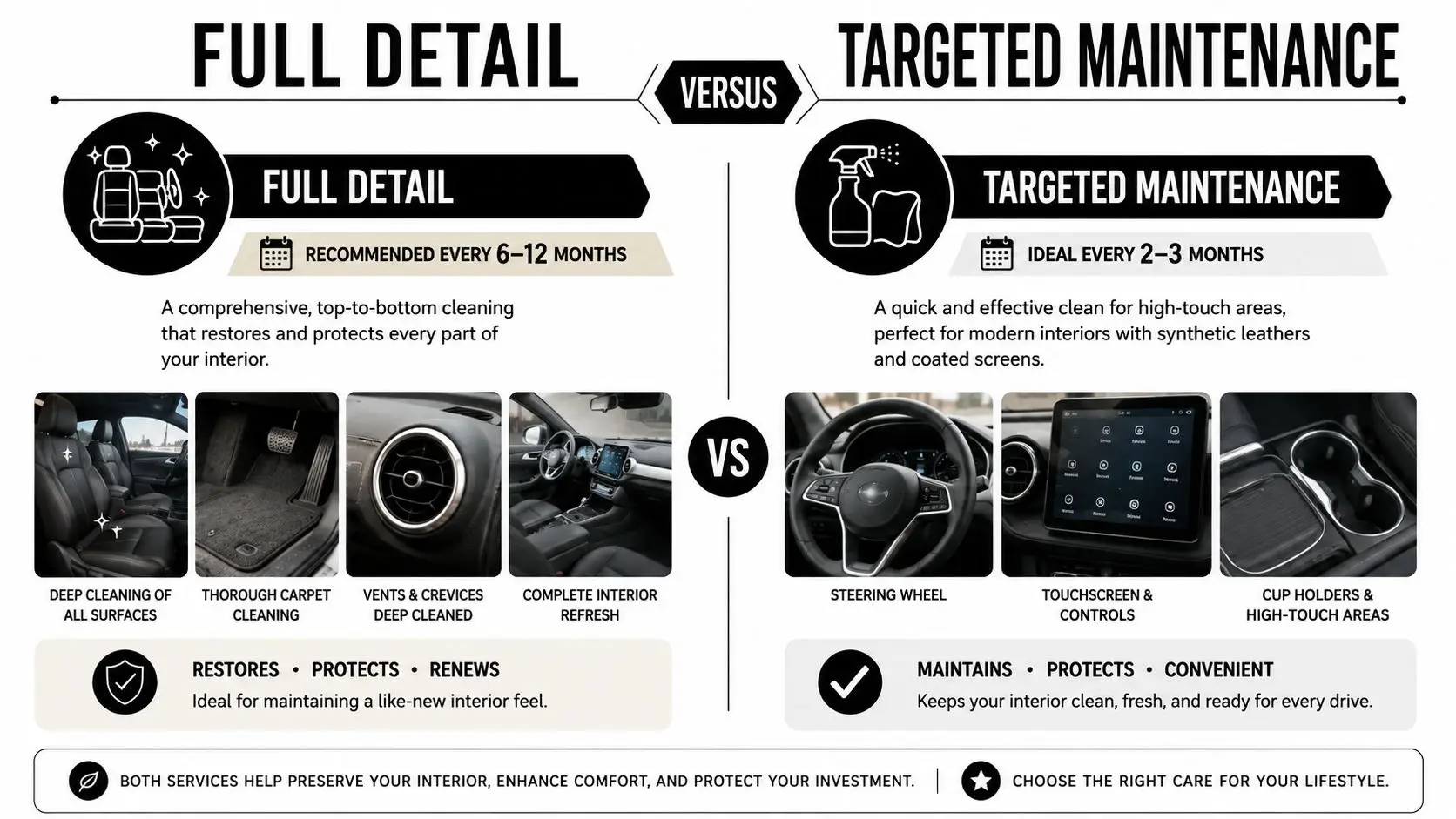
A full detail every few months sounds responsible, but it isn't automatically the safest schedule for a modern cabin. Many newer vehicles use synthetic leather, coated touchscreens, textured plastics, and treated fabrics. These materials benefit from controlled cleaning and protection, but repeated wet extraction, aggressive brushing, or unnecessary solvent use can create wear of its own.
Ontario's contamination pattern changes with the seasons. Winter brings salt, slush, wet boots, and grit. Spring exposes what settled under mats and along carpet edges. Summer heat can intensify odours from damp materials, while sunlight through a panoramic roof can stress dashboards, seat surfaces, and trim. A blanket calendar ignores the vehicle's actual use and condition.
What deserves frequent attention
A targeted maintenance routine concentrates on high-impact zones instead of repeatedly wetting the entire cabin:
- Floor mats and carpet edges: Remove and shake out loose grit, then clean salt residue before it migrates into the backing.
- Steering wheel and touchpoints: Clean away skin oils without leaving a glossy, slippery dressing.
- Door sills and lower panels: Wipe these areas before grit becomes an abrasive paste.
- Cup holders and storage pockets: Remove food residue rather than sealing it under a protectant.
- Infotainment screens: Use a dry or lightly damp, clean microfibre towel and avoid household glass products.
Ontario-focused detailing guidance recommends more frequent attention in winter and spring because salt and moisture accumulate, while describing full details as seasonal or periodic services and maintenance cleans as more regular, as discussed in this Toronto and Ontario detailing guide. The useful distinction is preservation versus cosmetic perfection.
A condition-based decision matrix
| Interior condition | Sensible approach | Why |
|---|---|---|
| Light dust and isolated marks | Targeted wipe and vacuum | A full wet service adds little value |
| Visible salt on mats or carpet edges | Targeted salt removal | Early treatment limits residue spread |
| Persistent damp odour | Inspection and source removal | Fragrance won't solve trapped moisture |
| Heavy stains across upholstery | Full detail or extraction | Broad contamination needs controlled recovery |
| Cracked leather or loose headliner | Repair assessment | Cleaning cannot restore failed material |
| Vehicle sale or lease return | Full inspection-led detail | Presentation and hidden residue both matter |
A driver who cleans high-use areas regularly may need a full interior service mainly after winter or before winter preparation. A family vehicle carrying wet sports equipment, food, pets, or muddy footwear may need deeper work sooner. For concerns involving ventilation moisture rather than surface dirt, a cabin air filter change cost assessment can be a useful separate check.
DIY Interior Detailing Techniques That Work
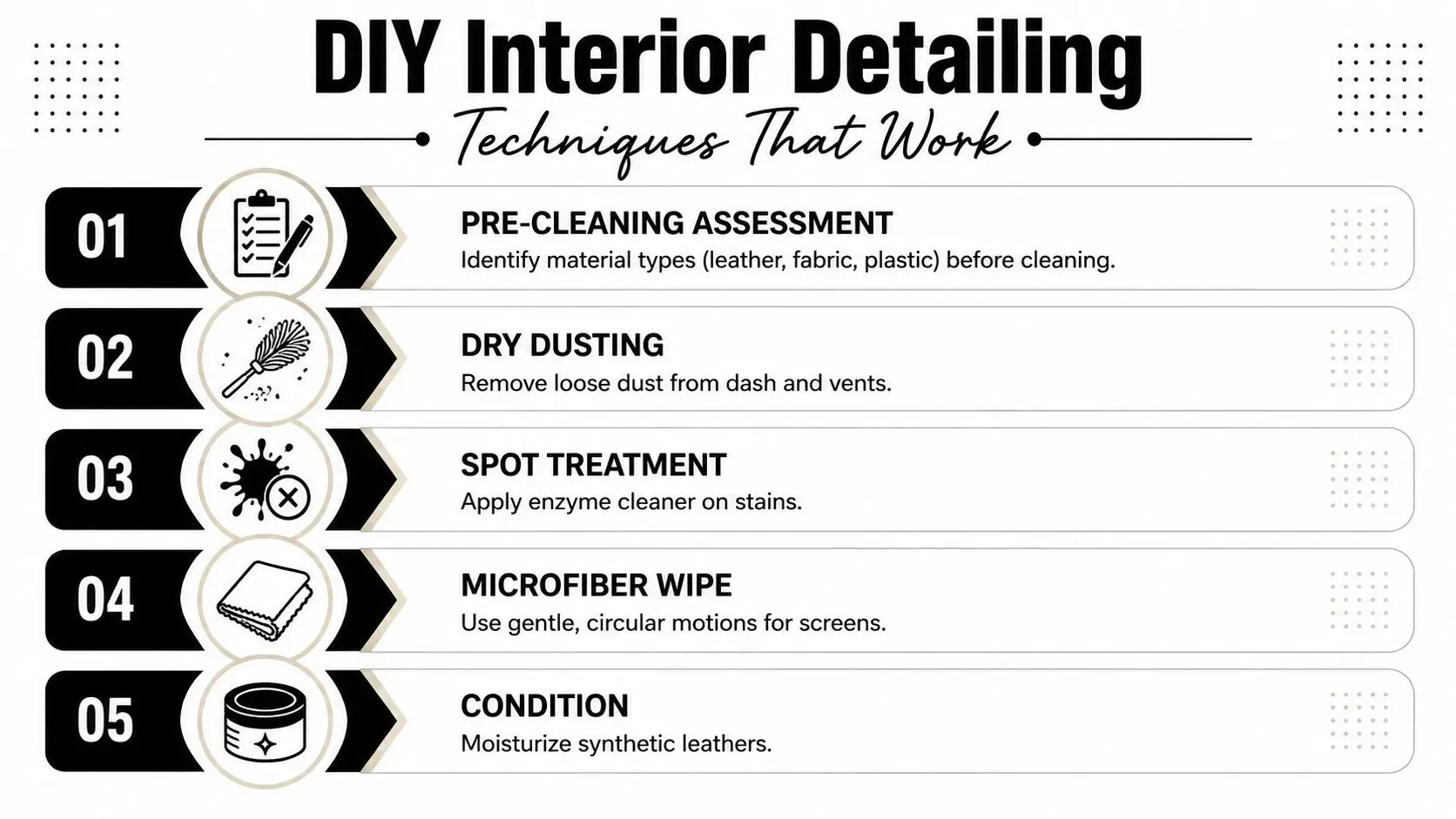
DIY interior detailing works when you control material, moisture, agitation, and drying. Start by identifying the surface. Genuine leather, coated synthetic leather, tight-weave fabric, porous cloth, vinyl, soft-touch plastic, and glossy trim each react differently. Test every cleaner on a hidden area first, allow it to dry, and inspect for colour change, tackiness, or coating damage.
A safe top-to-bottom sequence
Remove loose contamination first. Take out mats and personal items. Use a soft brush or compressed air around vents, seat seams, switch gaps, and console edges, then vacuum the loosened dust. Starting with a wet towel turns dry grit into a paste and increases the chance of abrasion.
Work with folded microfibre towels. Fold a towel into quarters so you can rotate to a clean face as soil transfers. Spray the product onto the towel rather than directly onto screens, buttons, speakers, or switchgear. Use two containers, one for clean solution and one for rinsing, so a dirty towel doesn't return grit to the dashboard.
Treat salt carefully. White deposits are often mineral residue, so a mildly acidic approach can help dissolve them. A diluted white vinegar solution may be used cautiously on suitable carpet fibres, followed by a clean-water wipe and thorough extraction. Don't apply acid to leather, untested dyes, metal hardware, or sensitive trim, and don't assume a home mixture is safe just because it's common.
Control odour at the source. Baking soda can absorb odours from dry carpet and mats when left in place temporarily and vacuumed thoroughly afterward. It won't solve saturated backing, mould, spilled milk, or HVAC contamination. Masking sprays usually make diagnosis harder and can leave a film on surfaces.
Protect screens and delicate trim. Infotainment screens need minimal moisture. A clean, dry microfibre towel often removes fingerprints; if more cleaning is needed, lightly dampen the towel and use gentle straight passes. Avoid ammonia glass cleaner, abrasive cloths, and heavy pressure that can affect anti-glare coatings.
Drying is part of cleaning
Extract fabric slowly, make overlapping passes, and remove as much water as the equipment allows. Leave doors open in a safe, ventilated space and confirm that carpets and seat seams are dry before closing the vehicle. Rushing this stage can leave moisture beneath the visible surface, especially during humid Whitby summers.
For climate-related concerns, an air-conditioning cleaning service for cars may be more suitable than repeatedly spraying the cabin. Product dilution should always follow the manufacturer's label because concentrates differ significantly. There isn't a universal ratio or dwell time that's safe for every interior material.
When to Call the Professionals
DIY cleaning is appropriate for routine dust, light spills, removable mat soil, and small marks on known materials. It becomes risky when you can't identify the contamination, when moisture has reached hidden layers, or when the surface is already failing. Scrubbing harder rarely improves those situations. It often spreads the problem or removes the finish that was still protecting the material.
Call for professional assessment when you find:
- Persistent biological odour: Sour, musty, or decomposing smells may come from carpet backing, seat foam, spills, or HVAC pathways. Surface fragrance won't remove the source.
- Deep contamination: Urine, blood, vomit, spoiled food, and mould require controlled isolation, appropriate chemistry, extraction, and drying.
- Sagging headliner fabric: Excess water or steam can loosen adhesive further. A detailer should assess whether cleaning is safe before treatment.
- Cracked or dye-worn leather: Dressings can make the surface look darker temporarily, but they can't rebuild missing colour or repair splits.
- Contamination near electronics or airbags: Flooding switches, seat connectors, vents, or restraint components can create problems beyond cosmetic cleaning.
Professional equipment helps, but equipment alone isn't the answer. Steamers, extractors, blowers, inspection lights, and purpose-made brushes allow better control than household tools, while the operator's material knowledge determines whether those tools are used safely. Canada's federal VOC rules also set a 50 g/L maximum VOC concentration for regulated automotive-refinishing surface cleaners, making compliant product selection and dilution control important for operators. The regulatory context appears in the federal VOC rules reference.
| Contamination Type | DIY Feasible | Professional Required | Risk Level |
|---|---|---|---|
| Loose dust and crumbs | Yes | No | Low |
| Light salt on removable mats | Usually | Not always | Low to moderate |
| Set-in food or drink stains | Sometimes | Recommended if spreading | Moderate |
| Persistent biological odour | Limited | Usually | High |
| Mould or saturated carpet backing | No | Yes | High |
| Cracked leather or sagging headliner | No | Repair assessment | High |
| Spills near electronics or restraints | No | Yes | High |
A professional consultation should begin with an inspection, not a sales script. Expect questions about when the odour started, what spilled, whether the vehicle has been wet inside, and which areas were previously treated. The operator should identify materials, document existing damage, explain what can be cleaned versus repaired, and give you a scope that distinguishes routine maintenance from restoration.
Carmedics Autowerks Inc offers auto detailing alongside repair, fleet maintenance, window tinting, paint protection film installation, and collision repair for Whitby drivers. Its interior detailing option is most useful when winter salt, moisture, odour, or material damage has moved beyond what a careful home clean can safely address.
If your Whitby vehicle is carrying winter salt, trapped moisture, stubborn odours, or delicate interior damage, visit Carmedics Autowerks Inc to discuss an inspection-led interior detailing service. Ask the team to separate targeted maintenance, deep cleaning, and repair needs so you pay for the work your cabin requires.