

You park your car on the Whitby driveway before heading to work, then leave it exposed through the brightest part of the day. By late summer, the hood looks less lively than the doors, the roof feels rough after washing, and the deep colour that once looked sharp has started to lose its gloss. Ontario doesn't have a desert climate, but the sun can still age a vehicle steadily when outdoor parking becomes the routine.
The practical answer to how to protect car paint from sun isn't one miracle bottle. It's a layered plan built around parking habits, careful washing, seasonal protection, and professional options such as ceramic coating, paint protection film, or tinting. The right level depends on whether your vehicle sleeps in a garage, sits outside at a GO station, or spends most of its week on exposed streets across Durham Region.
Why Ontario Sun Is Harder on Paint Than Most Drivers Expect
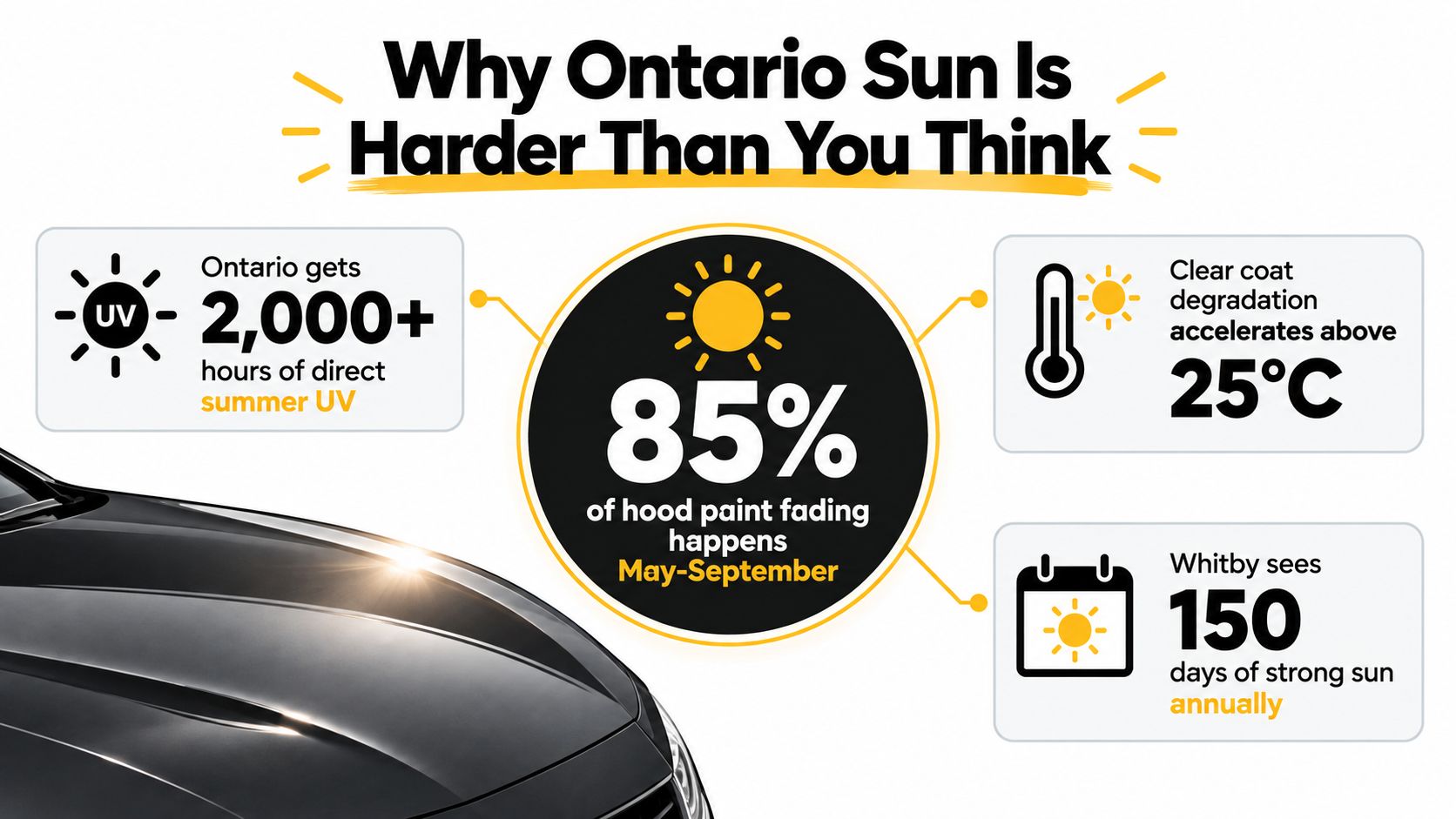
A commuter in Whitby may park outside from May through September and assume the paint is safe because the weather doesn't feel as severe as Southern California. That assumption can be expensive. Federal guidance places a UV Index of 6 to 7 in the High band, 8 to 10 in the Very High band, and 11 or more in the Extreme band, with the greatest exposure risk between 11 a.m. and 3 p.m. from April through September. Environment and Climate Change Canada's UV Index guidance gives a better picture of the risk than temperature alone.
Whitby and the wider Durham Region create several ordinary exposure patterns:
- Suburban driveways: A vehicle may remain in the same position for hours, leaving the hood and roof repeatedly exposed.
- GO station parking: Large open lots at Whitby, Ajax, or Oshawa offer little shade during the workday.
- Lakeshore glare: Reflected light around Lake Ontario can add to the exposure on already bright surfaces.
- Winter reflection: Snow and pale surfaces can reflect sunlight toward the lower body and glass, even when temperatures are low.
Cloud cover doesn't eliminate the problem. UV can still reach the vehicle through intermittent cloud, so a partly cloudy day shouldn't be treated as a complete break from exposure.
Exposure matters more than a single hot day
UV intensity drives the chemical side of oxidation, while heat makes the paint film work harder. The hood, roof, and trunk lid usually show changes first because they face the sky directly for most of the day. Darker colours make fading easier to notice, but lighter finishes can become dull or chalky too.
Practical rule: Judge your protection plan by where the car sits for most of the week, not by how hot the forecast feels.
A garage is the strongest everyday habit because it removes direct exposure while the vehicle is stationary. If that isn't possible, shade, a clean sunshade, regular surface protection, and consistent washing form a sensible layered approach. A printable seasonal maintenance checklist can help turn those habits into a repeatable routine rather than an occasional spring project.
How Sun Actually Damages Car Paint
Modern automotive paint relies on a clear coat above the colour layer. UV radiation gradually weakens the clear coat's protective chemistry, while oxygen and heat continue the oxidation process. The first signs aren't always dramatic. You may notice reduced gloss, a slightly dry texture, cloudy areas, or a colour difference between horizontal panels and protected sections.
Infrared heat adds another stress. The hood, roof, and trunk lid heat and cool repeatedly, causing the paint film to expand and contract. Over time, that movement can contribute to fine cracking and make the surface more vulnerable to contaminants. Automotive coatings literature also shows that clear-coat UV absorbers can degrade with exposure, and one tested clearcoat system limited transmission of 340 nm UV radiation to the basecoat to less than 10 percent for less than one year in that test system. The peer-reviewed coatings paper illustrates why factory protection isn't infinite.
Contaminants turn exposure into surface damage
Tree sap, bird droppings, road salt residue, and industrial fallout from the 401 corridor can bond to the surface. When the paint is warm, these materials can etch more readily, leaving marks that washing alone won't remove. A vehicle parked beneath maple or oak trees may receive shade, but it also receives more organic contamination.
Colour changes vary by finish:
| Paint Colour | Primary Symptom | Time to First Signs | Repair Cost Range |
|---|---|---|---|
| Red | Fading and loss of colour richness | Varies with exposure and maintenance | Panel respray is roughly $800 to $1,500 CAD |
| Black | Dullness, visible haze, and reduced gloss | Varies with exposure and maintenance | Panel respray is roughly $800 to $1,500 CAD |
| Dark blue | Colour fading and uneven appearance | Varies with exposure and maintenance | Panel respray is roughly $800 to $1,500 CAD |
| White and silver | Chalking, dryness, and loss of clarity | Varies with exposure and maintenance | Panel respray is roughly $800 to $1,500 CAD |
The repair range is an editorial market estimate, not a universal quote, and it can change with the panel, colour match, preparation, and shop. Once the clear coat has oxidized severely or begun peeling, polishing can't recreate missing material. Read more about the warning signs in what causes car paint to fade, then act before a cosmetic issue becomes a repainting job.
Simple Habits That Cut Daily UV Exposure
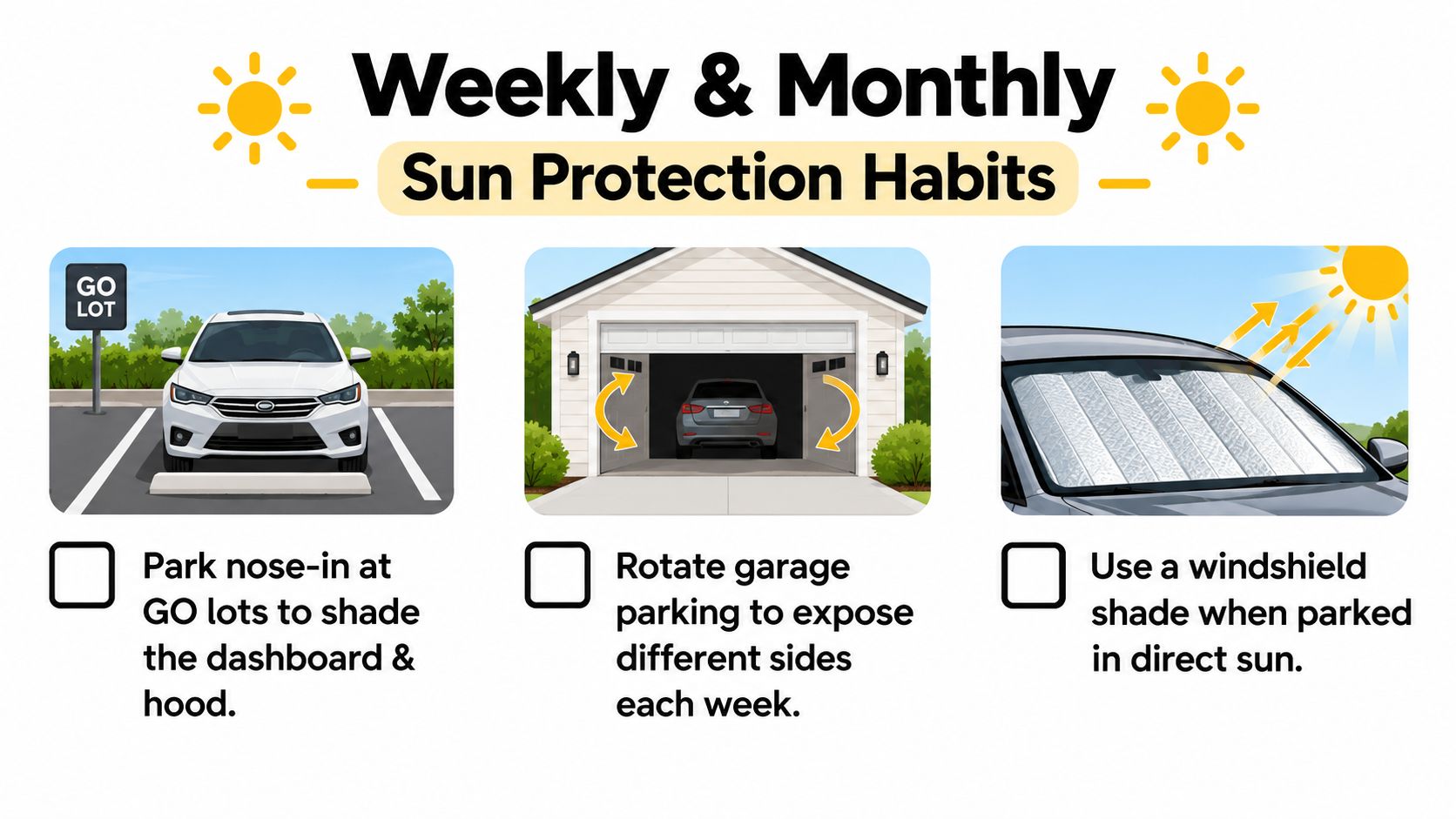
The cheapest protection is usually a change in where and how you park. At a GO station, choose a spot that leaves the hood less exposed when practical, and rotate your position rather than giving the same panel the same afternoon exposure every day. At home, pulling farther forward in the driveway may place the hood under the garage's shadow during part of the afternoon.
A windshield sunshade is worth keeping in the car. It protects the dashboard and reduces the heat entering the cabin, and a custom-cut roof shade can help when the vehicle sits outside all day at work. Use the shade only when the inside of the vehicle is clean enough that trapped grit won't rub against the glass or dash.
Keep the surface clean without creating new marks
For a Whitby commuter, a two-week wash rhythm during the brighter months is a practical starting point. Use a pH-neutral automotive soap, a clean microfibre mitt, and a separate method for wheels and lower panels. Dry with a waffle-weave towel instead of letting mineral-rich water evaporate on the paint.
Handle aggressive contamination quickly:
- Bird droppings: Rinse and soften them as soon as you can, ideally within 24 hours, because dried deposits can etch the surface.
- Tree sap: Dab and lift with a suitable automotive-safe cleaner rather than scraping it with a card or fingernail.
- Salt residue: Rinse thoroughly after winter roads have been treated, including the lower doors and rocker panels.
- Water spots: Wash in shade and dry promptly so minerals don't bake onto a warm panel.
Exterior plastic and rubber trim need attention too. Apply a UV-resistant dressing after washing, using a product that leaves the surface natural rather than greasy. Grey, brittle trim makes an otherwise well-kept vehicle look older and can crack when neglected.
Consistency matters more than an elaborate product shelf. A careful wash, dry, shade strategy, and quick response to contamination will do more for a daily-driven car than applying an expensive product once and ignoring it afterward.
DIY Protection Options Worth Your Weekend
DIY protection works when expectations stay realistic. A careful two-bucket hand wash protects the finish by reducing grit-related marring, while wax and sealants add a temporary sacrificial layer above the clear coat. Neither option replaces professional correction when the paint already has oxidation, deep swirls, or peeling clear coat.
A quality paste wax commonly costs about $20 to $40 and lasts roughly six to 10 weeks. A spray sealant typically costs $15 to $25 and lasts about four to six weeks. Those figures are product-use estimates, so weather, washing technique, storage, and exposure will affect the result.
Choose the tier that matches your parking
| Method | Product Cost | Lifespan | Time Per Application | UV Protection Level |
|---|---|---|---|---|
| Two-bucket hand wash and microfibre dry | Varies by supplies already owned | Maintained by each wash | About 45 to 90 minutes | Foundational, no sacrificial coating |
| Carnauba paste or liquid wax | About $20 to $40 | Roughly six to 10 weeks | About two to three hours including wash | Moderate, short-term surface barrier |
| Synthetic spray sealant | About $15 to $25 | Roughly four to six weeks | About 15 minutes after washing | Light to moderate, convenient maintenance |
A vehicle outside every weekday in Durham Region needs more frequent upkeep than a weekend car stored indoors. For the former, spray sealant is useful as a topper between more thorough wax applications. For the latter, a careful wash and seasonal wax may be enough if the paint remains healthy.
Understand the limits before you start
DIY products sit on top of the clear coat. They don't stop 401 stone chips, and they won't repair oxidation that has already removed or damaged the clear coat. Washing can also create swirl marks if the mitt is dirty, the towel is overloaded, or the vehicle is wiped while gritty.
Take your time with panel preparation, work in shade, and use separate towels for paint, glass, wheels, and door jambs. If you want to compare a surface film approach with temporary products, review paint protection film and spray options before choosing based only on bottle claims.
Professional Sun Protection Ceramic Coating PPF and Tinting
Professional protection makes sense when the car's exposure, value, or ownership plans justify a more controlled installation. The three options Whitby drivers usually compare are ceramic coating, paint protection film, and window tinting. They solve different problems, so buying one as a substitute for another often leads to disappointment.
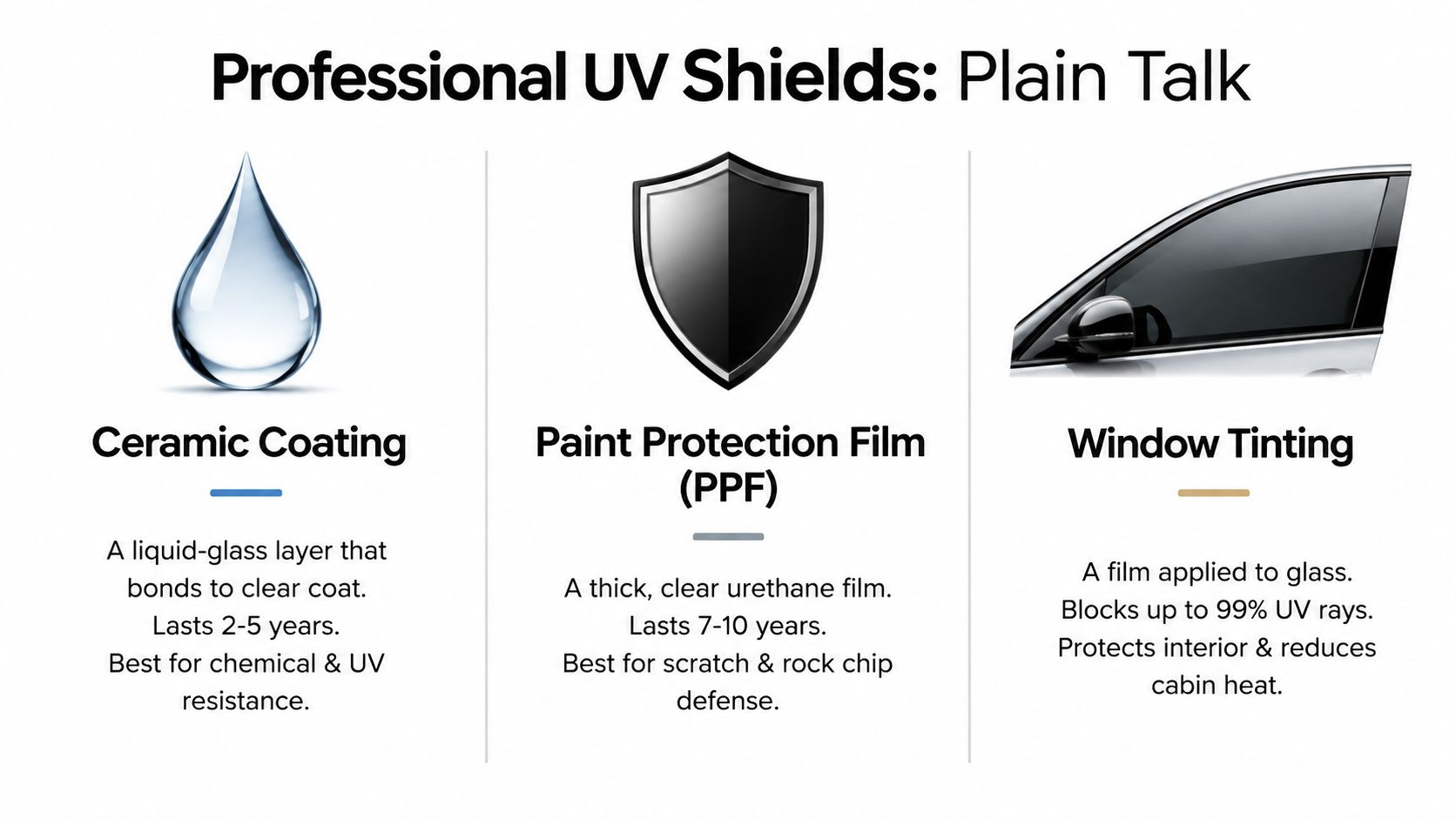
Ceramic coating is a liquid product that bonds to prepared clear coat. It adds water repellency, chemical resistance, easier washing, and a sacrificial layer against UV exposure. It doesn't stop rock chips, and it won't hide deep scratches or correct poor preparation. Ontario-focused guidance places ceramic coating service life at two to five years, while wax lasts six to eight weeks and sealants about four to six months, depending on product and maintenance. California car-care guidance on protection lifespan provides those product comparisons, although Ontario exposure and maintenance still differ.
PPF is a clear urethane film applied to selected panels or the whole vehicle. It is the better choice for stone impact on the hood, bumper, mirrors, and front fenders, and it also reduces direct UV contact with the covered paint. It won't protect uncovered roof or trunk panels, and damaged or lifting film needs inspection rather than being ignored. California guidance commonly places PPF service life at six to 10 years, with some recommendations for replacement every five to seven years as film properties change. The California PPF discussion gives that context, not a guarantee for every brand or installation.
Window tinting protects the interior rather than the exterior paint. It can reduce glare and solar load through the glass, but tint shade and legal compliance must be considered separately. Ontario requires at least 70 percent visible light transmission on the front side windows, so check the applicable rules before selecting film.
Match the service to the actual complaint
| Option | Typical Whitby Market Range | Best Use | Main Limitation |
|---|---|---|---|
| Consumer ceramic coating | About $600 to $900 | Owners who want a maintained, easier-to-clean surface | Requires preparation and careful washing |
| Professional multi-year coating | About $1,200 to $2,000 | Newer vehicles and outdoor parking | Doesn't prevent impact chips |
| Partial-front PPF | Roughly $1,500 to $2,500 | 401 commuters and high-impact areas | Leaves uncovered panels exposed |
| Full-body PPF | $4,000 and up | High-value or aggressively preserved vehicles | Highest initial investment and still needs maintenance |
| Quality sedan tint | About $300 to $700 | Interior UV and cabin comfort | Doesn't protect painted exterior panels |
For a new vehicle driven daily on the 401, partial-front PPF plus coating on the remaining painted panels is a logical compromise. A vehicle that rarely sees highway debris may get more value from coating and disciplined maintenance. See PPF or ceramic coating for a side-by-side decision before booking.
A Realistic Ontario Maintenance Schedule
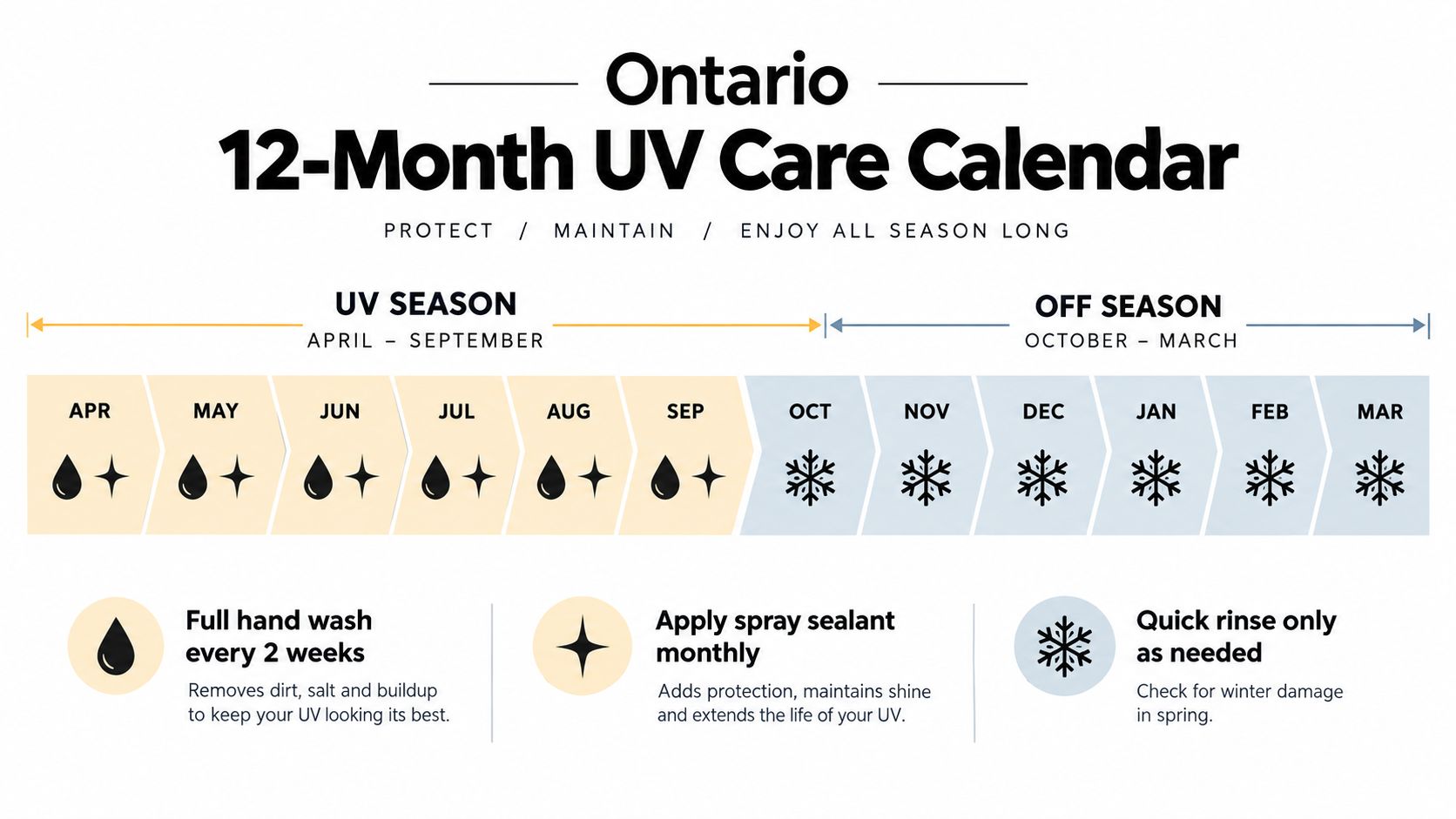
Ontario care should follow the season, not a southern-climate template. The brighter stretch from April through September deserves more frequent washing and replenishment, while the colder months shift the priority toward salt removal, safe rinsing, and inspection after winter.
Use this calendar as a garage-door checklist:
- April: Remove winter contamination with a thorough wash and decontamination. Inspect the hood, roof, and trim before the strongest UV season.
- May: Apply a fresh wax in late May, especially after the first warm stretch. Set a recurring two-week hand-wash reminder.
- June: Wash every two weeks and apply a spray sealant topper monthly. Check whether water behaviour remains consistent on coated or waxed panels.
- July: Keep the same wash rhythm through peak summer exposure. Use a windshield shade whenever the vehicle sits in an exposed lot.
- August: Refresh paste wax in late August, then look closely at horizontal panels after any prolonged hot spell.
- September: Continue the two-week wash routine and remove bonded contaminants before autumn debris settles.
- October: Book a professional decontamination wash, inspect PPF edges, and check coating behaviour before road salt returns.
- November through March: Wash monthly when conditions allow, rinse salt from lower panels, and use quick detailer only for light, clean dust. Avoid rubbing heavily contaminated paint.
Build inspection into the routine
Check PPF edges monthly for lifting, contamination, or damage. On coated paint, look at water behaviour after a clean wash, but don't treat beading alone as proof that the coating is healthy. A full paint correction or coating inspection every two to three years can identify whether the surface needs correction, decontamination, or just better maintenance.
The schedule works because it uses familiar triggers. The first warm day in May signals the initial protection, the August heat wave prompts a surface check, and the first salt application in November signals the winter routine. Keep the list short enough to follow and specific enough that you won't need to remember what comes next.
When to Bring It to Carmedics Autowerks in Whitby
DIY care has reached its limit when the paint looks dull immediately after washing, fading is obvious on the hood or roof, or the clear coat is peeling. Recurring water spots that no longer polish away can indicate etching rather than surface dirt. A newer or leased vehicle also deserves an earlier decision because preserving the factory finish may matter more than correcting neglected damage later.
Book the service around the symptom:
- Visible oxidation or swirls: Start with paint correction before applying a coating. A coating protects prepared paint, but it doesn't turn damaged paint into new paint.
- 401 commuting and stone exposure: Choose PPF for the bumper, hood, mirrors, and other high-impact areas. Consider coating the uncovered panels if sun exposure is also a concern.
- Low-maintenance exterior care: Ceramic coating can make routine washing easier and provide a durable sacrificial layer, provided you continue using safe wash methods.
- Cabin heat and interior exposure: Window tinting addresses the glass and interior, not paint chips. Confirm the film selection meets Ontario requirements before installation.
An inspection-first appointment is more useful than choosing a package from a photo or a broad product description. The team can assess paint condition, identify whether correction is needed, discuss film coverage, and provide a written quote. Ask about available warranty options and the maintenance expected after installation.
Carmedics Autowerks is located in Whitby and offers PPF, tinting, and coating-related solutions alongside broader vehicle care. For Durham Region drivers, the Whitby PPF and tint shop is a practical place to compare options with the vehicle in front of the installer, rather than juggling products and weekend labour without knowing the starting condition.
Prevention remains more predictable than repainting. If you're unsure whether your car needs a careful maintenance plan, paint correction, PPF, ceramic coating, or tint, an inspection can remove the guesswork before you commit.
Carmedics Autowerks Inc offers professional paint protection film, ceramic coating solutions, and window tinting for Whitby and Durham Region drivers dealing with sun, road debris, and daily outdoor parking. Visit Carmedics Autowerks Inc to discuss your vehicle's paint condition, exposure habits, and the most suitable protection plan.