


You're loading the truck for work, the rear sits a little lower than usual, and there's a clunk from the back over potholes on a Whitby side street. That's the moment most drivers type leaf springs near me and start sorting through local listings, hoping to find a shop that can tell the difference between a worn spring, a tired shock, and a load problem. If you want a clearer path than scrolling endless results, local reputation help like find local reputation solutions can be useful when you're comparing nearby businesses and trying to judge who knows suspension work. For a driver who needs real help, not just a search result, Carmedics Autowerks's Whitby location is a sensible place to start.
Introduction to Finding Leaf Springs Near You
A lot of leaf spring searches begin the same way, with a driver noticing the truck doesn't sit quite right after a load, a trailer pull, or a rough winter. On Ontario roads, that matters because suspension wear doesn't stay neat and tidy. Salt, corrosion, and repeated hauling can turn a small problem into a bigger one before the vehicle feels unsafe.
The tricky part is that “near me” doesn't tell you whether the shop can identify the right spring, inspect the whole assembly, or explain whether repair makes sense. A nearby listing can be close to you and still be wrong for the job. That's why local trust matters as much as location, especially if you're trying to avoid a second visit because the first part didn't fit.
Ontario drivers also have a real reason to take leaf spring issues seriously. Federal commercial-vehicle rules say a leaf spring can't be cracked, broken, missing, or shifted out of position, and Ontario inspection standards set specific fail thresholds for wear and damage. If you're comparing shops, it helps to understand what a real inspection should look for before anyone sells you parts.
For owners who want a broader shop overview while they're sorting out suspension noise or sag, Vehicle Maintenance BASIC suspension concerns is a useful reference point. The main thing is simple, though. Don't just look for the closest shop. Look for the one that can diagnose the spring correctly, explain the options clearly, and keep your truck working without guesswork.
What Leaf Springs Do and How They Work
Think of a leaf spring like a stacked diving board made of layered steel strips. Each leaf flexes a little, and together they carry weight, smooth out bumps, and help hold the axle in the right position. That's why they're still common on work trucks, pickups, vans, and fleet vehicles that haul or tow regularly.
Why the design still matters
Leaf springs are one of the oldest suspension designs, and they stayed common on many vehicles well into the 1970s before coils and independent suspensions took over more passenger-car duty. That history matters because plenty of Ontario drivers still depend on older work vehicles, and plenty of newer light trucks still use rear leaf springs where load support is more important than a soft ride. In other words, this isn't some obsolete part you only find in a museum.
They sit between the axle and the chassis, so they do two jobs at once. They support the vehicle's weight and help keep the axle located when the truck is carrying cargo or pulling a trailer. When the spring pack gets tired, the truck can sit lower, feel harsher, or react badly under load.
Practical rule: if the vehicle is used to carry weight, the spring choice needs to match that job, not just the year and model on the registration.
If you already know the rest of the suspension is healthy and you're chasing a spring issue specifically, Vehicle Maintenance BASIC suspension concerns gives a broader context for what suspension problems can look like. For parts and service work, suspension repair is the service category that lines up most closely with a spring problem. The key point is that leaf springs don't just “hold things up”, they control load, axle position, and ride height together.
Common Signs Your Leaf Springs Need Attention
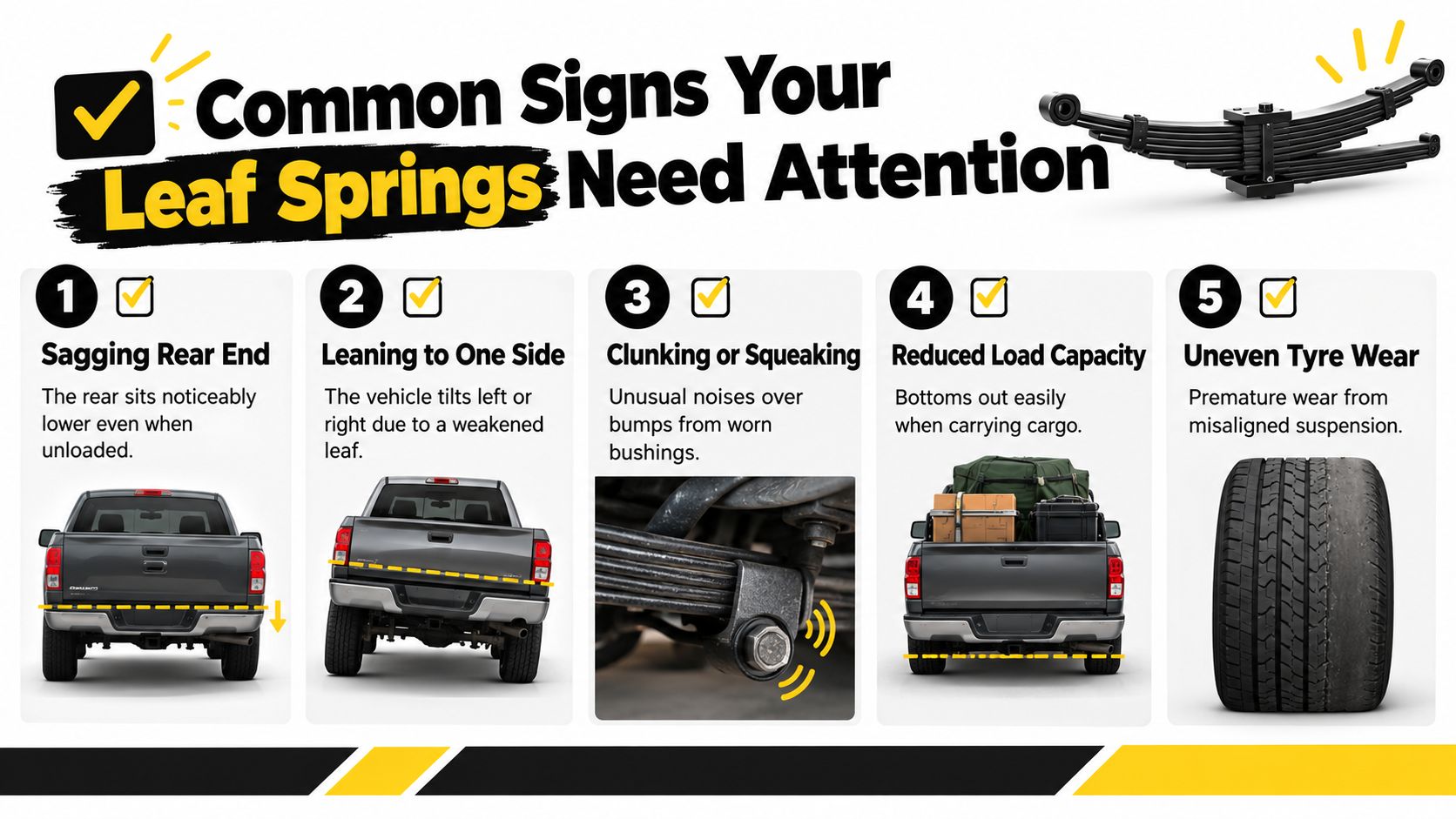
A sagging rear end is the first clue many drivers notice. If the truck looks low even when it isn't loaded, the spring pack may have lost its arch or one side may be working harder than the other. On Ontario vehicles, that's not just a comfort issue. Inspection standards can reject a spring when a leaf is broken, missing, cracked, or shifted out of place, and they also reject certain wear levels in the hanger and contact areas.
Sounds and stance tell different stories
Clunking or squeaking over bumps often points to movement where there shouldn't be any. That can come from worn bushings, shifted leaves, or corrosion that's started to open up the pack. If the sound appears only when the box is loaded or the trailer is attached, the spring is doing more of the talking than the shocks are.
Reduced load capacity is another warning sign. A truck that bottoms out early, sags under a normal weekend load, or feels unstable when towing may have a spring pack that no longer matches the work it's being asked to do. Uneven tyre wear can follow from that, because a suspension that sits wrong won't keep the tyres planted evenly.
A spring problem often starts as a small change in stance, then shows up as noise, rubbing, or a rougher ride.
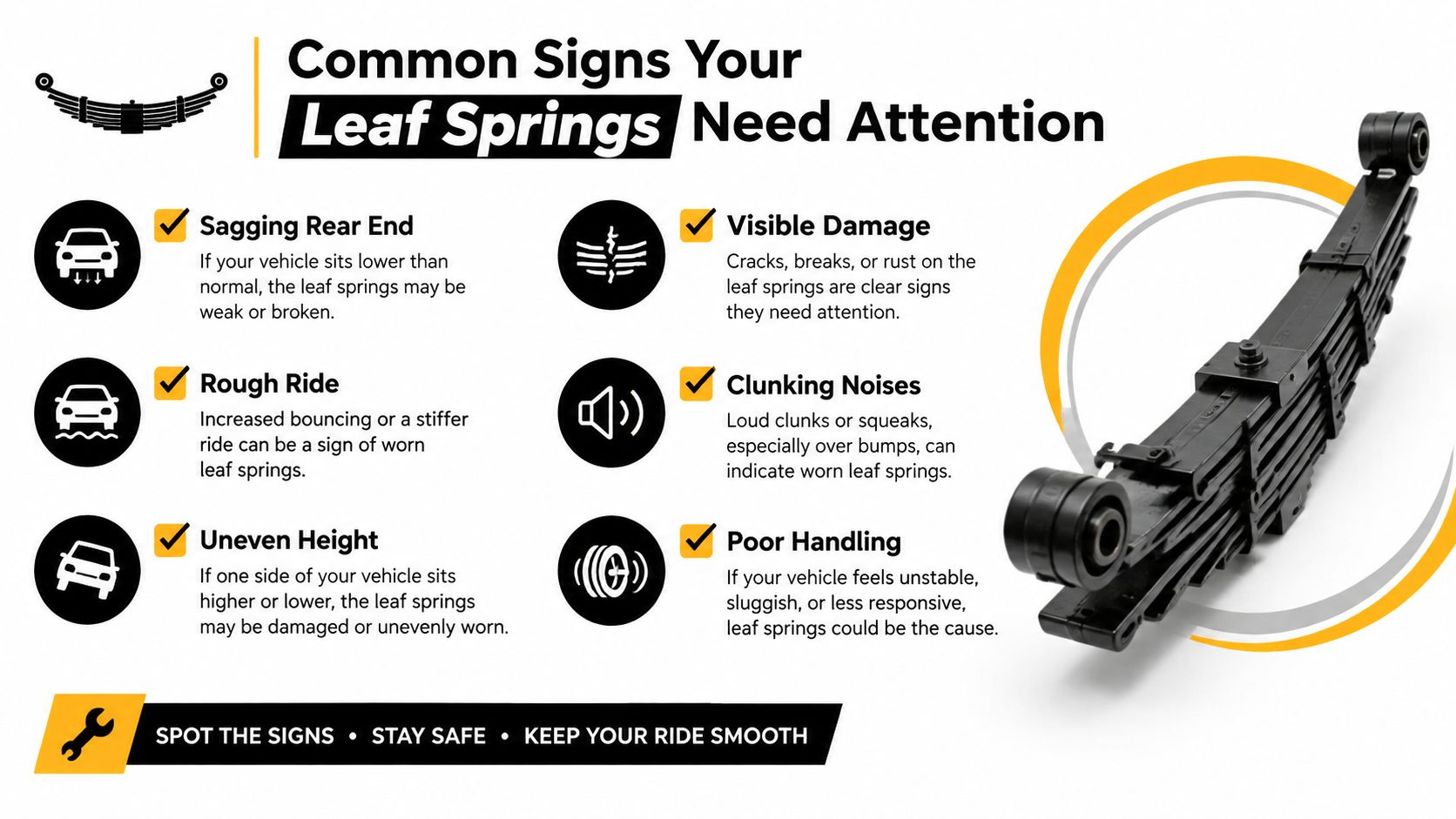
Corrosion makes all of this more serious. Metallurgical analysis of failed springs found heavy corrosion products, salt pitting, cracking across the spring width, and failures tied to stress corrosion, which is why a rusty undercarriage deserves a close look instead of a shrug. Ontario drivers who hear rubbing, see visible rust scale, or notice the vehicle sitting crooked should treat that as a reason to book an inspection soon. If the symptom seems more like bouncing than sagging, shock absorber replacement can help separate a shock issue from a spring issue before money gets spent in the wrong place.
Repair or Replace Understanding Your Options
Not every leaf spring problem calls for a full replacement. The right choice depends on the condition of the metal, how the vehicle is used, and whether the spring still matches the load it has to carry. For a work truck in Durham Region, that decision can matter more than the cheapest nearby quote.
Comparing the practical paths
| Option | Best For | Consideration |
|---|---|---|
| Individual leaf replacement | A pack with one damaged leaf but otherwise usable hardware | Works only when the rest of the spring assembly is still sound |
| Re-arching | Springs that have lost height but are not badly corroded | Better when the metal still has enough life left |
| Adding a leaf | Vehicles that need extra support for regular hauling or towing | Changes capacity and ride feel, so it has to match the use case |
| Full replacement | Packs with cracking, severe corrosion, or repeated failure | Often the cleanest option when the spring is worn out across the assembly |
A small repair can make sense if the problem is limited and the parts are healthy. Re-arching may suit a vehicle that has flattened over time. Adding a leaf is more about load support than cosmetic ride height, and it should be chosen with the vehicle's actual work in mind.
Full replacement is the better call when corrosion has started attacking more than one leaf, or when inspection standards are already being challenged by wear. Ontario commercial rules treat a cracked or broken main spring leaf, or more than one broken leaf in a spring assembly, as a suspension defect, so repeated patchwork can become false economy. The nearby shop that spends time measuring and explaining the load decision usually gives better value than the one that only sells the easiest part to stock.
How to Identify the Correct Leaf Spring Before You Buy
The wrong spring wastes time fast. It can sit almost right, look almost right, and still be wrong enough to create a fitment problem or a repeat visit. The easiest way to avoid that is to gather the details a real spring supplier or shop needs before anyone orders parts.
What to bring to the counter
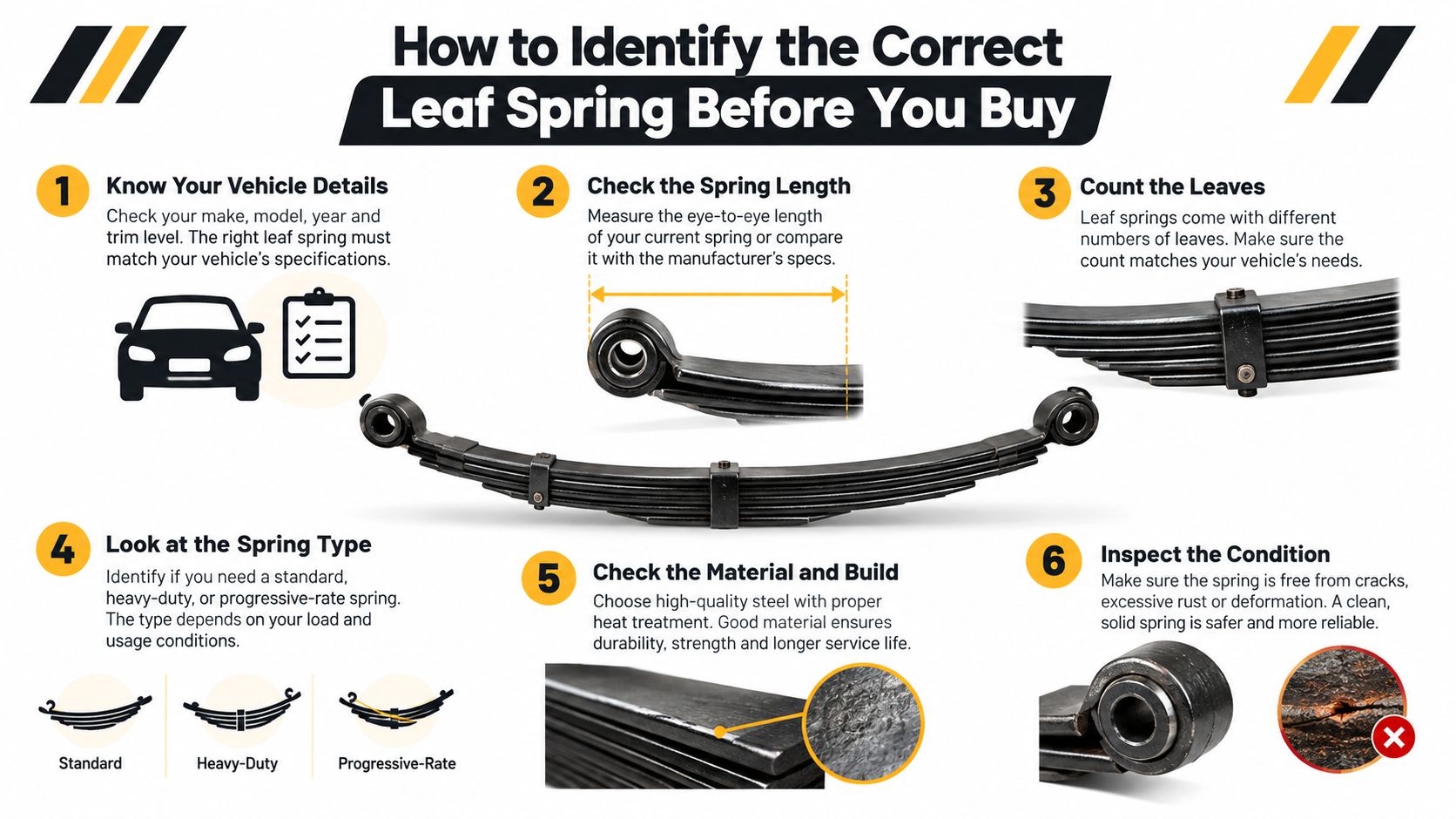
Start with the part number if it's still readable on the spring. If it isn't, bring the vehicle's make, model, year, and axle position. That information alone often narrows the options, but it's not enough for every truck, especially when previous repairs or aftermarket parts have changed the setup.
Measurements matter too. A supplier may need the spring's length, width, and arch, because standard inventory doesn't always match what's under the vehicle. That's especially important in an aging fleet, where one truck may have a replacement pack, another may have been re-arched, and a third may have a custom build from a previous repair.
Bring measurements, not guesses. A spring that is close enough on paper can still sit wrong under load.
For drivers comparing new parts with reuse or repair options, OEM vs aftermarket parts is a practical place to start. The main idea is simple, identify the spring by the vehicle and the hardware on the vehicle, not by hope. That saves repeat labour, avoids downtime, and keeps the fix tied to the actual axle position and load requirements.
How to Choose a Trusted Shop Near You in Whitby and Durham Region
A good nearby shop should be able to explain what it found, not just quote a part number. Ask how they inspect the spring pack, whether they check for corrosion along the leaves and hangers, and how they confirm the correct load rating. If the answer is vague, that's usually a sign the shop is selling convenience rather than diagnosis.

Questions worth asking before you book
- Do you inspect the full spring assembly? A proper answer should include leaves, hangers, bushings, and visible corrosion.
- Can you explain repair versus replacement? Shops that only push one answer may not be matching the fix to the vehicle.
- How do you confirm the correct spring? Measurements and vehicle details should be part of the process.
- Do you check for salt damage and wear at the contact points? That matters in Ontario, where corrosion is a real fatigue factor.
- Can you handle related suspension work too? If shocks, bushings, or alignment concerns are part of the problem, it helps to keep the job in one place.
Transport Canada has warned that faulty leaf springs have been tied to at least three fatalities involving commercial vehicles, and it points to improper repairs, poor maintenance, and weak inspection practices as contributing factors. That makes careful shop selection more than a convenience. It's a safety decision.
If you're comparing local visibility and want to understand how nearby repair businesses present themselves online, boost auto repair 'near me' rankings can help you think more critically about the results you're seeing. For Whitby drivers, Carmedics Autowerks's mechanic service page is one local option to consider when the spring problem is part of a broader repair need. Carmedics Autowerks in Whitby handles general auto repairs, so it fits naturally when you want suspension work checked alongside the rest of the vehicle.
Getting Back on the Road With Confidence
Leaf springs don't usually fail in a dramatic moment. They give clues first, a lower stance, a new noise, a rougher ride, or a load that feels heavier than it used to. The smart move is to act on those clues early, before corrosion and wear turn a manageable repair into a more complicated one.
Ontario drivers get the best result when they match the fix to the job. That means identifying the correct spring before buying, thinking carefully about repair versus re-arch versus replacement, and choosing a shop that understands inspection thresholds as well as fitment. If you haul, tow, or run a work truck in Whitby or Durham Region, load-correct suspension work is worth more than the cheapest quick install.
If your truck sits low, clunks over bumps, or needs a spring checked before the next load, book a suspension inspection with a shop that can measure, diagnose, and explain the options clearly. A real answer beats a close-by guess every time.
Carmedics Autowerks Inc handles general auto repairs in Whitby, including suspension-related concerns that can affect ride height, noise, and load support. If your vehicle needs a leaf spring inspection or a broader suspension check, visit Carmedics Autowerks Inc and get the problem looked at by a local team that works on real Ontario vehicles.