

The storm has moved east, the driveway is drying, and you're expecting to find little more than wet leaves on your vehicle. Instead, the hood is covered in shallow dimples, the windshield has a small star-shaped fracture, and the roof looks different under the morning light. You're left asking the practical questions: Is the car safe to drive? Will insurance cover it? Should you book the first available shop, or wait for someone who can preserve the factory paint?
Hail damage repair isn't a photo-based guessing game. The correct method depends on the depth and density of the dents, the condition of the paint, the panel material, access behind the metal, and damage to glass, trim, sensors, or alignment points. A proper inspection gives you the information needed to weigh the repair against your deductible and the vehicle's value.
The Morning After the Storm
The morning after a thunderstorm rolled off Lake Ontario, I stepped outside in Whitby expecting pollen dust on my car. The hood looked like someone had tapped it with a ball-peen hammer. Under the soft light, the dents seemed harmless. Once I moved the vehicle into the shop and used a proper reflection board, the roof and trunk showed a much wider pattern.
Hail doesn't damage every panel in the same way. Smaller stones can leave shallow craters in broad steel surfaces, while heavier impacts can push the metal beyond its original shape. A deeper strike may stretch the panel around the dent, create a sharp crease, or fracture the paint film that protects the substrate.
What the impact can change
A quarter-sized stone can do more than leave a mark. It can crease an edge, crack a body line, or fold an aluminium panel where the metal has less tolerance for repeated reshaping. On a hood, that can affect the gap beside the fender. On a roof, impacts can disturb mouldings, clips, and channels that direct water away from the cabin.
Glass deserves its own inspection. A windshield impact may begin as a small star pattern and spread later after temperature changes, vibration, or pressure from normal driving. A damaged mirror, lamp, or camera cover can also create a safety issue even when the surrounding paint looks acceptable.
Practical rule: A clean walkaround doesn't prove the vehicle escaped serious damage. Hail marks often become visible only when a technician changes the lighting angle or examines the panel after temperature swings.
Paint damage can be subtle. Fine silver lines, tiny chips, or a fractured clearcoat may not stand out at noon, but they can signal that PDR alone won't provide lasting protection. Door edges are easy to miss because they sit outside the broad roof-and-hood pattern. Detailers and technicians often find them only after opening each door and checking the returns.
Before driving normally, check that the hood latches and releases correctly, doors open without binding, the windshield doesn't obstruct your view, and no trim has become loose. If the storm left glass damage or you're concerned about future impact protection, a specialist resource on windshield film protection can help you understand preventative options. Don't press dents from the outside or use a suction tool on a sharp crease. DIY pressure can stretch the metal and turn a repairable panel into a refinishing job.
Three Ways to Fix Hail Damage
Inside a repair bay, the technician isn't choosing a repair method based on the number of visible dents alone. The decision follows the metal, the paint, the panel construction, and the access points behind the damage.
Paintless dent repair
Paintless dent repair, or PDR, is usually the first option when the paint remains intact and the metal hasn't been badly stretched. A technician uses slender rods, picks, glue tabs, and controlled reflection lighting to massage the panel back into its original contour. The work is gradual. Pushing too hard can create a high spot, so the technician makes small corrections while watching the reflection move across the panel.
PDR works particularly well on shallow dents across hoods, roofs, doors, and trunk lids. It preserves the factory paint, avoids filler and blending, and keeps the original panel in place. I describe it to customers as physiotherapy for metal. The technician restores movement and shape rather than cutting out the damaged area.
A useful field test is simple. If you can run a fingernail across the depression without catching on a sharp edge, PDR may be suitable. That isn't a final diagnosis, but it's a sensible reason to request an in-person assessment rather than assuming the panel needs paint.
Conventional body repair and refinishing
Refinishing becomes necessary when the paint has chipped, cracked, or separated from the substrate. A body technician may need to straighten the metal, apply filler where appropriate, sand the surface, prime it, and apply basecoat and clearcoat in a controlled booth. The repair restores both appearance and corrosion protection.
Sharp creases are difficult because the metal has folded and may have lost its original tension. A PDR technician can sometimes improve a crease, but forcing it flat can disturb the paint or leave a visible wave. Refinishing is the more responsible route when the coating is already broken or the panel cannot hold a clean shape.
For a closer look at situations where paint damage changes the repair plan, see this guide to auto paint repair near me.
Panel replacement
Replacement is the least conservative option, so it shouldn't be the automatic answer after a storm. It becomes reasonable when a steel panel is severely folded, an aluminium panel has stretched, or several impact zones overlap in a way that makes restoration labour-intensive and uncertain. The shop must also consider sensor mounts, sound insulation, mouldings, and the quality of available replacement parts.
Think of refinishing as a surgical patch and replacement as an organ transplant. Neither is automatically better. The correct choice is the one that returns the vehicle to a sound shape without sacrificing factory paint when PDR can do the job.
What Happens During a Proper Inspection
A photo estimate can help open a conversation, but it can't establish the repair method or the full scope of hail damage. A phone camera flattens the panel, hides shallow dents, and rarely captures paint fracture, edge damage, access limitations, or the relationship between adjacent panels.
The inspection sequence
A proper assessment starts under controlled lighting. The technician moves a reflection board or light across the hood, roof, trunk, doors, and quarter panels so each dent creates a visible distortion. The inspector then checks the surface by touch, looking for a soft depression, a hard edge, a stretched crown, or a sharp crease.
The shop documents the vehicle panel by panel. Photographs should show the damage clearly and support the written estimate, while the vehicle identification number, mileage, existing marks, and storm-related defects are recorded separately. That distinction matters because insurers need to see what belongs to the current event and what was already present.
A sound triage order is:
- Glass and visibility: Inspect the windshield, mirrors, lamps, and camera covers first. A cracked windshield or damaged lighting component can affect safe operation.
- Operation and alignment: Check hood gaps, latch operation, door movement, roof rails, mouldings, and water channels. Misalignment can point to more than a cosmetic dent.
- Repair feasibility: Determine whether each panel is suitable for PDR, conventional refinishing, or replacement.
- Estimate documentation: Record each panel and operation as a line item so the adjuster can compare the shop's assessment with the claim.
The same principle applies to other parts of a property after a storm. A resource such as this roof inspection for hail damage explains why hidden impact damage deserves professional review rather than a driveway glance. Your vehicle deserves the same discipline, especially around roof rails and glass seals.
Carmedical documentation also helps later if hidden damage appears during disassembly. A digital vehicle inspection in Ontario can give the owner a clearer record of condition before work proceeds.
The inspection is the decision point. Skip it, and you risk approving the wrong repair method, missing glass or trim damage, or discovering too late that a photo estimate understated the job.
What Hail Damage Repair Costs in Ontario
Ontario hail repair pricing varies widely because hail doesn't produce a standard job. One vehicle may have a few shallow dents on one panel. Another may have damage across the roof, hood, doors, trunk, glass, and trim. A 2026 Ontario pricing guide places hail jobs between $800 and $15,000 or more, and it notes that an in-person inspection is necessary because the visible pattern can range from limited panel damage to hundreds of dents across the vehicle. See the Ontario hail repair pricing guide for that published range and its inspection explanation.
The numbers below are decision categories, not promises. A shop can't responsibly assign your vehicle to one tier without examining the panel surfaces and paint.
| Damage Scenario | Typical Cost Range | Repair Method | Insurance Claim Likely? |
|---|---|---|---|
| Light damage on one panel | Qualitatively, lower-cost PDR | PDR when paint is intact | Depends on deductible and policy |
| Broad damage across several panels | Qualitatively, mid-range repair | PDR, with refinishing where needed | Often considered when repair exceeds the deductible |
| Deep creases, broken paint, or stretched aluminium | Qualitatively, substantially higher | Conventional body repair or replacement | More likely, subject to coverage |
| Damage involving glass, trim, and multiple panels | Qualitatively, high-complexity repair | Mixed repair methods and possible glass work | Often requires detailed claim review |
What moves the quote
Dent density matters as much as dent size. A panel with many closely spaced impacts takes more time to map and correct than one with a few isolated depressions. Panel material matters too. Aluminium can behave differently from steel, and a technician may need a more cautious repair strategy.
Paint integrity is another dividing line. Intact factory paint supports PDR. Chipped or fractured paint adds preparation, colour matching, blending, and clearcoat work. Glass replacement can add further work when cameras or driver-assistance systems require inspection or calibration after installation.
Ontario's exposure also affects the repair environment. CARFAX Canada reported $37.4 million in Ontario hail-related claims in its cited ranking, while its broader weather-related repair reporting placed Ontario at more than $50.3 million in one recent year. Those figures show why local capacity and insurer triage can become strained after a major event. They don't predict your personal bill.
Your deductible is the practical dividing line. If the written repair estimate is only slightly above the deductible, self-payment may be worth discussing with your insurer and shop. If the damage involves several panels, glass, or refinishing, a claim may make more sense. Don't approve work based on a low photo quote because it appears to fit below the deductible. The final cost can change after proper lighting, touch inspection, and glass or trim checks.
Filing an Insurance Claim the Right Way
The morning after a Whitby hailstorm, a low photo estimate can look reassuring until an in-person inspection finds paint chips, stretched metal, damaged glass, or restricted access behind a panel. Document the vehicle before washing, polishing, removing glass, or authorizing repairs. Take wide photographs of the entire vehicle, followed by close-ups of the hood, roof, trunk, doors, glass, lamps, and loose trim. Keep the storm date and your first report details with the images.
Hail damage is generally handled under optional comprehensive coverage, rather than basic auto insurance. Check your policy wording, deductible, glass coverage, rental limits, and reporting requirements before assuming every damaged part is included.
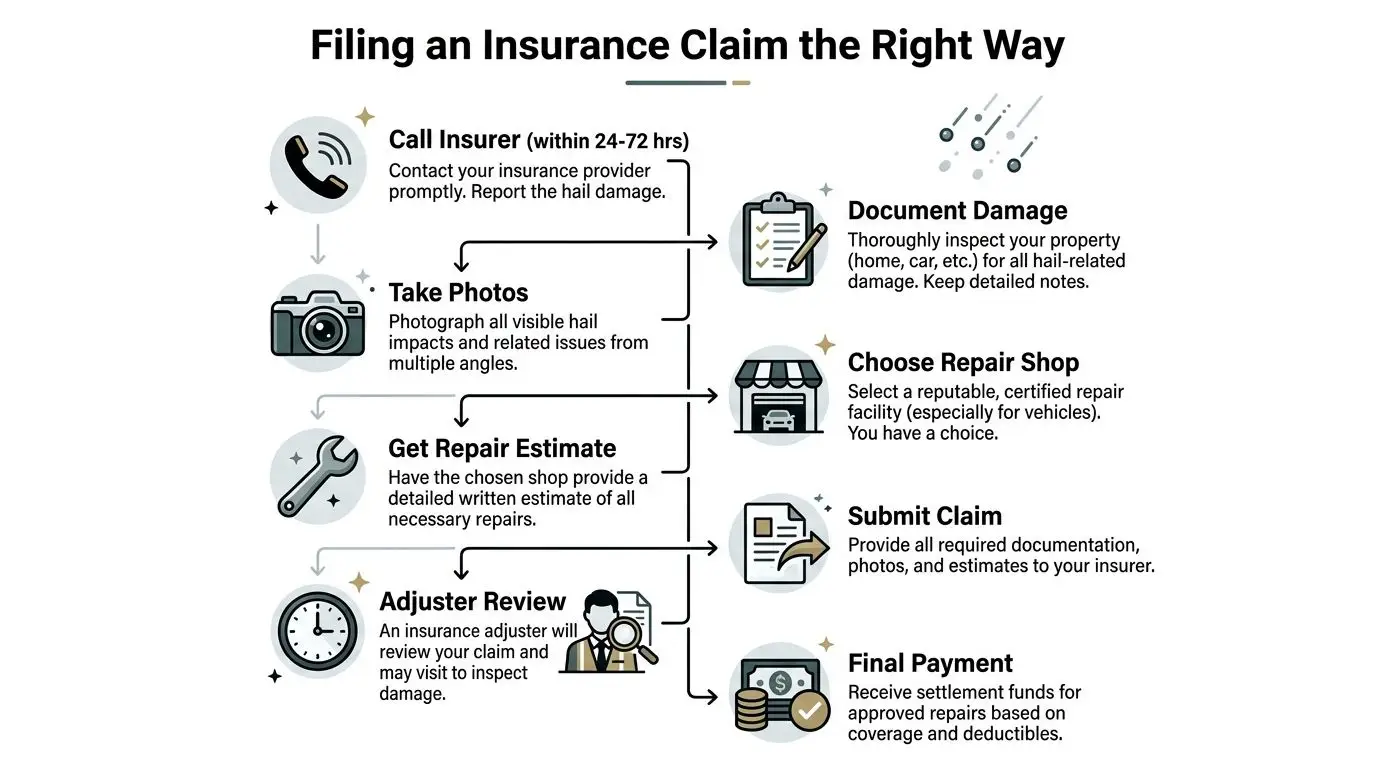
A practical claim sequence
- Call the insurer promptly. Ask to open a hail claim and obtain the claim number, deductible, adjuster process, and inspection options. A verbal assurance is not the same as written confirmation of coverage.
- Request an in-person inspection. A quote from photographs cannot establish whether paintless dent repair will preserve the factory finish. The technician must assess paint integrity, metal stretch, glass, panel access, and any bodywork that may be unavoidable.
- Choose the shop carefully. A preferred network may reduce administration, but ask whether you can use an independent facility. The shop should explain the trade-offs between PDR, refinishing, and replacement, including how each option affects factory paint and repair time.
- Match the documents. The shop estimate should identify panels and operations clearly. A supplement may be needed when inspection or teardown reveals broken clips, damaged insulation, hidden damage, or parts that cannot be reused.
- Read every signature. Confirm whether the document authorizes inspection, authorizes repairs, or directs payment. Those permissions are different.
- Track rental paperwork. Keep approvals, extensions, and receipts together. Coverage limits vary, and missing records can create disputes.
Before approving a facility, review practical information about car repair and insurance to clarify which paperwork the repairer may handle and which decisions remain yours. For separate property damage, this hail damage roof insurance claim guide can help keep the vehicle and home claims organized without treating them as one policy.
Record a conversation with the insurer only when Ontario law and the circumstances permit, and tell the other party before recording. Write down the adjuster's name, claim number, approval conditions, and deadlines during the call. Do not approve work based on a low photo quote just because it appears to fall below the deductible. The amount can change after lighting, touch inspection, glass checks, and trim checks.
Timing Your Repair After a Major Storm
The first available appointment isn't always the best appointment. After a large Canadian hail event, insurers and repairers may create dedicated estimating locations or temporary intake procedures because ordinary appointment systems can't absorb the volume. The Insurance Bureau of Canada reported that the August 5, 2024 Calgary hailstorm produced about C$2.8 billion in insured damage and 130,000 claims, with roughly 70,000 vehicle claims and about C$900 million in auto damage. The scale of that event illustrates why repair queues can change quickly after a storm. Insurance Bureau of Canada's hail-loss coverage provides the wider context.
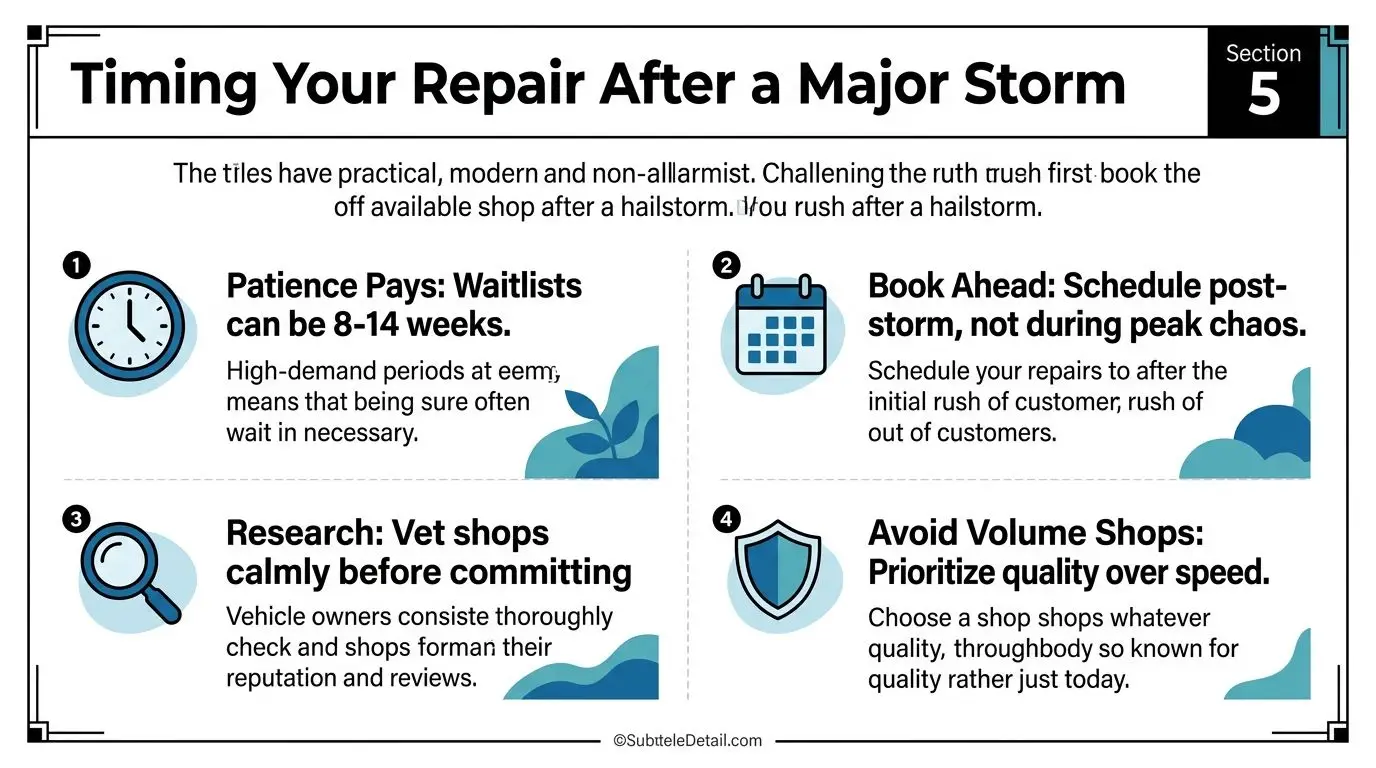
Waiting can protect the vehicle when the paint is intact and the car remains safe to operate. It gives you time to compare inspection quality, confirm that PDR is performed properly, and avoid a rushed repair that converts a factory-painted panel into a refinishing job.
Waiting is a poor choice when paint has chipped through to exposed metal, glass is cracked, a roof rail is loose, or a hood and door no longer align. Those conditions can allow corrosion, water entry, or further damage during normal driving. Ask the shop whether temporary protection is needed while you wait.
Use the queue as part of the decision
A good shop should give you a realistic inspection and repair schedule, not an attractive promise it can't keep. Ask whether the vehicle will remain in one facility, whether PDR is done in-house, and when the insurer must approve supplements.
The right decision balances paint condition, vehicle value, safety, deductible, and queue depth. A sound vehicle with intact paint may tolerate a measured wait for qualified PDR. A car with broken coating or compromised glass needs prompt attention, even if the first appointment isn't convenient.
Choosing the Right Shop in Whitby
Walk the property before handing over the keys. A permanent facility with identifiable bays, organised intake, and a clear inspection process gives you more to evaluate than a temporary operation that appeared immediately after the storm.
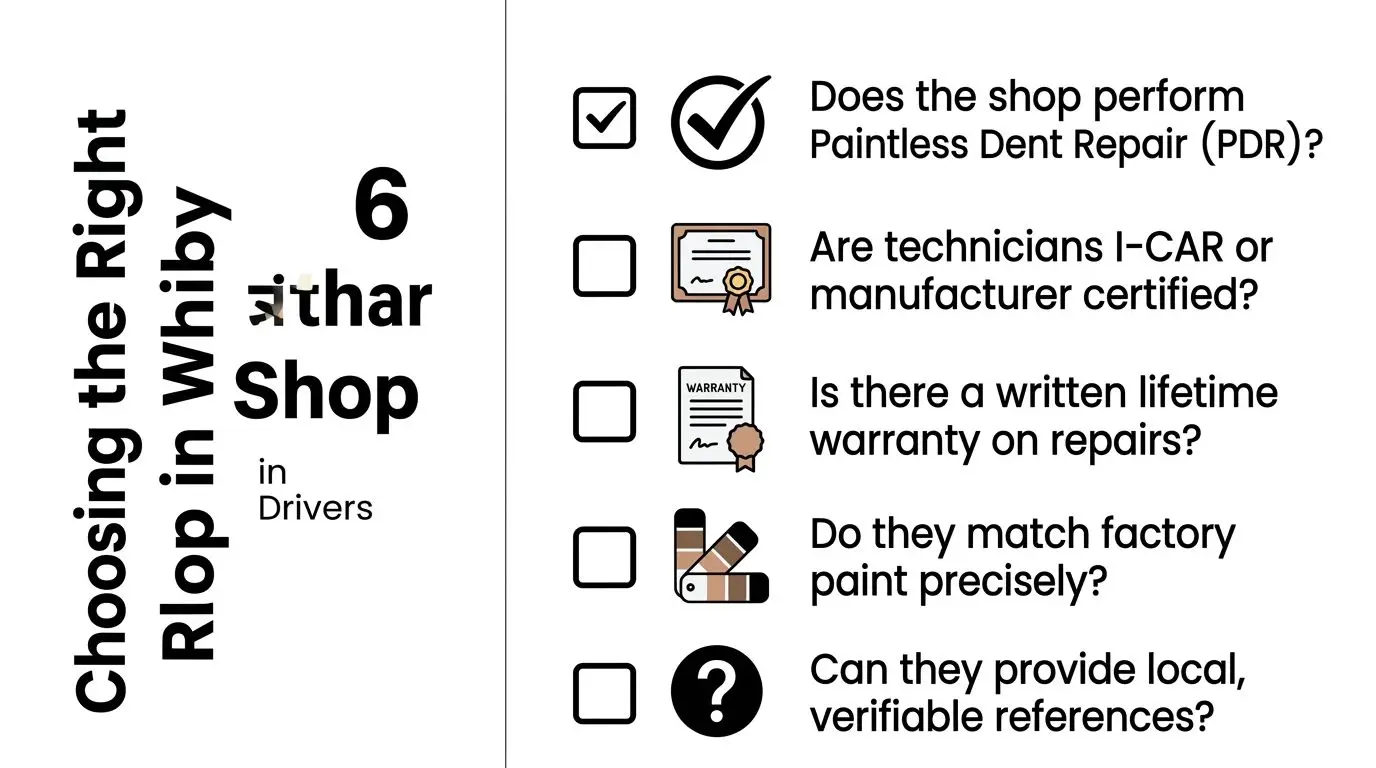
Ask these questions directly:
- PDR capability: Does the shop perform paintless dent repair in-house, or does it subcontract the work?
- Estimate method: Will a technician inspect every panel under proper lighting, or is the price based mainly on your phone photos?
- Paint warranty: If refinishing is required, will the shop provide written warranty terms for adhesion, colour match, and clearcoat?
- Insurance administration: Can the shop communicate with the adjuster and prepare supplements, while still explaining every approval to you?
- Final delivery: Will someone walk around the vehicle with you, demonstrate the repaired panels, and identify any replaced trim or glass?
A registered repairer disclosure, transparent documentation, and a willingness to separate pre-existing damage from storm damage are useful Ontario signals. Certifications can help, but they don't replace a careful inspection or a clear explanation of why one panel receives PDR while another needs paint.
For a broader view of what to ask from a facility, review this guide to a collision repair shop. The same standards apply to hail work: clear estimates, appropriate repair methods, proper paint preparation, and a final inspection with the owner.
Carmedics Autowerks Inc in Whitby offers collision repair with in-house PDR capability, insurance coordination, and refinishing services for vehicles that need more than dent correction. Those are the details to verify in writing, especially if preserving factory paint and resale condition matters to you.
Bring your hail-damaged vehicle to Carmedics Autowerks Inc for an in-person assessment of the dents, paint, glass, trim, and panel alignment. The team can explain whether PDR, refinishing, or replacement fits the damage, then help organise the repair and insurance documentation before work begins.